
Poilievre Asks Carney to Repeal BC Tanker Ban Ottawa Promised to Keep
A Conservative bill to scrap the north coast tanker ban reaches second reading this week, with a 250,000 barrel a day rail plan through Prince Rupert behind it and a July promise from Ottawa standing in the way.
Key points
- Conservative Leader Pierre Poilievre has asked Prime Minister Mark Carney to repeal the oil tanker ban on British Columbia's northern coast, months after Ottawa promised the province it would not…
- The letter puts a specific project at the centre of the fight.
- The MPs say the ban "effectively donates" billions of dollars to the United States, by forcing Canada to sell discounted oil that profits American refineries instead of reaching Pacific buyers at…
Conservative Leader Pierre Poilievre has asked Prime Minister Mark Carney to repeal the oil tanker ban on British Columbia's northern coast, months after Ottawa promised the province it would not change it. Poilievre was one of several Opposition MPs who signed a letter to Carney as a federal Conservative bill to scrap the ban goes to second reading in Parliament this week.
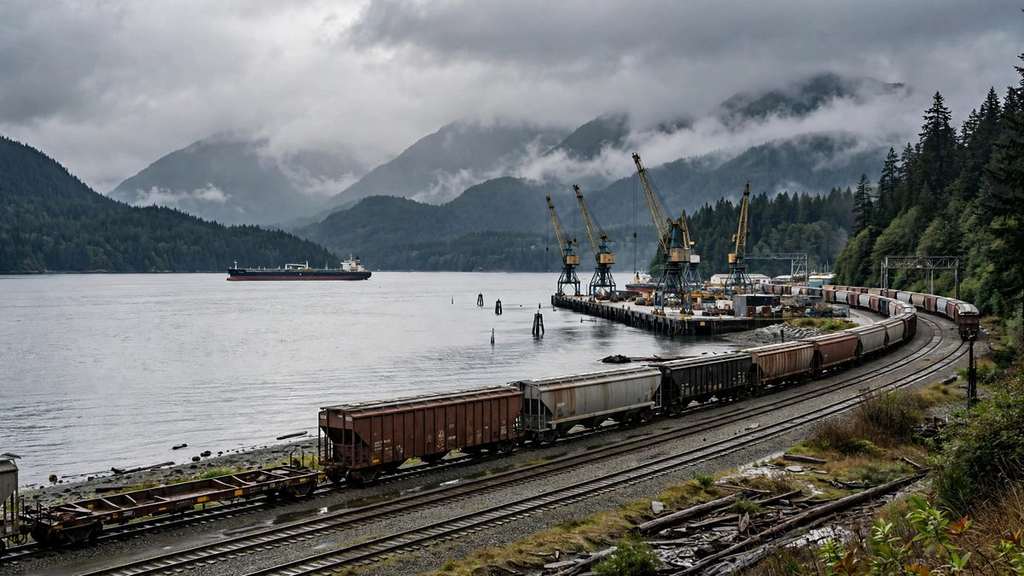
The letter puts a specific project at the centre of the fight. Calgary-based Strathcona Resources wants to ship up to 250,000 barrels of Canadian oil a day on existing railroad tracks through Prince Rupert, on the north coast, and then across the Pacific. For that proposal to even be considered, the tanker ban would have to be lifted. The letter says the federal government is the only thing standing in the way.
What the letter argues
The MPs say the ban "effectively donates" billions of dollars to the United States, by forcing Canada to sell discounted oil that profits American refineries instead of reaching Pacific buyers at full price. They also left a door open: the letter says the Opposition would be willing to discuss amendments to the ban that would allow the Prince Rupert project to move forward, short of full repeal.
The letter says lifting the ban would give Alberta and British Columbia "an opportunity to build prosperity together." Alberta has skin in this game. After Ottawa signed its deal with B.C., Alberta formally submitted its own pipeline proposal to the federal major projects office, but with a southern route. That plan would largely follow the path of the existing Trans Mountain pipeline from Bruderheim, Alberta, to an export terminal in Delta, B.C.
The promise in the way
The obstacle is a signature. In July, Carney and then-B.C. Premier David Eby signed an agreement that included a promise by Ottawa to maintain the north coast tanker ban "without alteration, suspension, or narrowing of scope." Repealing the ban, or carving an exception into it, would break that sentence in public.
The politics around the promise just shifted. Eby's New Democrats lost the B.C. election on Saturday. Lorne Doerkson's provincial Conservatives swept to power with about two-thirds of the 93 seats in the provincial legislature. Doerkson's government backs energy expansion, and Carney congratulated him on the win, writing that he looked forward to getting more homes built and unleashing Canada's potential as an energy superpower. The tanker ban now sits between two governments that agree on energy in general and disagree on this coast in particular.
Why it matters
For Alberta producers, the question is price. Oil that can only move south sells at a discount set by American buyers. A Pacific outlet through Prince Rupert would put the same barrels in front of Asian refiners. For coastal B.C., the question is risk. The north coast ban exists because the waters around Prince Rupert are remote, rough and hard to clean after a spill.
First Nations leaders add a third voice. They are meeting Carney and the premiers in Ottawa this week, and the north coast is not an abstraction for the nations whose territories line it. Any change to the ban without them would start in conflict, not consultation.
Key numbers
- 250,000 barrels a day: the Strathcona rail proposal through Prince Rupert
- 93 seats: the size of the B.C. legislature the provincial Conservatives just swept, taking about two-thirds
- July 2026: the month Ottawa promised B.C. the ban would stay unchanged
What happens next
The Conservative bill reaches second reading this week. It will not become law on an opposition timetable, but the debate forces every party to state a position on the record. Watch whether Carney defends the July wording word for word, or starts talking about the project instead of the ban. That choice of subject is the tell. Watch also Alberta's southern-route proposal, which can move without touching the ban at all, and the Ottawa meetings with First Nations leaders, where the coast's own governments get their say.
Timeline
- Jul 2026Carney and B.C. Premier David Eby sign an agreement promising the north coast tanker ban stays without alteration.
- Oct 24, 2026B.C. election: Eby's New Democrats lose, Lorne Doerkson's provincial Conservatives win about two-thirds of 93 seats.
- Oct 26, 2026Poilievre and Opposition MPs write to Carney asking for repeal as the Conservative bill heads to second reading.