
Weather Whiplash: Record Heat, Then First Snow for the Northeast
Highs in the 90s threaten records more than 125 years old through Thursday. A cold front on Friday brings 45 mph gusts, lows in the 20s, and the first mountain snow of the season.
Key points
- Unseasonably warm weather will expand across the central and eastern United States through Thursday, October 15, with highs in the 90s threatening longstanding daily records, the Weather…
- That is the whiplash in one week.
- AccuWeather said daily high records dating back more than 125 years could be challenged or broken in cities such as Chattanooga, Tennessee, Birmingham, Alabama, and St. Louis, Missouri.
Unseasonably warm weather will expand across the central and eastern United States through Thursday, October 15, with highs in the 90s threatening longstanding daily records, the Weather Prediction Center at NOAA said. By Friday, a powerful cold front will bring the coldest air of the season so far to the Northeast, with the first snowflakes of the season possible in the mountains of New York, Vermont, and New Hampshire.
That is the whiplash in one week. Temperatures about 20 degrees above average, according to Weather.com meteorologist Rod Shackelford, will give way to wind gusts approaching 45 miles per hour, overnight lows in the 20s in the far north, and frost and freeze concerns spreading east.
Records within reach
AccuWeather said daily high records dating back more than 125 years could be challenged or broken in cities such as Chattanooga, Tennessee, Birmingham, Alabama, and St. Louis, Missouri. Records that old fall only when warm air covers a wide region at a time of year when the calendar argues for cooler weather.
The heat is not a single city story. NOAA said the warm pattern expands across the central and eastern United States through Thursday. Highs reaching the 90s in mid-October change daily life in practical ways. Schools, outdoor crews, and sports practices deal with summer conditions. Homes that had switched off cooling turn it back on, then will need heat within a day or two.
The front arrives Friday
A powerful cold front arriving Friday, October 16 will bring the coldest air of the season so far to New York, Pennsylvania, Vermont, New Hampshire, and Maine. Wind gusts approaching 45 miles per hour will make the change feel sharper than the thermometer alone suggests.
Saturday highs may struggle to escape the 30s in higher elevations, while other Northeast locations stay in the 40s and 50s. Overnight lows could fall into the 20s across northern New York, Vermont, and New Hampshire. That hard turn catches gardens, pipes, and weekend travel plans off guard.
The shift reaches the Midwest too. The National Weather Service office in Detroit said a first freeze is possible Friday night, October 16 in Michigan. In Lansing, Michigan, temperatures drop from the 80s on October 12 and 13 to the 50s and 60s by Wednesday, October 14, with a Saturday high of 55 and gusts up to 50 miles per hour on Friday.
Farther west, a freeze watch was also in effect for parts of New Mexico and Colorado, with lows into the 20s. The cold is not only a Northeast story. It is a broad reset after a warm spell that covered much of the country.
First snow, in the mountains
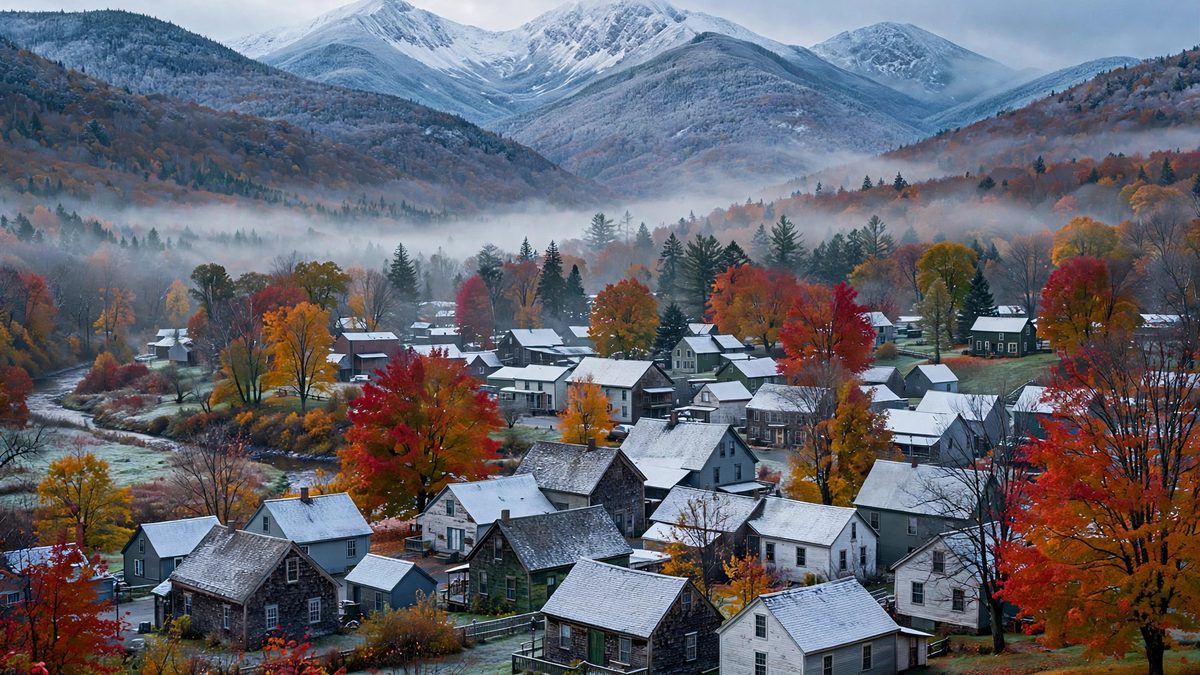
The Adirondack Mountains of New York, the Green Mountains of Vermont, and the White Mountains of New Hampshire have the best chance of the season's first snowflakes. Accumulation is expected to be limited if any, and most communities will see rain.
That limit matters. This is not a forecast for a major snowstorm. It is a first taste of winter in the high country, on the same week that parts of the South and Midwest chase heat records. The snow will matter most as a signal: the season has turned in the mountains, even if valleys see only cold rain and wind.
What to do this week
Do not make planting or gear decisions on one warm day. The heat through Thursday is real, and so is the cold behind it. Gardeners should protect tender plants before Friday night, when frost and freeze concerns spread east and lows fall into the 20s in the north. Anyone with exposed pipes in a cold outbuilding should check them before the coldest night, not after it.
Expect travel wind on Friday. Gusts approaching 45 miles per hour in the Northeast, and up to 50 miles per hour in Michigan, can slow high vehicles, scatter loose outdoor items, and make a routine drive feel rough. Secure patio furniture and bins before the front arrives. Dress for Saturday, not for Thursday: higher elevations may stay in the 30s, and much of the Northeast will sit in the 40s and 50s.
Key numbers
Heat: highs in the 90s through Thursday, October 15, about 20 degrees above average. Old records at risk: daily highs dating back more than 125 years in Chattanooga, Birmingham, and St. Louis. Wind: gusts approaching 45 miles per hour in the Northeast, up to 50 miles per hour in Michigan on Friday. Cold: Saturday highs in the 30s at higher elevations, overnight lows in the 20s across northern New York, Vermont, and New Hampshire, and in parts of New Mexico and Colorado under a freeze watch.
What happens next
The question after a swing like this is whether the cold holds or the warmth returns. The forecasts in hand answer only the near term: heat through Thursday, a front on Friday, and a cold weekend in the Northeast and parts of the Midwest. Plan for both seasons in the same week, and let Friday, not the warm days before it, set the weekend plan.
Timeline
- Oct 12, 2026Lansing, Michigan sees temperatures in the 80s on October 12 and 13, before the midweek drop.
- Oct 14, 2026Lansing drops to the 50s and 60s by Wednesday, October 14, as cooler air begins to arrive.
- Oct 15, 2026Unseasonably warm weather expands across the central and eastern United States through Thursday, October 15, with highs in the 90s threatening daily records.
- Oct 16, 2026A powerful cold front arrives Friday, October 16, bringing the coldest air of the season so far to the Northeast and a possible first freeze in Michigan that night.