
Woolly Mammoths Were Still Alive a Thousand Years After the Great Pyramid Was Built
On Wrangel Island in the Arctic Ocean, a small herd of woolly mammoths outlived the pyramid builders by more than a thousand years, and DNA shows inbreeding was not what finally ended them.
Key points
- Woolly mammoths were still walking the Arctic when builders finished the Great Pyramid of Giza.
- On the mainland, the story had ended long before.
- One population escaped that ending.
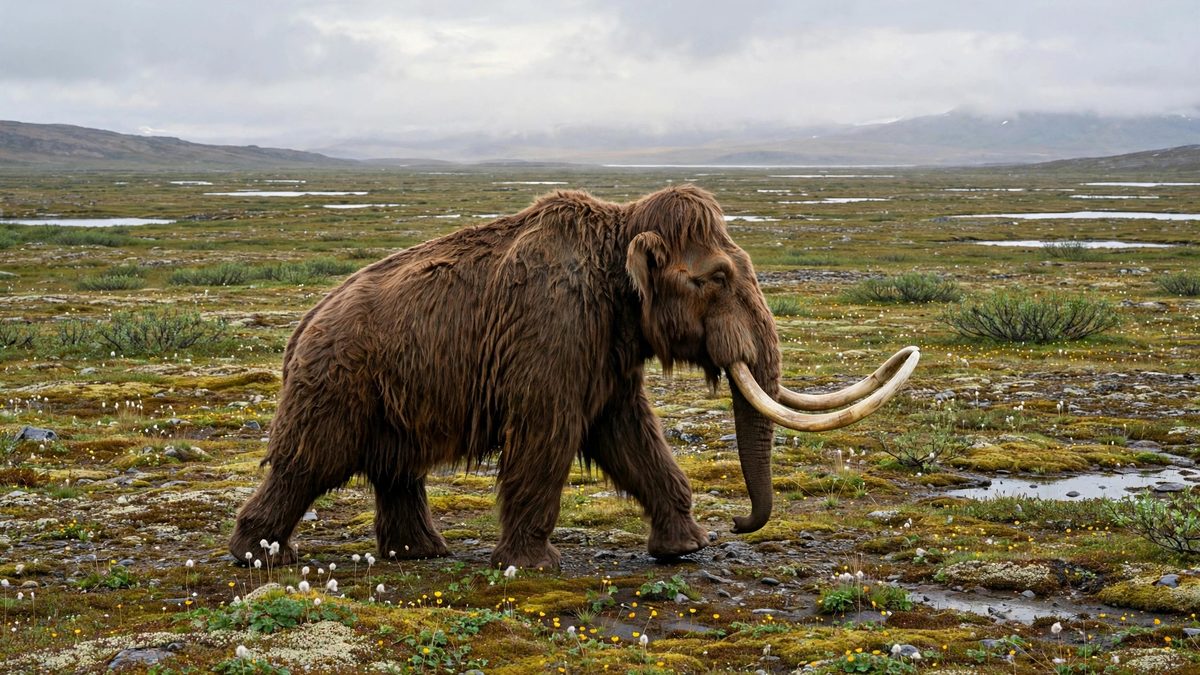
Woolly mammoths were still walking the Arctic when builders finished the Great Pyramid of Giza. The last mammoths died around 1700 BC, more than a thousand years after the pyramid was completed around 2560 BC.
An island cut off by the sea
On the mainland, the story had ended long before. Woolly mammoths vanished from mainland Siberia and North America about 10,000 to 12,000 years ago as the climate warmed at the end of the last ice age.
One population escaped that ending. It lived on Wrangel Island in the Arctic Ocean north of Siberia. The island is about the size of Delaware. Rising seas cut it off from the mainland about 12,000 years ago, and the water formed a barrier that kept the mammoths safe and alone.
Radiocarbon dating of bones and tusks found on Wrangel Island shows mammoths alive there until about 1700 BC, roughly 4,000 years ago. EarthSky reports a similar date, with survival until about 1650 BC. By either count, these animals outlived the pyramid builders by centuries.
Another island, another ending
Wrangel Island was not the only refuge. A second holdout population survived on St. Paul Island in Alaska until about 5,600 years ago.
That group left a clearer clue about its end. A study published in the Proceedings of the National Academy of Sciences found that dwindling fresh water likely killed the St. Paul mammoths. As the island shrank and its lakes dried or turned salty, the animals ran short of water to drink.
Eight founders and a comeback
For years, scientists assumed inbreeding doomed the Wrangel herd. A small island colony should pile up harmful mutations over time. The DNA tells a different story.
A 2024 study in the journal Cell, led by Love Dalen of Stockholm University, sequenced 21 Wrangel mammoth genomes. The team found that the colony grew from about 8 breeding individuals to between 200 and 300 animals within 20 generations. Harmful inbreeding mutations were gradually purged, and the researchers concluded that inbreeding alone did not kill them.
A death with no clear culprit
People did not do it either. Humans reached Wrangel Island about 400 years after the mammoths died out, so no hunters were there at the end.
That leaves a mystery. The final cause is unknown. The researchers say a random event, such as a disease outbreak or a severe storm, may have finished a herd that had survived for thousands of years. The mammoths of Wrangel Island did not fade away slowly. They endured, recovered, and then vanished suddenly, in a world that already had pyramids, farms, and cities.