
The Eiffel Tower Does Not Grow Six Inches in Summer. The Real Movement Is Stranger.
Heat adds a few millimetres of height in summer. Over a clear day, the top of the tower also draws a slow circle about 15 centimetres wide.
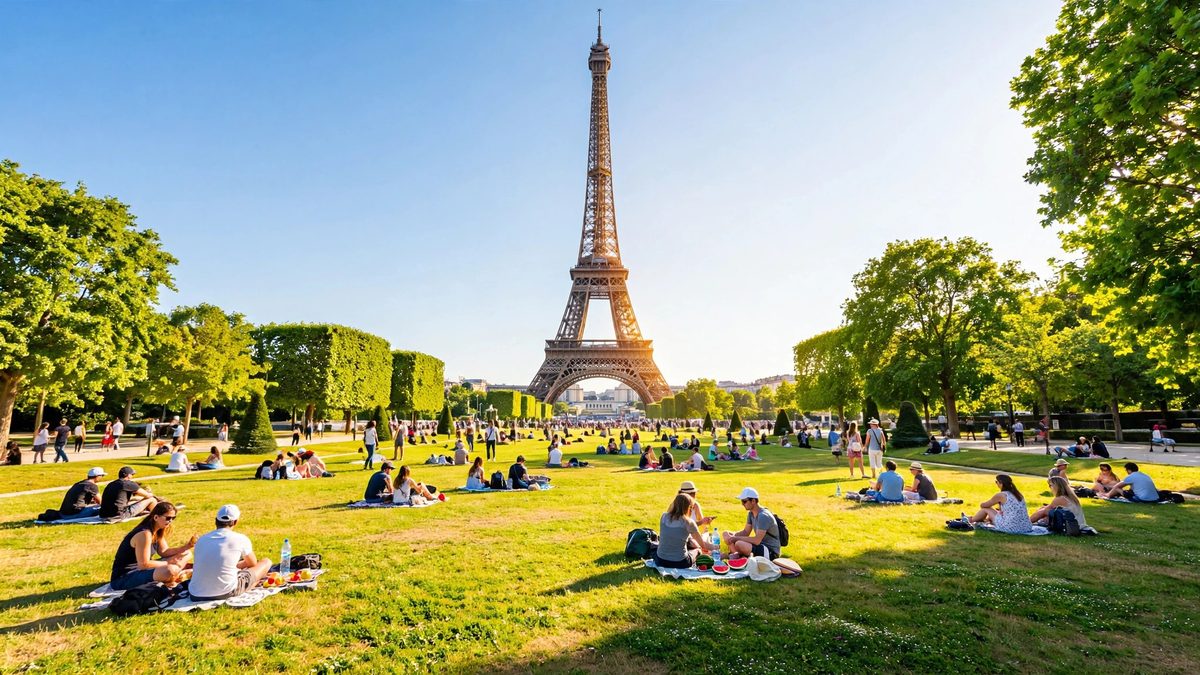
Key points
- No, the Eiffel Tower does not grow 15 centimetres taller in summer.
- The tower is built of puddled iron and now measures 330 metres including its antennas.
- The official Eiffel Tower website gives a modest figure for the height change.
No, the Eiffel Tower does not grow 15 centimetres taller in summer. Heat adds only a few millimetres to its height. The famous 15 centimetre figure is real, but it measures something else. It is the width of the slow circle that the top of the tower traces over the course of a clear day.
A tower built from puddled iron
The tower is built of puddled iron and now measures 330 metres including its antennas. Iron responds to temperature. When iron warms, its atoms move farther apart and the metal takes up more space. When iron cools, the metal contracts. Engineers call this thermal expansion, and it affects bridges, rails, and towers as well as small metal parts.
The official Eiffel Tower website gives a modest figure for the height change. When temperatures rise, the iron expands and the tower gains a few millimetres in height in summer. In winter cold, the tower contracts and loses a few millimetres. A few millimetres on a structure 330 metres tall is hard to spot, and no visitor could feel it.
The lean that draws a circle
The 15 centimetres enter the story through sunlight, not height. The sun heats only one of the tower's four sides at a time. That side expands more than the shaded sides. The tower therefore leans slightly away from the sun.
As the sun moves across the sky, the heated side changes and the lean shifts with it. Over a clear day, the official site explains, the top of the tower moves in a more or less circular curve. That curve measures approximately 15 centimetres in diameter. In other words, the tip travels around a small circle. It does not rise 15 centimetres above its winter height.
How the wrong version spread
The two numbers are easy to mix up. Both involve heat, iron, and the same tower. A statement about the width of a daily path can turn into a claim about extra height as it is copied from page to page.
Mike Caulfield traced that spread in a fact checking analysis of the claim. University and textbook sources, including a Purdue University materials page, have repeated 15 centimetres as a height gain. Each repetition gave the wrong version more authority, even though the official account separates the small height change from the wider daily movement of the tip.
What visitors would notice
The official site says these changes are imperceptible to visitors. They also have no impact on the strength of the structure. The tower was built to flex within safe limits, and its iron frame handles daily heating and cooling as a normal part of life outdoors.
Wind, in fact, moves the tower more than heat does. Strong gusts push the top farther than sunlight shifts it. For safety, the top of the tower can be closed in high winds. Heat draws a small, slow circle at the summit. Wind is the force that staff watch with real care.