
The Croissant Is Not French. It Arrived in Paris From Vienna in 1838.
The croissant began as the kipferl, an Austrian crescent pastry with centuries of history, and French bakers turned it into the flaky icon Paris is famous for.
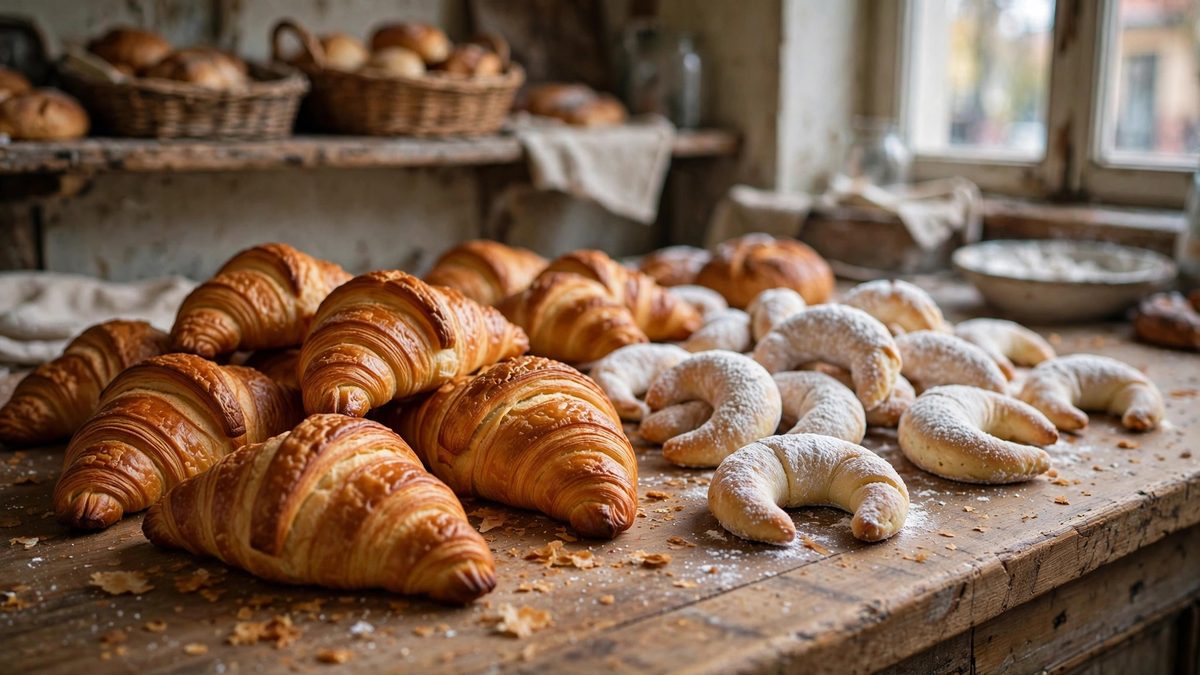
Key points
- The croissant is not French by birth.
- Walk into a bakery in Paris today and the croissant feels like the most French object in the room.
- In Austria and Germany today, a kipferl is usually a crescent cookie or roll.
The croissant is not French by birth. It began in Austria as the kipferl, a crescent shaped pastry documented there since at least the 13th century, and it reached Paris only in 1838.
Walk into a bakery in Paris today and the croissant feels like the most French object in the room. Its name is French, its fame is French, and its flaky layers are French work. Its shape and its first home are not.
An Austrian pastry with a long past
In Austria and Germany today, a kipferl is usually a crescent cookie or roll. It is often denser and sweeter than a croissant. Bakers there were making crescent shaped pastries for centuries before anyone in Paris sold one under the name croissant.
That long record matters because it separates the pastry from the stories told about it later. The kipferl did not need a war or a queen to exist. It was already an ordinary Austrian bake with a documented history.
Two famous stories with no evidence
One story says Viennese bakers invented the crescent shape in 1683 to celebrate defeating the Ottoman siege of their city. Another story says Marie Antoinette brought the pastry with her from Vienna to France.
Both stories are legends without evidence. Historian Jim Chevallier notes that there are no references to the croissant in France before about 1850. He also notes that there is no evidence for the Marie Antoinette story. A good story can travel for centuries. That does not make it a record.
The bakery that actually brought it
The documented route runs through a business, not a battle. Austrian entrepreneur August Zang opened the first Viennese bakery in Paris in 1838, at 92 rue de Richelieu. Some records give the year as 1839.
Zang sold kipferl, Vienna bread and kaiser rolls, and Parisians lined up for them. The shop drew crowds, and other bakers copied the idea fast. By 1840, Paris already had at least a dozen makers of Viennese bread. The Austrian import had quickly become a Paris trade.
How France made it its own
French bakers then changed the pastry itself. They remade it with laminated puff pastry, a French technique of folding butter into dough in thin layers. That change gave the croissant its light, flaky pull, which the denser kipferl does not have.
Chevallier sums up the split this way: the croissant began as the Austrian kipferl, but it "became French the moment people began to make it with puffed pastry." The shape came from Vienna. The layers came from France.
The first recorded recipe for the modern laminated croissant appeared in the early 1900s. In 1915, Sylvain Claudius Goy published a version made with laminated yeast dough. By then the pastry had a history in both cities, and Paris had the stronger claim on the finished thing.
So the honest label is a shared one. Austria supplied the crescent and the centuries of practice behind it. France supplied the technique that turned it into the croissant the world knows now.