
The Coelacanth Was Extinct for 66 Million Years, Until a Trawler Caught One in 1938
Science knew this big lobe finned fish only from fossils, and its record ended with the dinosaurs. Then a museum curator in South Africa spotted one in a pile of dockside fish, days before Christmas.
Key points
- Every fossil said the coelacanth was gone.
- Then, on December 22, 1938, a fishing trawler working off the east coast of South Africa, near the mouth of the Chalumna River, pulled up a fish nobody on board could name.
- Courtenay-Latimer had no reference book that matched it, but she knew old when she saw it.
Every fossil said the coelacanth was gone. The rocks held its kind for hundreds of millions of years, and then, about 66 million years ago, at the same boundary that ended the dinosaurs, the record stopped. Case closed, for generations of scientists.
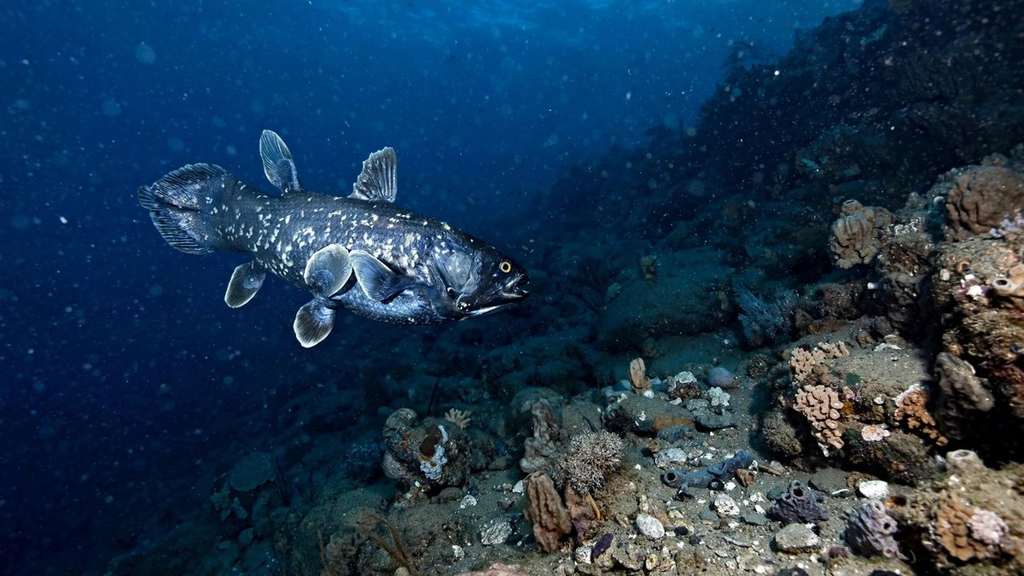
Then, on December 22, 1938, a fishing trawler working off the east coast of South Africa, near the mouth of the Chalumna River, pulled up a fish nobody on board could name. The captain thought of the one person who always asked to see anything strange: Marjorie Courtenay-Latimer, curator of the small museum in East London. She came to the docks, dug through the catch, and found a fin sticking out of the pile. Under it was a creature about five feet long, blue, with fleshy lobed fins that looked partway to legs.
A fossil, alive, in the back of a taxi
Courtenay-Latimer had no reference book that matched it, but she knew old when she saw it. She had the fish taken to the museum and contacted J.L.B. Smith, a fish specialist at Rhodes University, sending him a sketch and scales. Transport and the holidays slowed everything. Smith did not see the specimen until February 16, 1939. His verdict made the fish famous around the world: it was a living coelacanth, a member of a group the scientific world believed had died out 66 million years earlier. The species was described in 1939 as Latimeria chalumnae, named for the curator who saved it and the river near where it was caught.
Smithsonian's Ocean portal tells the same story with the wider frame: coelacanth fossils reach back to the Devonian period, about 420 million years ago, and for most of a century of fossil hunting not one younger than the age of the dinosaurs had ever turned up. A single live fish rewrote that ending in one afternoon.
It had cousins, and they were hiding too
The 1938 fish was not a lone stray that proved easy to find again. Fourteen years passed before a second specimen surfaced, near the Comoros islands. Then, in 1998, nearly 6,000 miles to the east, coelacanths were caught off northern Sulawesi in Indonesia. That population proved to be a second living species, Latimeria menadoensis. The genus had been down there the whole time, in deep water along steep coasts, out of reach of the nets and eyes that had declared it extinct.
The coelacanth matters beyond the surprise. It is a lobe finned fish, part of the sarcopterygian lineage that also gave rise to land vertebrates, the group that includes us. Its fleshy fins carry bones arranged in a pattern that echoes the limbs of four legged animals. Studying how it moves and lives gives researchers a working model from a branch of the family tree that mostly survives only as stone.
Scientists call a return like this a Lazarus taxon, a line that vanishes from the fossil record and then walks back into the present. The coelacanth is the most famous case on Earth, and it is not safe: the known populations are small, and the West Indian Ocean species is listed as critically endangered. The fish survived the asteroid. Whether it survives us is a different question.