
This Antarctic Valley Has Had No Rain for About Two Million Years
The McMurdo Dry Valleys are the driest place on Earth. Wind, mountains and bitter cold keep rain and snow out, and scientists study the bare ground as a close match for Mars.
Key points
- Parts of the McMurdo Dry Valleys in Antarctica have had no rain for about two million years.
- The valleys sit in Victoria Land, west of McMurdo Sound, and cover about 4,800 square kilometres.
- Three things keep the valleys dry.
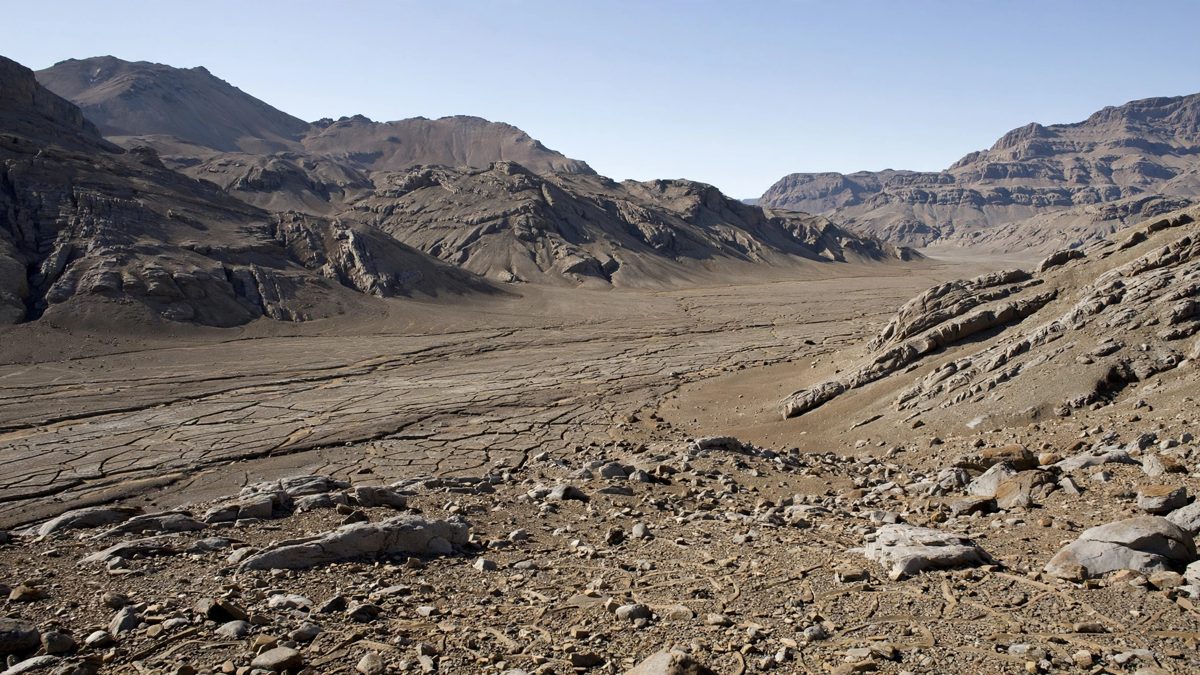
Parts of the McMurdo Dry Valleys in Antarctica have had no rain for about two million years. The ground there is bare rock and gravel, with no snow cover and no ice sheet, in the middle of the coldest continent on Earth.
A desert made of cold
The valleys sit in Victoria Land, west of McMurdo Sound, and cover about 4,800 square kilometres. They form the largest ice free region in Antarctica. A desert is defined by how little water falls, not by heat, and by that measure this polar desert beats every hot desert on the planet.
Three things keep the valleys dry. High mountains block moist air moving in from the sea, so clouds rarely reach the valley floors. The air itself is so cold that it holds very little water vapour. Then come the katabatic winds. Cold, dense air pours downhill from the high Antarctic plateau and can reach about 320 kilometres per hour. As that air descends it warms, and it strips moisture from the ground. Snow that lands does not melt into puddles. It turns straight from ice into vapour, a process called sublimation, and vanishes.
Lakes that never open
The valleys are not fully empty. Glaciers sit along the valley sides, and in summer a small amount of meltwater runs in short streams. Lakes on the valley floors stay covered by thick ice all year. Under that ice, mats of microbes live in dark, salty water. Other microbes live inside rocks, where a thin film of moisture and light through the stone give them just enough to survive.
Seals that wandered inland long ago died there and dried out instead of rotting. Their mummified bodies, some hundreds of years old, still lie on the gravel. In a wet place they would have broken down in months. Here the dry air preserved them.
Why scientists treat it like Mars
Researchers describe the Dry Valleys as the place on Earth that comes closest to conditions on Mars. The soil is dry, cold and poor in nutrients, the light is harsh, and life holds on at the very edge of what is possible. Space agencies and university teams use the valleys to test instruments and drills built for Mars missions, and to learn what signs of life a rover should look for in dry soil.
That is the real surprise of the valleys. The driest place on a planet covered mostly by ocean is not in the Sahara or in Chile. It sits at the bottom of the world, surrounded by ice, kept dry by wind for about two million years.