
Earth Has More Trees Than the Milky Way Has Stars
A global count in Nature put Earth at about 3.04 trillion trees. NASA puts the Milky Way at 100 to 400 billion stars. The trees win by a wide margin.
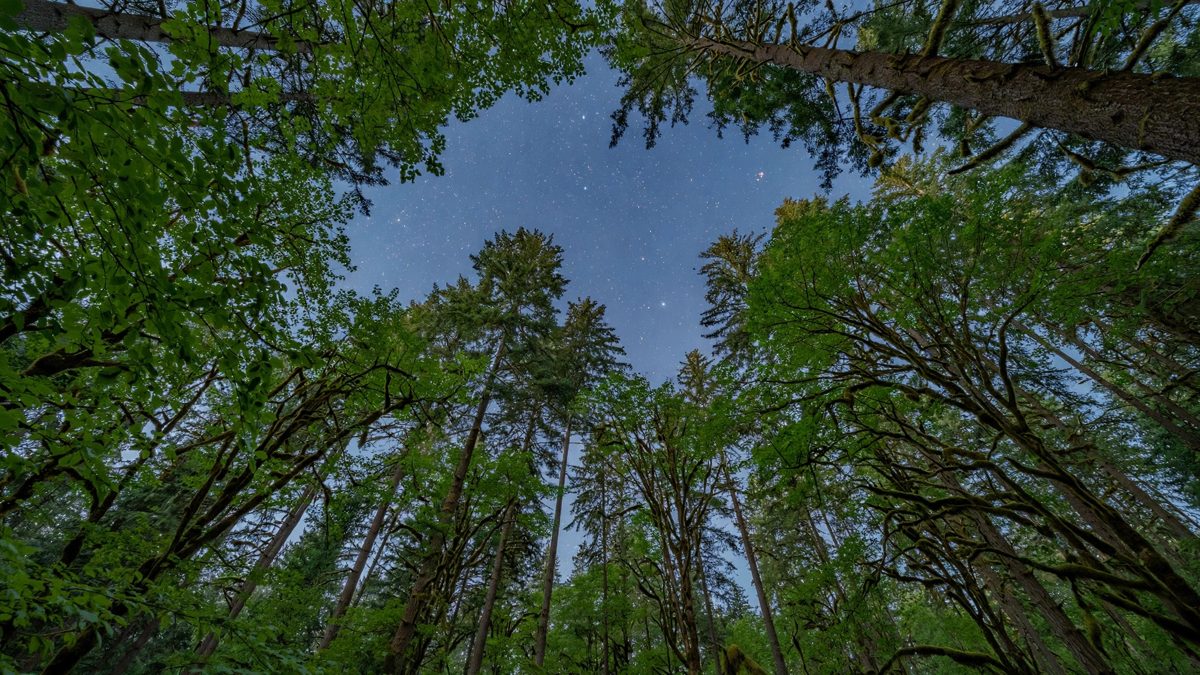
Key points
- Earth holds about 3.04 trillion trees.
- The tree figure comes from a 2015 study in the journal Nature, led by Thomas Crowther and a large international team.
- The ground data changed the answer.
Earth holds about 3.04 trillion trees. The Milky Way holds an estimated 100 to 400 billion stars. Put side by side, this one planet has at least seven times more trees than our whole galaxy has stars, and the true gap may be far larger.
Where the tree number came from
The tree figure comes from a 2015 study in the journal Nature, led by Thomas Crowther and a large international team. Earlier estimates, built mostly from satellite images of forest area, put the global total near 400 billion. The new team added more than 400,000 ground measurements of tree density, taken in forests and other biomes, and matched them to satellite data.
The ground data changed the answer. Counting only from above missed how dense many forests really are. The revised total landed near 3.04 trillion, about eight times the older figure. The study counted a tree as a woody plant with a stem at least 10 centimetres across at breast height, so shrubs and seedlings are not in the number.
Why the star number is a range
No one can photograph the Milky Way from outside and count its stars one by one. Astronomers work from the galaxy's mass and brightness, then estimate how many stars that light implies. Small faint red stars are hard to detect and change the total a lot, which is why NASA gives a wide range of 100 to 400 billion. Even at the very top of that range, the star count stays well below the tree count.
Most of the galaxy's mass is not stars at all. Dark matter, gas and dust make up a large share, so a heavier galaxy does not mean trillions more stars.
The number is falling fast
The same Nature study carried a warning. It estimated that people cut down more than 15 billion trees a year, and that the global tree count has fallen by about 46 percent since the start of human civilisation. Tropical and subtropical forests hold the largest share of the remaining trees, followed by the great northern forests of Russia and Canada.
The comparison works because both numbers are hard to picture. Three trillion is not a count anyone made by hand. It is a careful estimate, and it can shrink. For now, a walk through a dense forest puts you among more living trunks than there are stars overhead in the entire Milky Way.