
Why a Ripe Banana Makes the Fruit Next to It Ripen Faster
Bananas give off ethylene, a natural plant hormone in gas form. It tells nearby fruit to soften, sweeten and change colour, which is why one ripe banana can push a whole fruit bowl over the edge.
Key points
- A ripe banana releases a gas called ethylene, and that gas tells the fruit around it to ripen.
- Ethylene is a plant hormone that travels through the air.
- Inside the fruit, ethylene drives three changes people can see and taste.
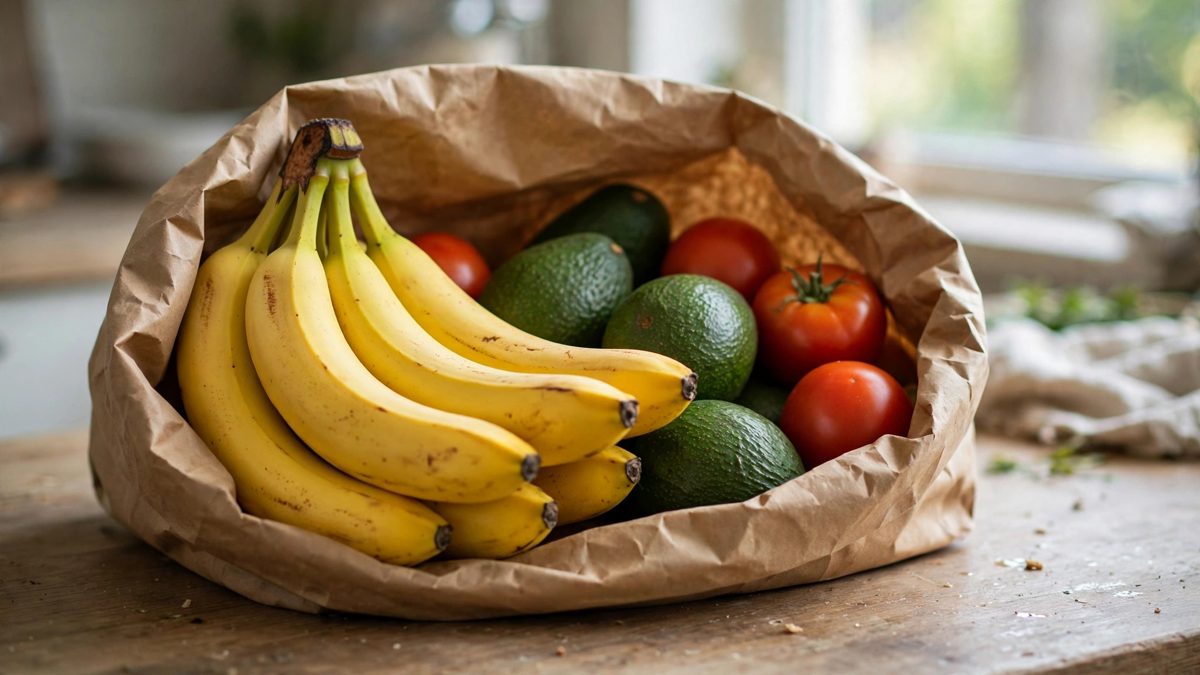
A ripe banana releases a gas called ethylene, and that gas tells the fruit around it to ripen. Put a ripe banana in a paper bag with a hard avocado or a green tomato, and the second fruit will soften and sweeten far faster than it would on its own.
A hormone you cannot see
Ethylene is a plant hormone that travels through the air. Many fruits make it as they ripen, and bananas are strong producers. When a banana ripens, its ethylene output rises sharply. The gas switches on ripening genes in the banana itself, and it does the same work in any fruit close enough to breathe it in.
Inside the fruit, ethylene drives three changes people can see and taste. Starches turn into sugars, so the fruit gets sweeter. Green pigments break down, so skins and flesh take on ripe colours. Cell walls soften as pectin breaks down, so a hard pear or avocado yields to the thumb.
Fruit scientists sort produce into two groups. Climacteric fruit, such as bananas, apples, avocados, pears, peaches and tomatoes, keep ripening after harvest and respond strongly to ethylene. Non climacteric fruit, such as grapes, strawberries and citrus, ripen on the plant and respond far less. The banana trick works on the first group and does little for the second.
Why the paper bag works
A paper bag does not add heat or magic. It traps the gas. Ethylene that would drift away in an open kitchen builds up inside the bag, so the fruit sits in a stronger dose and ripens sooner. The bag still lets a little air move, which matters, because a sealed plastic bag traps moisture too and can push fruit toward mould.
Shops use the same science at a far larger scale. Bananas are shipped hard and green, then held in ripening rooms where a measured dose of ethylene starts the process on schedule. At home the effect runs the other way just as well. To slow ripening, keep bananas apart from other fruit, because the bunch will push apples and avocados to soften before you want them.
So the old kitchen tip is real chemistry. One ripe banana is a small gas factory, and every climacteric fruit near it takes the signal as an order to ripen now.