
Cilantro Tastes Like Soap to Some People. Their Genes Are the Reason.
The same leaf tastes bright and citrusy to one person and like a mouthful of soap to another. The difference sits in a smell receptor gene called OR6A2, and the chemistry is real.
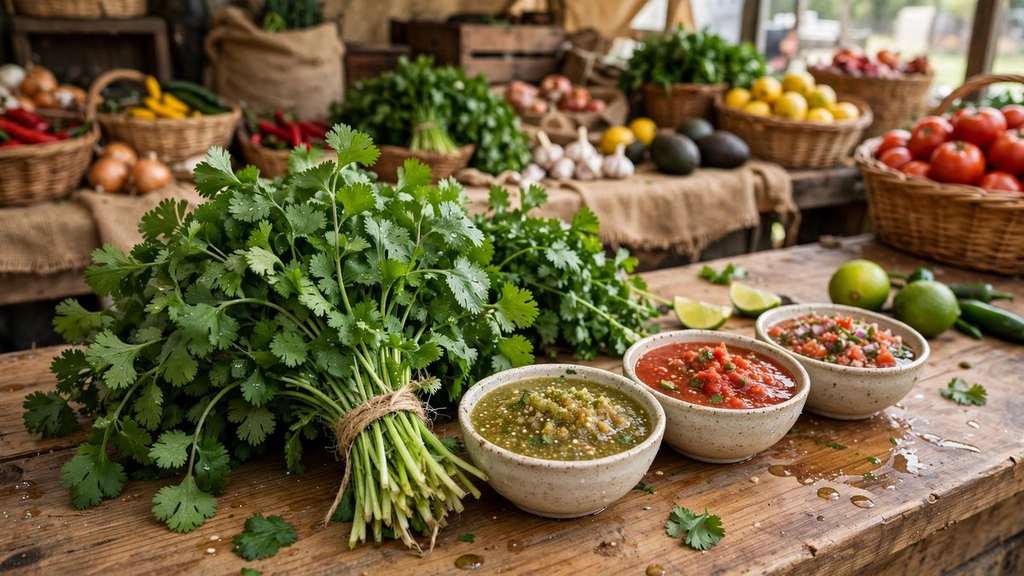
Key points
- Few foods split a dinner table like cilantro.
- This is not pickiness and it is not snobbery in either direction.
- Cilantro leaves are rich in chemicals called aldehydes.
Few foods split a dinner table like cilantro. One person tastes something fresh and lemony. The person next to them tastes soap, lotion, or a crushed bug, and cannot understand how anyone eats the stuff on purpose. Both are telling the truth. They are, in a measurable sense, tasting different foods.
This is not pickiness and it is not snobbery in either direction. It is chemistry meeting genetics.
The soap connection is literal chemistry
Cilantro leaves are rich in chemicals called aldehydes. Aldehydes are a family of compounds that show up in many strong smells. Some of the same aldehydes in cilantro also appear in soaps and lotions, which is why the comparison is so specific. People who dislike cilantro rarely say it tastes bad in a general way. They say soap, and they say it immediately, because their noses are picking out the same molecules that scent a bar of soap.
Most people register those aldehydes as a background note under the leaf's fresher flavours. For a minority, the aldehyde note is the whole experience.
One gene near the nose
In 2012, geneticist Nicholas Eriksson and colleagues published a genome wide study in the journal Flavour, built on data from tens of thousands of research participants. They found that a small variation in DNA near a gene called OR6A2 tracked closely with whether a person described cilantro as soapy and whether they liked it.
OR6A2 codes for a smell receptor, one of the detectors in the nose that responds to airborne chemicals. The receptor is sensitive to aldehydes. Carrying the variant seems to turn the volume up on exactly the compounds that make cilantro taste like soap. The study also estimated how the trait runs in families, and twin and family data point the same way: two people can inherit genuinely different versions of the same meal.
Surveys put the soapy share at roughly 4 to 14 percent of people, with clear patterns by ancestry. Rates run higher among people of East Asian and European descent and lower among people of South Asian, Middle Eastern and Hispanic backgrounds, groups whose cuisines have used cilantro heavily for centuries. That pattern is suggestive rather than settled, but it fits a simple idea: where fewer people carry the soap variant, the herb had an easier path into everyday cooking.
Not picky, just wired differently
A gene is not the whole story. The OR6A2 variation explains part of the effect, not all of it, and researchers are careful on this point. Exposure matters too. People often soften toward cilantro over time, and crushing the leaves changes the chemistry, breaking down some of the sharpest aldehydes before the leaf reaches the plate. Cooks in cilantro loving cuisines have practical tricks that do the same job, pairing the herb with lime, chilli, and fat, which round out its edges.
Still, the core fact stands and it settles a thousand kitchen arguments. When someone pushes cilantro to the side of the plate, they are probably not being difficult. Their nose handed their brain a different dish. The leaf did not change. The taster did.