
A Clam Named Ming Lived 507 Years. It Was Born Before Shakespeare.
An ocean quahog pulled from the seabed off Iceland in 2006 turned out to be the oldest individual animal ever measured. Its shell held five centuries of ocean history.
Key points
- The oldest individual animal ever found was not an elephant, a tortoise, or a whale.
- The clam was an ocean quahog, a hard shelled mollusc with the scientific name Arctica islandica.
- A birth year of 1499 puts the clam in a different world.
The oldest individual animal ever found was not an elephant, a tortoise, or a whale. It was a clam, and it was already 100 years old when Shakespeare was born.
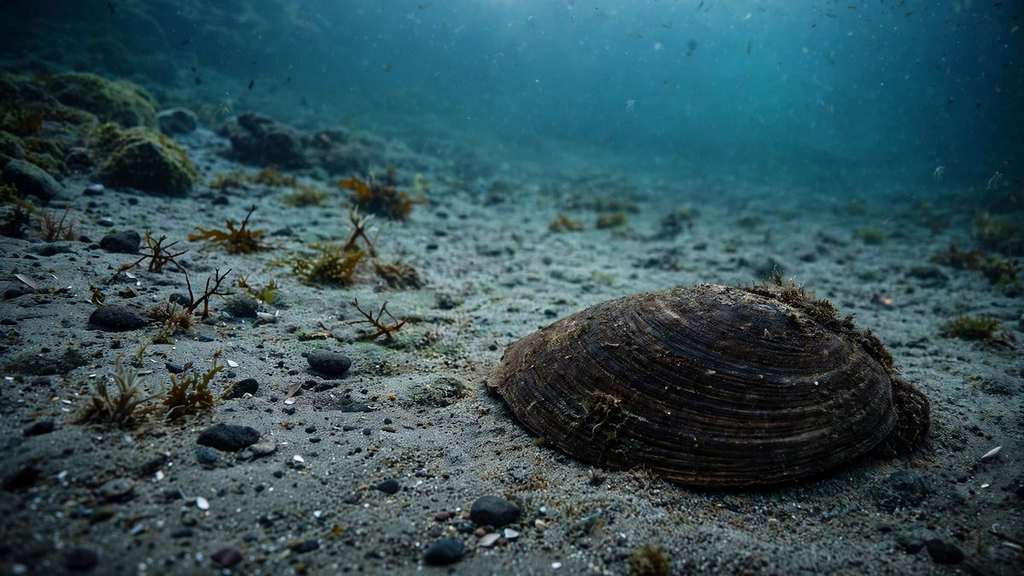
The clam was an ocean quahog, a hard shelled mollusc with the scientific name Arctica islandica. A research team from Bangor University in Wales dredged it from the seabed off the north coast of Iceland in 2006. The team was collecting shells to study how the ocean climate had changed over the past 1,000 years. Nobody on the ship knew that one plain dark shell in the catch had started life in the year 1499.
Born in the age of Columbus
A birth year of 1499 puts the clam in a different world. Leonardo da Vinci was painting in Italy. Christopher Columbus was still sailing between Spain and the Caribbean. Henry VIII had not yet taken the English throne. The clam settled into the cold sediment of the North Atlantic and stayed there, filtering seawater and growing very, very slowly, while all of human history after 1499 happened above it.
Researchers later nicknamed it Ming, after the Ming dynasty that ruled China when the clam was born. The name stuck even after the clam turned out to be older than its first estimate.
Counting years in a shell
Clams write their age into their shells. Each year adds a growth band, much like the rings in a tree trunk, and scientists who study those bands can count backward through a shell's life. The field is called sclerochronology.
The first count, announced in 2007, put Ming at between 405 and 410 years old, already a record. In November 2013 the Bangor team published a revised count using more careful methods, including carbon dating checks. The rings near the hinge of the shell were packed so tightly that the first count had missed about a century. The corrected age was 507 years.
Guinness World Records lists Ming as the oldest mollusc ever recorded and as the longest lived non colonial animal ever discovered. Non colonial matters here. Corals and similar creatures are colonies made of many connected animals. Ming was one single animal, alive for half a millennium.
Why a clam can live so long
Life on the cold Icelandic seabed runs slowly. Ocean quahogs grow slowly, mature late, and spend their adult lives half buried in sediment, filtering food from the water and asking little of the world. That slow pace is part of how the species reaches ages no land animal can match. The shells are also useful long after the animal dies. Because each band records the water conditions of its year, a 507 year shell is a five century archive of North Atlantic temperatures and currents, which is exactly what the Bangor team had gone to sea to find.
A record with an awkward ending
Ming did not survive its discovery. Like the other shells in the 2006 catch, it was frozen aboard the research ship as a routine step, long before anyone counted its rings. The age was only measured afterward, from the dead shell. The researchers took public criticism for it in 2013 and answered honestly: they had no way to know the clam's age while it was alive.
There is a fair chance Ming was not even the oldest quahog on that seabed. It is simply the oldest one science has ever opened and counted. Somewhere in the cold dark water off Iceland, an older clam may still be down there, adding one thin ring at a time.