
One Day on Mercury Lasts Two Mercury Years
Mercury races around the Sun in 88 Earth days, yet a single sunrise to sunrise day there takes 176 Earth days. The planet turns three times for every two trips around the Sun.
Key points
- Stand on Mercury at sunrise and you would wait two full Mercury years for the next one.
- The confusion comes from two different clocks.
- Earth hides this effect because it spins fast.
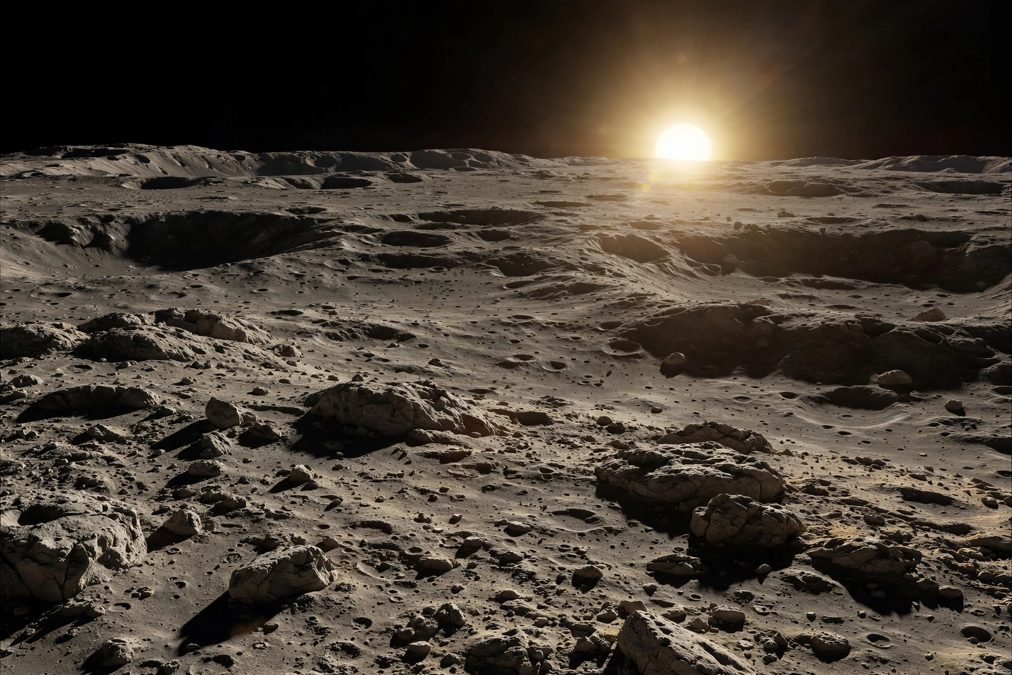
Stand on Mercury at sunrise and you would wait two full Mercury years for the next one. NASA puts one Mercury solar day, one full day and night cycle, at 176 Earth days. A Mercury year, one trip around the Sun, takes only 88 Earth days. The day is twice as long as the year.
Two clocks that disagree
The confusion comes from two different clocks. Mercury spins on its axis once every 59 Earth days. That is its rotation, measured against the distant stars. But while it turns, it is also speeding along its orbit. By the time a spot on the surface has turned back toward the Sun, the planet has moved so far around its orbit that the Sun has not yet returned to the same place in the sky. The surface has to keep turning. Sunrise to sunrise therefore takes 176 Earth days, not 59.
Earth hides this effect because it spins fast. Our rotation takes one day and our orbit takes 365 days, so the gap between the star clock and the Sun clock is only about four minutes. On Mercury the spin is slow and the orbit is fast, and the gap grows to months.
Locked in a three to two rhythm
Mercury is not turning at random. It sits in what astronomers call a 3:2 spin orbit resonance. The planet rotates exactly three times for every two orbits of the Sun. The Sun's gravity, pulling on a planet with a stretched, egg shaped orbit, settled Mercury into that rhythm long ago and holds it there.
For centuries astronomers got this wrong. Through a telescope Mercury is small and hard to read, and most observers assumed it kept one face to the Sun, the way the Moon keeps one face to Earth. Radar measurements in 1965 proved the spin took about 59 days. The Italian astronomer Giuseppe Colombo then worked out the three to two pattern that explained the numbers.
What a two year day does to the ground
A day that long bakes one side and freezes the other. The side facing the Sun heats up for weeks on end, while the night side sits in darkness for just as long and drops to bitter cold. NASA missions, first Mariner 10 and then Messenger, which orbited Mercury from 2011 to 2015, mapped a world of craters where ice can survive in shadowed polar craters even on the planet closest to the Sun.
The lesson travels well beyond Mercury. A day is not a spin. A day is the Sun coming back. On any world where the spin and the orbit run at close speeds, those two measures split apart, and a calendar built on one will break on the other.