
A Storm Bigger Than Earth Has Been Raging on Jupiter for More Than 300 Years
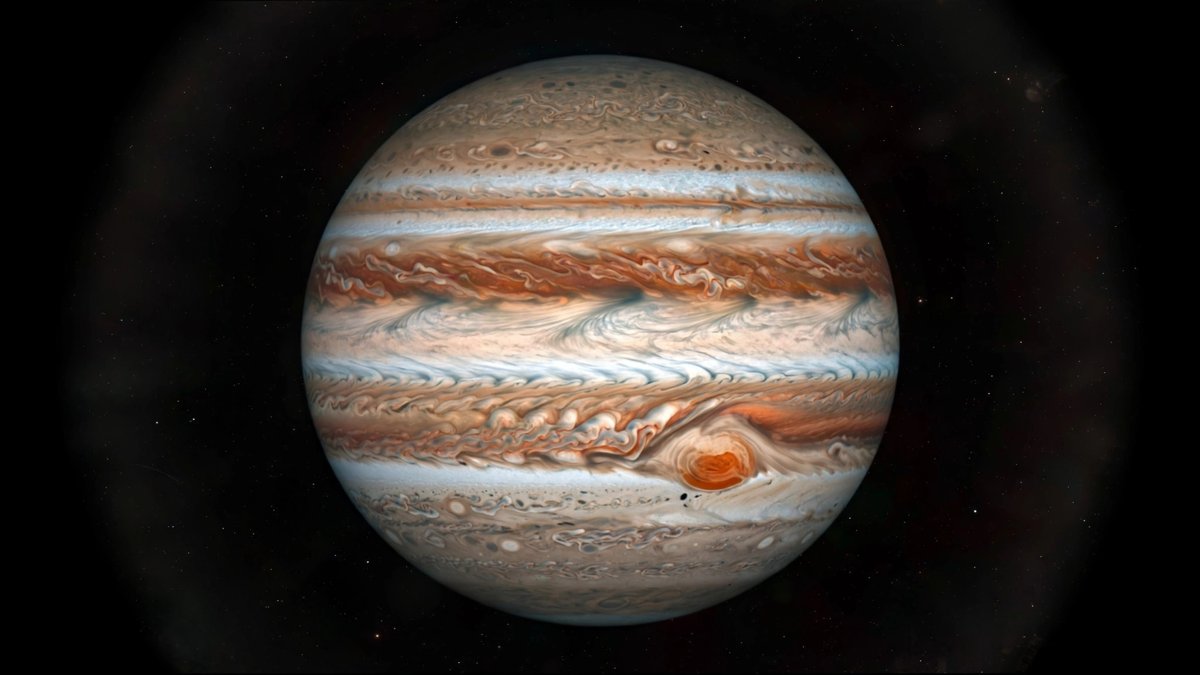
Astronomers saw the Great Red Spot through 17th century telescopes, and it is still spinning today. NASA's Juno spacecraft found its roots reach about 300 miles below the cloud tops.
Key points
- The longest running weather report in the solar system is more than 300 years old, and the storm has not stopped.
- NASA states the fact flatly: the Great Red Spot is a giant storm bigger than Earth that has raged for hundreds of years.
- Storms on Earth die when they cross land or run out of warm water.
The longest running weather report in the solar system is more than 300 years old, and the storm has not stopped. Jupiter's Great Red Spot is a vast spinning storm, wider than the entire Earth, and astronomers were already watching it through small telescopes in the 1600s.
NASA states the fact flatly: the Great Red Spot is a giant storm bigger than Earth that has raged for hundreds of years. Hubble Space Telescope measurements put its length at 15,400 miles, almost twice the size of the Earth and one sixth the diameter of Jupiter itself. Winds inside it reach about 270 miles per hour.
A cyclone with no ground to hit
Storms on Earth die when they cross land or run out of warm water. The Great Red Spot has neither problem. Jupiter is a gas giant, 11 times wider than Earth, with no solid surface under its clouds. There is no coastline to break the storm's spin and no ground friction to slow it. NASA notes that the spot's long life may come from exactly that: a storm turning in a deep ocean of gas has little to stop it.
The spot spins counterclockwise, like a cyclone running in reverse as a high pressure system. It sits in Jupiter's southern hemisphere, rolling between two jet streams that feed it energy from either side, the way two conveyor belts keep a ball spinning between them.
Juno looked underneath it
For centuries the spot was a surface feature, a red oval painted on the clouds. NASA's Juno spacecraft, which reached Jupiter in 2016, measured what lies below. Using gravity data, the Juno team pinned the storm's depth to about 300 miles below the cloud tops. That is far deeper than any Earth storm, which lives in an atmosphere only a few miles thick, yet shallow compared with Jupiter's immense bulk. The spot is a deep whirlpool with a visible top, not a thin stain.
Its color is still not fully settled science. The red comes from chemicals in the upper clouds broken apart by sunlight, but the exact mix is debated, and the spot has shifted between red, orange, and pale tones over the years of watching. The honest summary: the largest known storm in the solar system has outlived every telescope that first saw it, every astronomer who named it, and every nation that has ever pointed a lens at it. It was old when Newton was young. It is spinning tonight.