
Butterflies Taste With Their Feet, and a Mother Drums a Leaf Before She Trusts It
Most of a butterfly's taste sensors sit on its feet. A female lands on a leaf, drums it with her feet to release the juices, and reads the chemistry before she lays a single egg.
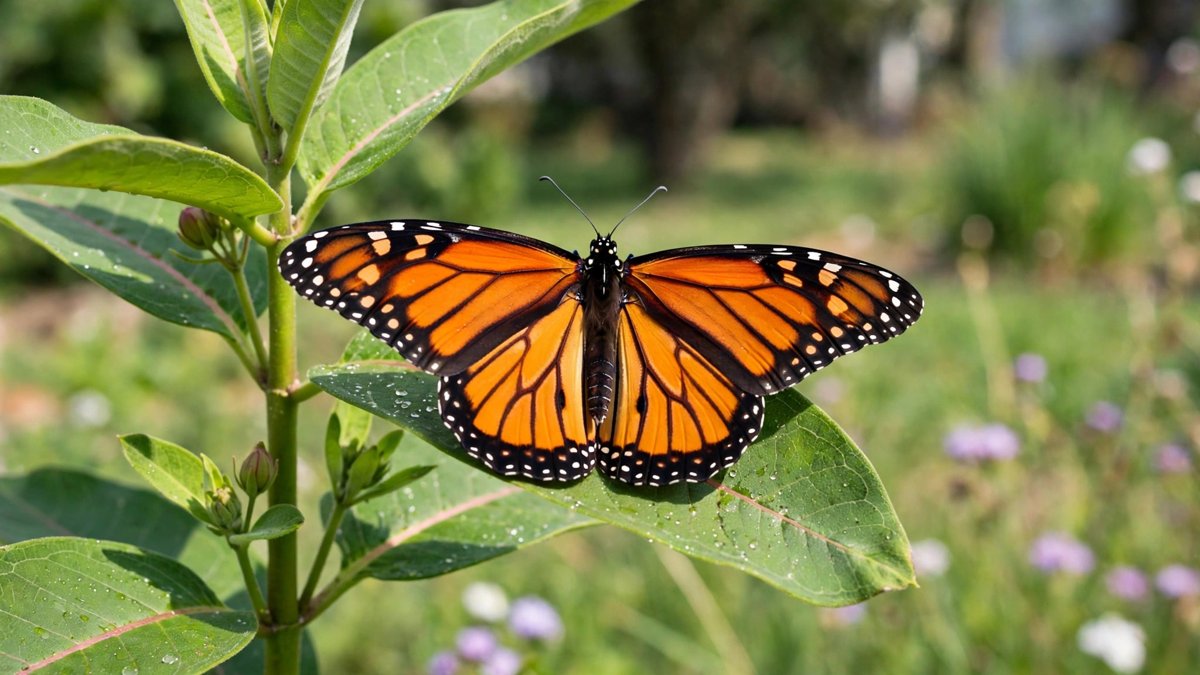
Key points
- A butterfly tastes dinner by standing on it.
- The sensors are chemoreceptors, nerve cells that react to chemicals on contact.
- For a feeding butterfly, the feet give a fast first verdict on what is under them: sweet, salty, bitter, worth unrolling the proboscis for, or not.
A butterfly tastes dinner by standing on it. Most of the insect's taste sensors are not in its mouth. They are on its feet.
The sensors are chemoreceptors, nerve cells that react to chemicals on contact. The Florida Museum of Natural History, which runs a live Butterfly Rainforest exhibit, puts it plainly: butterflies do have some taste receptors on the proboscis, the long drinking tube, and on the antennae, but most of their taste buds are focused on their feet. A butterfly that lands on you in the exhibit can probably taste you.
Landing is the first bite
For a feeding butterfly, the feet give a fast first verdict on what is under them: sweet, salty, bitter, worth unrolling the proboscis for, or not. Biologists at Carleton University in Canada describe the same system. Contact chemoreceptors on the legs work the way taste buds on a human tongue do, except the tasting happens at the point of contact with whatever the insect is standing on.
The stakes are highest for a mother. A female butterfly does not eat the leaves she inspects most carefully. Her caterpillars will. Many caterpillar species can eat only a narrow set of plants, and the wrong leaf means starving young. So the female drums the leaf surface with her feet. The drumming scratches and presses the leaf and releases plant juices onto her sensors. She reads the chemical signature and decides: this plant, or keep flying.
A tongue would be too slow
The arrangement sounds like a joke until the job is clear. A butterfly samples dozens of plants on a single flight. Tasting by landing takes a fraction of a second per plant and needs no bite, no damage, and no commitment. The feet are the first body part to arrive anyway. Evolution simply wired the inspection to the arrival.
It also explains a sight gardeners know well: a butterfly that touches down on leaf after leaf, never feeding, never settling, then suddenly stays. She was not being picky about the view. She was reading menus with her feet, and she finally found the page she needed for her eggs.
One honest limit: taste for a butterfly is not flavor as people know it. Carleton's biologists note that what the insect perceives from those chemical signals is unlikely to match human taste at all. The sensors answer a practical question, safe or not safe, food or not food, right plant or wrong plant. The poetry of tasting with your feet is ours. The chemistry is the butterfly's.