
X Tells Delhi High Court the Takedown Notices Against Free Speech Groups Were Fake
X told the Delhi High Court on Friday that an impostor, not the Delhi Police, sent the notices seeking the removal of the Internet Freedom Foundation and SFLC.in accounts. The court closed the case and the accounts stay up.
Key points
- X told the Delhi High Court on Friday, November 6, that the takedown notices sent in the name of the Delhi Police against two Indian digital rights groups were fake.
- The case was heard by Justice Amit Mahajan.
- X forwarded two notices to the groups on November 3.
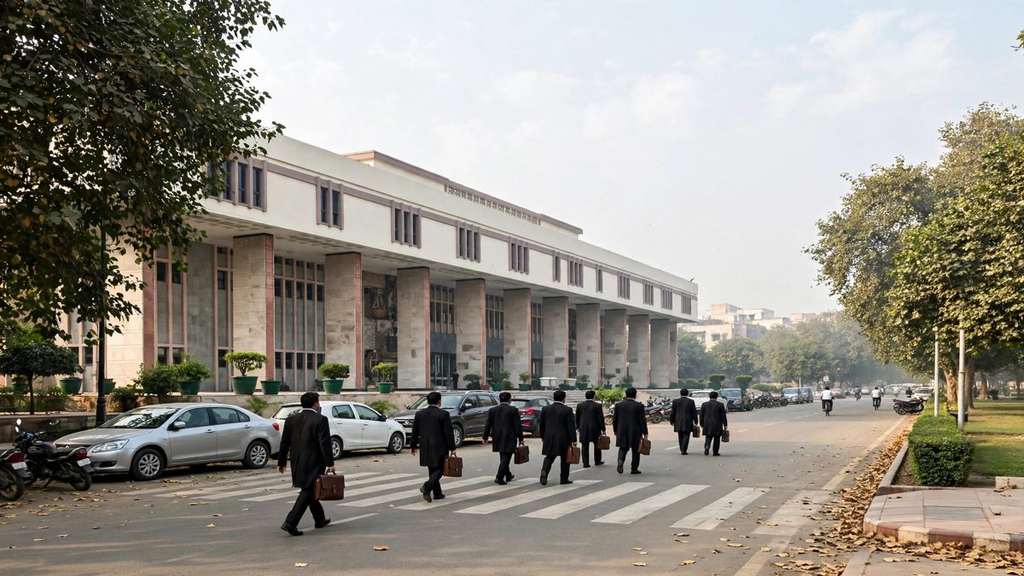
X told the Delhi High Court on Friday, November 6, that the takedown notices sent in the name of the Delhi Police against two Indian digital rights groups were fake. The notices were the work of an impostor, the company said. They were not sent by the Delhi Police.
The case was heard by Justice Amit Mahajan. The Internet Freedom Foundation, known as IFF, and the Software Freedom Law Center, known as SFLC.in, had petitioned the court to strike down notices that sought the removal of their accounts on X. Counsel for X told the court the company had run an internal investigation, had filed a complaint with the Delhi Police on Thursday night to identify the impostor, and had taken no action on the notices. The accounts will not be taken down. The court then disposed of both petitions.
What the notices asked for
X forwarded two notices to the groups on November 3. The first, dated October 31 and carrying reference number LD-321926, was filed in the name of the Special Commissioner of Police (Crime). The second, dated November 2 and carrying reference number LD-322956, listed 40 web addresses. It covered 37 individual posts and the entire accounts of IFF, SFLC.in and Geo Blocked in India, an account that documents content blocking in India. It also sought the removal of posts by 16 other users who had commented on the dispute.
The notices said the posts defamed the Rashtriya Swayamsevak Sangh, the RSS, and cited Section 356 of the Bharatiya Nyaya Sanhita, the provision on criminal defamation. The second notice also cited Section 79(3)(b) of the Information Technology Act and Rule 3(1)(d) of the IT Rules, and demanded action within three hours. SFLC.in said the fields for court order details were left blank in both notices, even though the second notice said it enforced a court order.
The dispute began on October 29, when the three accounts received a legal notice in the name of the RSS that demanded they stop documenting and criticising government blocking orders. Several RSS office bearers later questioned whether that notice was genuine.
Why the groups doubted the notices
Both groups tried to verify the police notices and failed. Emails to the address printed on the notices came back as undeliverable, with the address shown as not existing. SFLC.in wrote to senior Delhi Police officers and to the Intelligence Fusion and Strategic Operations unit, the police unit authorised to issue such notices, and received no confirmation. It also said the Special Commissioner of Police (Crime) is not on the Home Department list of officers authorised to issue notices under Section 79(3)(b).
SFLC.in said X's law enforcement request form at first had no way to verify who submitted a request, so anyone could potentially impersonate an official. It later found that X had added an email verification code to the form.
In court, Senior Advocate Akhil Sibal argued for the two groups that criminal defamation is a non-cognisable offence, which police cannot investigate without a magistrate's order, and that removing entire accounts was disproportionate and violated the freedom of speech protected by Article 19(1)(a) of the Constitution.
What happens next
The petitions are closed and the three accounts stay up. The open question is who sent the notices. X says it has asked the Delhi Police to find the impostor. The case shows a gap in the takedown system: a notice that looks official can reach a platform, and the people named in it may have no quick way to check whether it is real.
Timeline
- Oct 29, 2026IFF, SFLC.in and Geo Blocked in India receive a legal notice in the name of the RSS demanding they stop documenting government blocking orders.
- Oct 31, 2026A first takedown report, reference LD-321926, is filed in the name of the Special Commissioner of Police (Crime).
- Nov 2, 2026A second report, reference LD-322956, lists 40 web addresses and seeks the withholding of the three full accounts.
- Nov 3, 2026X forwards both notices to the groups, who question whether they are genuine.
- Nov 5, 2026SFLC.in publishes a statement setting out why it doubts the notices. That night, X files a complaint with the Delhi Police about an impostor.
- Nov 6, 2026X tells the Delhi High Court the notices were sent by an impostor, not the Delhi Police. The court disposes of the petitions.
Sources
- Reuters: X says takedown notices targeting Indian free-speech groups were fake
- Bar and Bench: Imposter misused Delhi Police name to get IFF, SFLC handles blocked, X to Delhi High Court
- Live Law: Takedown notices sent to IFF, SFLC were fake, complaint filed against impostor, X Corp tells Delhi High Court
- MediaNama: IFF and SFLC move Delhi High Court over Delhi Police takedown notices