
Blue Origin Pushes New Glenn Return to Flight to January 2027
An internal memo from chief executive Dave Limp moves the heavy lift rocket's return to January 2027, after a May explosion wrecked its Florida launchpad and a wet summer slowed the rebuild.
Key points
- Blue Origin has pushed the return to flight of its New Glenn rocket to January 2027.
- The company had said it still planned to fly again this year.
- The May explosion badly damaged the launchpad at Cape Canaveral.
Blue Origin has pushed the return to flight of its New Glenn rocket to January 2027. Chief executive Dave Limp told staff in an internal memo that the company was updating its anticipated launch date, according to Reuters, which saw the memo and spoke to two people familiar with the matter. The Financial Times first reported the news on Thursday, November 5.
The company had said it still planned to fly again this year. That target is now gone, about six months after a New Glenn rocket exploded during a ground test in May 2026 on Blue Origin's only launchpad in Florida, days before the rocket was set to carry Amazon satellites into orbit.
A pad rebuilt through a wet summer
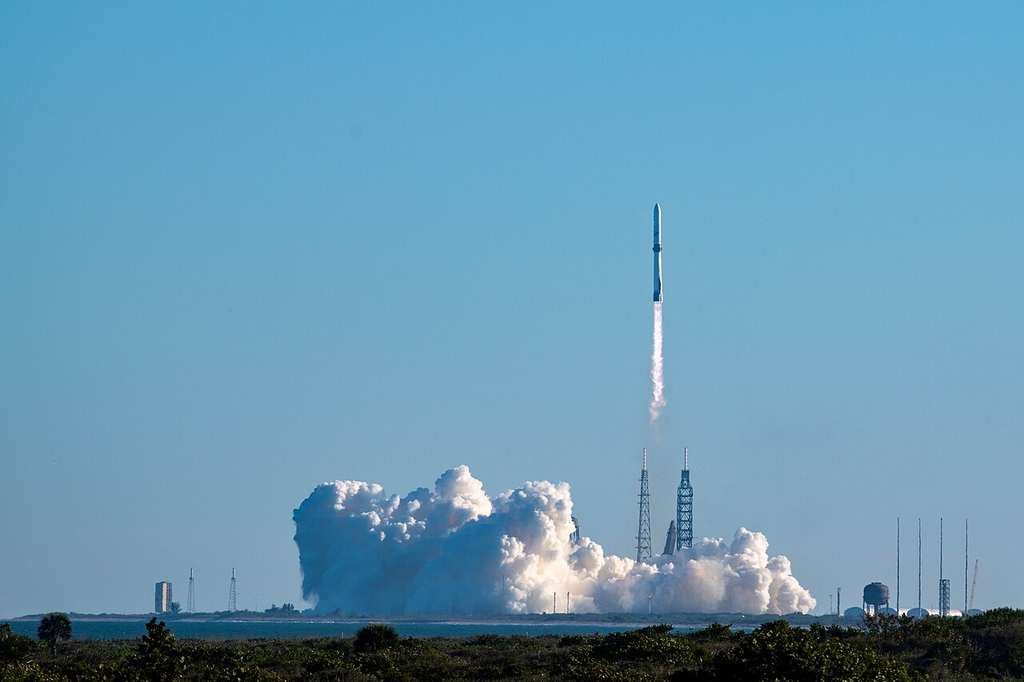
The May explosion badly damaged the launchpad at Cape Canaveral. New Glenn is a 322 foot rocket, about 30 storeys tall, and it had lifted off three times since its debut in 2025, Reuters reported.
Limp told employees that summer weather caused delays in the rebuild. The company has repaired and restacked the Vehicle Access Tower and restored the launch bridge, he wrote. The region has also been hit by flash floods in recent days.
"Rebuilding at this pace has not been easy. For those of you who live at or visit the Cape, you know that this summer's weather has not been our friend," Limp wrote in the memo, according to Reuters.
In the same memo, Limp said the team had "found and fixed the issue that caused the anomaly," The Register reported. Limp said in August that the problem originated at the main oxygen valve on one of the rocket's BE-4 engines, and that existing engines would need retrofitting.
New hardware announced in the same week
The delay came as Blue Origin announced two new pieces of hardware. GS3 is a new third stage for New Glenn, designed for missions that include direct injection into geostationary orbit and Earth escape trajectories. The company said GS3 is already under contract for a cislunar mission with a government customer scheduled to launch in 2028. Blue Origin said the stage is not required for its lunar lander plans, although it could support sustained operations around the Moon.
The company also unveiled Northstar, a booster engine with half the parts and 30 percent less mass than its BE-4 engine. Blue Origin said Northstar raises thrust from 640,000 to 715,000 pounds force.
What the delay puts under pressure
Amazon's Leo satellite internet constellation relies on Blue Origin as a key launch provider, and Leo is set to compete with SpaceX's Starlink service. A later return to flight leaves less room in the schedule for those launches.
The slip also leaves less breathing room before NASA's planned Artemis III demonstration mission next year, which involves lunar technologies from Blue Origin and SpaceX, The Register noted.
Blue Origin has not announced an exact date in January for the return flight.
Timeline
- May 2026A New Glenn rocket explodes during a ground test on Blue Origin's Florida launchpad, days before it was set to carry Amazon satellites into orbit.
- Nov 5, 2026Reuters and the Financial Times report that an internal memo from chief executive Dave Limp pushes New Glenn's return to flight to January 2027.
- January 2027Blue Origin's new target for New Glenn's return to flight. No exact date in January has been announced.