
Your Fingers Wrinkle in Water on Purpose, and the Wrinkles Help You Grip
Pruned fingers are not swollen skin. Your nervous system builds the ridges on purpose, and volunteers with wrinkled fingers moved wet marbles about 15 seconds faster.
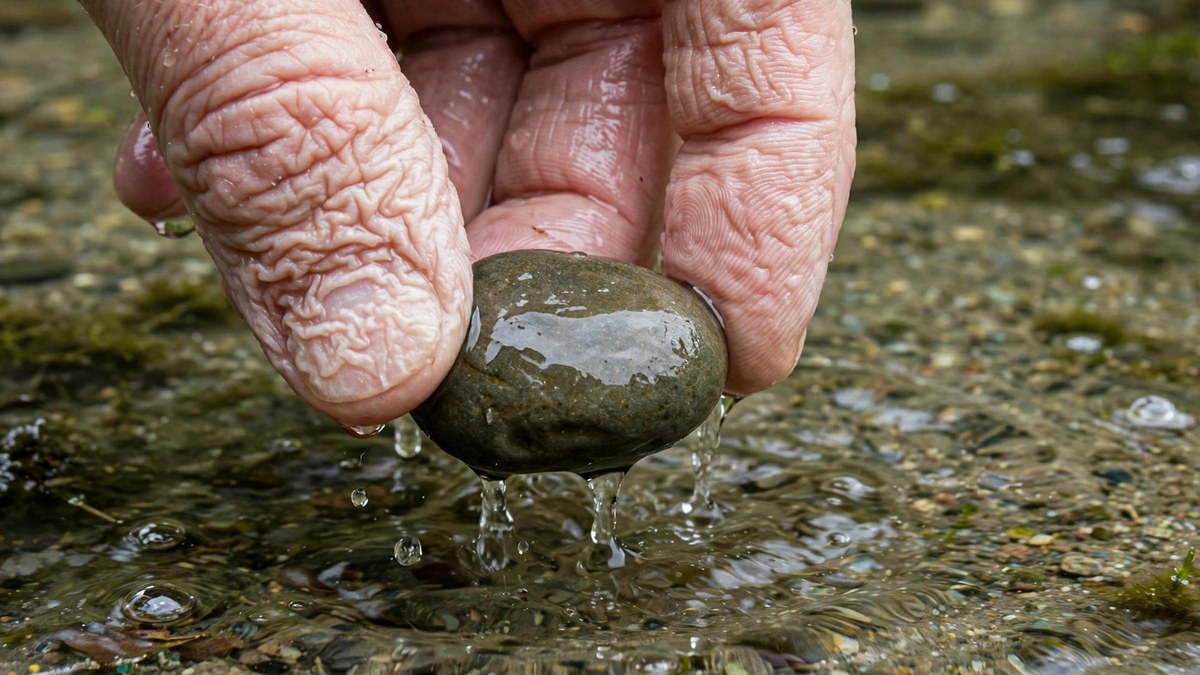
Key points
- Your fingers do not wrinkle in the bath because the skin soaks up water like a sponge.
- Researchers have known since the 1930s that fingers with nerve damage do not wrinkle in water, even after a long soak.
- The California Academy of Sciences explains the mechanism.
Your fingers do not wrinkle in the bath because the skin soaks up water like a sponge. They wrinkle because your nervous system orders them to. The wrinkles are a tool, and tests show they help you grip wet objects.
The clue from the 1930s
Researchers have known since the 1930s that fingers with nerve damage do not wrinkle in water, even after a long soak. Dead skin would swell the same way in every finger. Living skin wrinkles only when the nerves work, which means the wrinkling is an active response run by the body, not a passive accident.
The California Academy of Sciences explains the mechanism. The autonomic nervous system, the same system that runs breathing and heart rate, makes the blood vessels inside the fingertips contract. The fingertip shrinks slightly as the vessels narrow, and the skin on the surface folds into ridges.
Treads for your hands
In 2011, evolutionary neurobiologist Mark Changizi and colleagues proposed that the wrinkle pattern works like the rain treads on a car tyre. The folds form channels that push water away from the surface of the fingertip, so more skin touches the wet object.
A Newcastle University team then tested the idea and published the results in Biology Letters in 2013. Twenty volunteers moved wet and dry marbles between containers, first with normal hands and then with fingers wrinkled by a 30 minute soak in warm water. With wrinkled fingers, people moved the wet marbles about 15 seconds faster on average, according to the California Academy of Sciences account of the study. With dry objects, the wrinkles gave no advantage at all.
That split result is the strongest part of the evidence. A general swelling effect would change every task. A grip tool changes only the wet task, which is exactly what the study found.
Why it matters
The finding turns a bathroom curiosity into a piece of working design. Your body detects water, rebuilds the surface of your fingers within minutes, and reverses the change when you dry off. It also explains a real medical use: doctors have long used the wrinkle response in tests of nerve function, because a finger that stays smooth in water can point to nerve damage.
So the prune look is not your skin failing in water. It is your skin switching modes for wet work.