
Why a Cut Apple Turns Brown So Fast
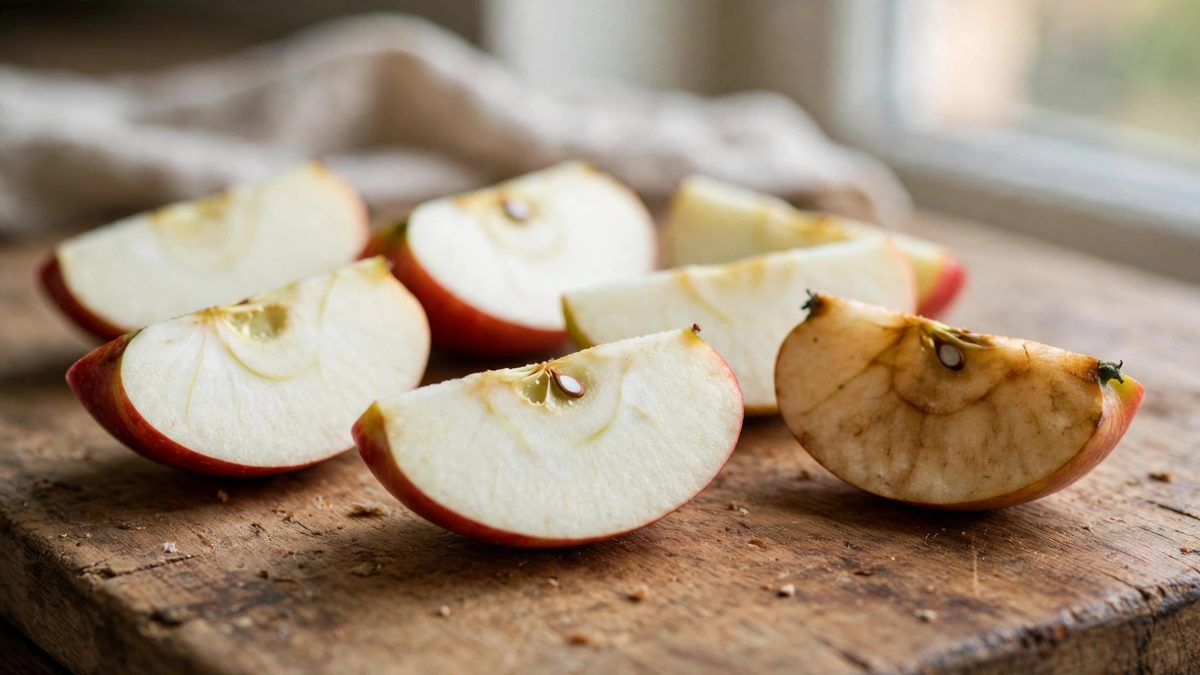
A cut apple is not rotting. Cutting breaks its cells, an enzyme meets oxygen, and the fruit builds brown melanin pigment on the cut surface within minutes.
Key points
- Slice an apple at breakfast and it can look tired by lunch.
- Inside a whole apple, the parts of the reaction never meet.
- A knife changes the arrangement in one stroke.
Slice an apple at breakfast and it can look tired by lunch. The white flesh turns yellow, then brown, in plain air. Nothing has rotted. The apple is running a chemical defence, and the brown colour is the product of an enzyme that only gets to work once a knife breaks the fruit open.
Three things that were kept apart
Inside a whole apple, the parts of the reaction never meet. An enzyme called polyphenol oxidase, or PPO, sits in small compartments inside the cells. The compounds it acts on, called polyphenols, sit elsewhere in the same cells. Oxygen stays outside the skin. Let's Talk Science, the Canadian science education charity, lays out the recipe plainly: browning needs oxygen, PPO and polyphenols together.
A knife changes the arrangement in one stroke. Cutting tears cell walls and membranes. PPO and polyphenols mix for the first time. Air reaches the wet surface and supplies the oxygen. The reaction starts at once, which is why browning follows the shape of the cut and the bruise, and why the skin covered parts stay pale.
From clear compounds to brown melanin
PPO uses oxygen to convert the colourless polyphenols into compounds called quinones. Quinones are restless molecules. They link up with each other and with proteins nearby, building larger and larger chains. The end product is melanin, the same family of brown pigment that colours human skin and hair. The apple, in short, tans its own wound.
Food science references such as Food-info, run from Wageningen in the Netherlands, describe the same chain: PPO catalyses one step in the conversion of plant phenolic compounds to brown melanins, and the melanins are not toxic. A brown slice is safe to eat for some hours after cutting. It looks worse than it is.
How lemon juice fights back
Every kitchen trick against browning attacks one leg of the recipe. Lemon juice works on two. Its acid drops the pH at the surface, and PPO works best near a neutral pH, so acid slows it hard. Lemon juice also carries vitamin C, which reacts with oxygen and with the early products of the reaction, buying the slice more white time.
Covering the slice works too. Cling film pressed onto the cut face, or water over the surface, cuts the oxygen supply. Heat is the heavy tool: blanching destroys the enzyme itself, which is why cooked apple never browns the same way. Cold slows everything, so the fridge helps, but it does not stop the clock.
A defence, not a flaw
Browning reads as damage, and in the fruit trade it costs money, so breeders and growers work against it. For the apple, the reaction is useful. The quinones formed on a wound are hostile to microbes and insects, and the melanin layer seals the broken surface. The brown patch on your lunch slice is the fruit patching itself, with chemistry it keeps loaded and separated until the moment it is needed.