
UN Report Says an External Attack on Hammarskjold's Plane Remains Plausible, 65 Years On
A fresh UN mandated report transmitted on November 4 keeps open the finding that an external attack or threat may have brought down Dag Hammarskjold's plane in 1961, and says it is almost certain that member states still hold undisclosed information.
Key points
- Sixty five years after Dag Hammarskjold died in a plane crash in Africa, the United Nations has put a fresh report in front of the General Assembly that refuses to close the case.
- The Secretary General has transmitted the latest report by Mohamed Chande Othman, a former chief justice of Tanzania who serves as the Eminent Person on the investigation, to the president of the…
- Dujarric said the Secretary General notes that the Eminent Person's assessment remains that it is plausible an external attack or threat was a cause of the crash.
Sixty five years after Dag Hammarskjold died in a plane crash in Africa, the United Nations has put a fresh report in front of the General Assembly that refuses to close the case. Its central assessment stands: an external attack or threat remains a plausible cause of the crash.
The Secretary General has transmitted the latest report by Mohamed Chande Othman, a former chief justice of Tanzania who serves as the Eminent Person on the investigation, to the president of the General Assembly. The report is public as General Assembly document A/80/815. A UN spokesperson, Stephane Dujarric, briefed reporters on it in New York on Wednesday, November 4.
Dujarric said the Secretary General notes that the Eminent Person's assessment remains that it is plausible an external attack or threat was a cause of the crash. The alternative feasible hypotheses are sabotage or unintentional human error.
What is new in this report
The Secretary General said he was encouraged that significant advancements continue to be made, including work on the possible involvement of mercenary pilots or other agents in a deliberate act against the flight, the possible type of aircraft used in any such act, the presence and role of foreign actors, information on search and rescue, and expert aviation analysis.
The sharpest line in the briefing concerns what has not been shared. The Eminent Person assesses that it is almost certain that material information exists that has not been disclosed by member states. The Secretary General called on member states to provide relevant information and to ensure comprehensive access to their archives, 65 years after the crash.
The Secretary General supports the Eminent Person's recommendation that the UN appoint an independent person to continue the work, after the Eminent Person's most recent mandate concluded at the end of the General Assembly's eightieth session in September.
The night the Secretary General died
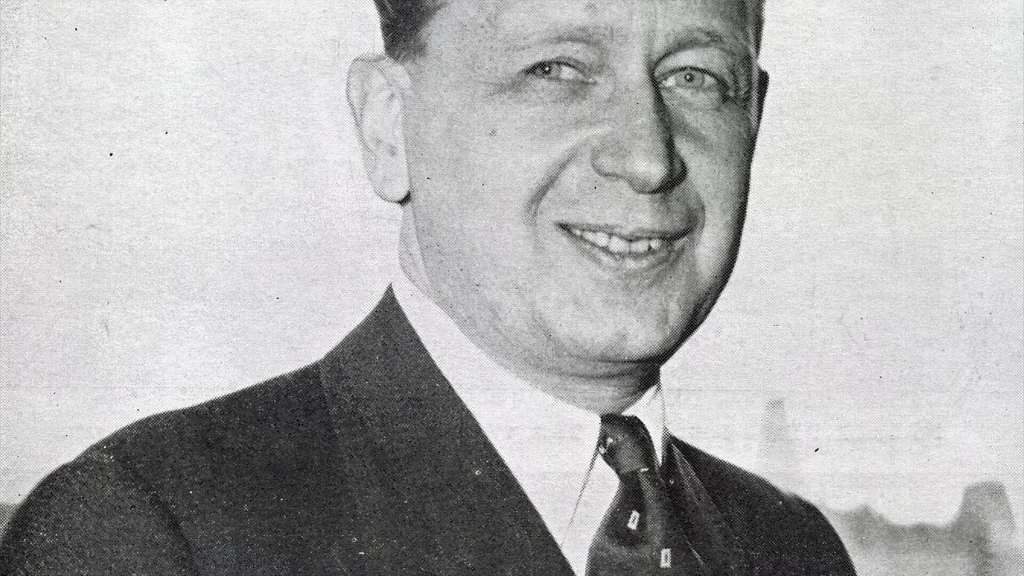
Hammarskjold, the second Secretary General of the United Nations, died on the night of September 17 to 18, 1961, when his plane crashed near Ndola in Northern Rhodesia, now Zambia. He was flying to negotiate in the Congo crisis. Fifteen other people on board died with him. He had held the post since April 1953 and, at 47 when elected, remains the youngest person to have held it.
The General Assembly reopened the investigation in 2014. Each round since has added material, and each round has ended the same way, with the investigator pointing at archives that stay shut.
Why this story keeps returning
This is not a cold case hobby. The report names the live questions in plain terms: mercenary pilots, a possible attacking aircraft, foreign actors on the ground, and records held by states that have never been opened. If an external attack brought down a Secretary General's plane, the states holding the proof have kept it for 65 years. The UN's own investigator now says, on the record, that such proof almost certainly exists. The next step sits with the General Assembly, which has to decide whether to appoint the independent person the report recommends and keep asking.
Timeline
- Sep 18, 1961Dag Hammarskjold and 15 others die when his plane crashes near Ndola in Northern Rhodesia.
- Nov 4, 2026The Secretary General transmits the Eminent Person's latest report to the General Assembly as document A/80/815.