
Phoenix, Arizona: Central Arizona Project Joins Nevada Lawsuit Over Colorado River Cuts for Phoenix and Tucson
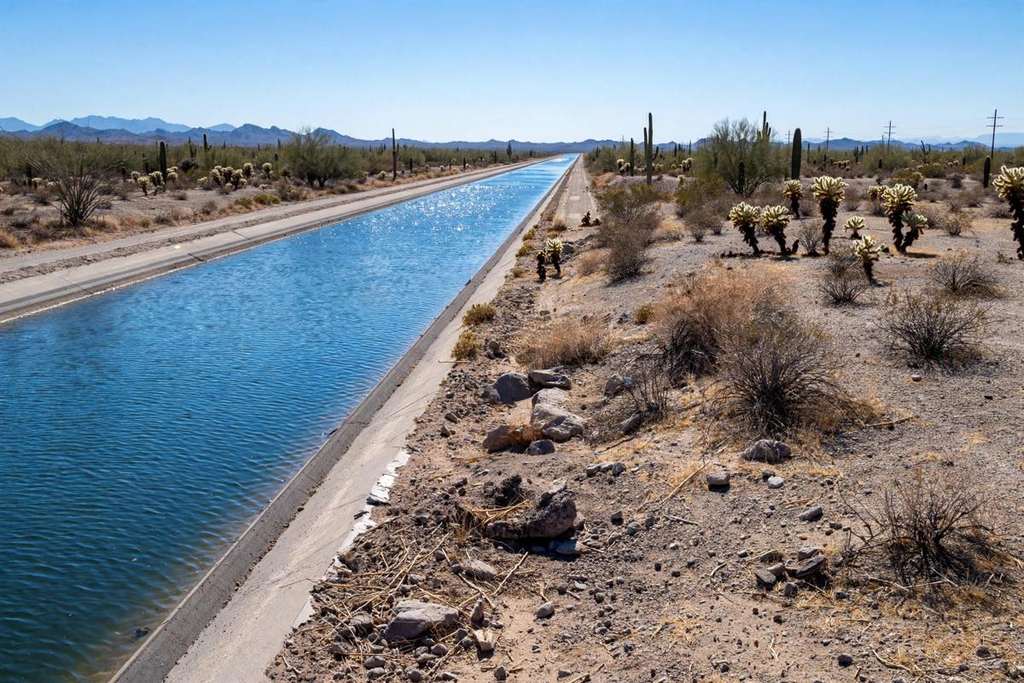
The Central Arizona Project filed to join Nevada's lawsuit against the federal Colorado River plan, warning in Phoenix that the framework could take the canal supply for Phoenix, Tucson and 11 tribes to zero in the driest years.
Key points
- The Central Arizona Project, the canal system that delivers Colorado River water to Phoenix and Tucson, filed a motion on Tuesday, October 27 to intervene in Nevada's lawsuit against the federal…
- "The United States has given itself the ability in its (framework) documents to take the CAP system and all of our water users, over 50 municipal and industrial users, 11 tribes, to zero," Burman…
- In the worst case, CAP officials argue, the plan could take up to 3 million acre-feet a year from the Lower Basin states of Arizona, California and Nevada, and the canal could go dry because CAP…
The Central Arizona Project, the canal system that delivers Colorado River water to Phoenix and Tucson, filed a motion on Tuesday, October 27 to intervene in Nevada's lawsuit against the federal plan for cutting river water over the coming decade. General Manager Brenda Burman announced the filing at a news conference and said the framework could, in the driest years, take the canal's supply to zero while forcing no new mandatory cuts on the four Upper Basin states. Arizona joined Nevada's lawsuit earlier, announcing the move on October 16, and CAP said it needs its own place in the case because its customers sit in the most exposed position in the state.
What Burman told Phoenix and Tucson
"The United States has given itself the ability in its (framework) documents to take the CAP system and all of our water users, over 50 municipal and industrial users, 11 tribes, to zero," Burman said. She said that would be devastating to central and southern Arizona, because CAP supplies at least some water for 80 percent of the state's residents and 90 percent of its economy. The federal plan, she said, "fails to adequately assess the devastation, the economic harm, the harm to everyday communities, the harm to the canal itself." CAP serves Maricopa, Pinal and Pima counties, home to nearly 6 million people, including Tucson, where it is the primary water source for some communities.
The numbers behind the fight
In the worst case, CAP officials argue, the plan could take up to 3 million acre-feet a year from the Lower Basin states of Arizona, California and Nevada, and the canal could go dry because CAP holds a relatively junior priority, a condition of the federal law that authorized its construction. Burman rejected the idea that this puts CAP last in line behind the upstream states. "CAP is not and has never been junior to the Upper Basin," she said. For the next two years the picture is smaller and agreed: the Lower Basin states will surrender 1.25 million acre-feet, with 760,000 acre-feet coming out of Arizona's 2.8 million acre-foot share, an offer made for two years only. Burman said the Upper Basin states of Wyoming, Colorado, Utah and New Mexico have now failed, for the first time, to meet delivery obligations under the Colorado River Compact, which assures the Lower Basin states and Mexico 8.23 million acre-feet a year on a 10-year rolling average past Lees Ferry. The river failed to deliver that much over the decade that ended on September 30.
What the other side says
Upper Basin officials say their users already lose water when poor snowpack forces farm cutoffs, and that declining flows come from climate change. At an October meeting of the Upper Colorado River Basin Commission, Colorado's commissioner, Becky Mitchell, told Arizona to use water it has banked underground. "Use only what the system provides," she said. The Interior Department did not immediately respond to a request for comment. When Arizona joined the lawsuit, a department spokesperson accused the state of "playing politics" and said litigation "won't create a single additional drop of water." The district, formally the Central Arizona Water Conservation District, argues that its fourth-priority rights need separate protection, because a broad court order could stop diversions to Phoenix, Tucson and tribal contractors. The case is expected to take years. "Those of us who share this precious resource have no choice but to turn to the courts to correct those errors," Burman said in a statement.
Timeline
- Sep 30, 2026The water year ends, closing a decade in which flows past Lees Ferry failed to deliver the 8.23 million acre-feet a year the compact system assures the Lower Basin states and Mexico, on a 10-year rolling average.
- Oct 16, 2026Arizona announces it has joined Nevada's lawsuit challenging the federal plan for managing Colorado River water over the coming decade.
- Oct 27, 2026The Central Arizona Project files a motion to intervene in Nevada's lawsuit, and General Manager Brenda Burman defends the filing at a news conference in Arizona.