
This Utah Forest Is One Single Tree, With More Than 40,000 Trunks on One Root System
Pando, a quaking aspen in Fishlake National Forest, covers 106 acres and weighs 13 million pounds. NASA calls it a forest of one, and deer are eating its future shoots.
Key points
- Walk into the aspen grove above Fish Lake in south-central Utah and you appear to be surrounded by a forest.
- NASA describes Pando as a forest of one.
- Quaking aspens reproduce two ways.
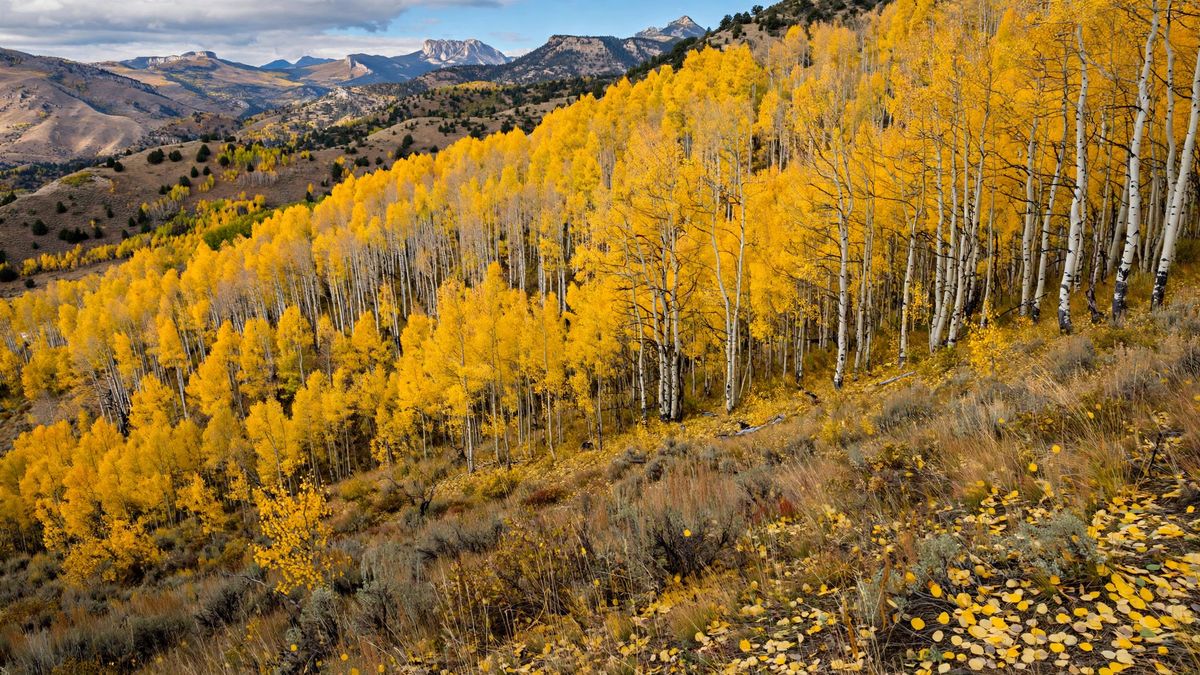
Walk into the aspen grove above Fish Lake in south-central Utah and you appear to be surrounded by a forest. You are standing inside one tree. The grove called Pando holds more than 40,000 trunks, and every one of them grows from a single shared root system. Genetically, they are one male quaking aspen, spread across 106 acres.
NASA describes Pando as a forest of one. Its trunks and roots together weigh about 13 million pounds, roughly the weight the agency compares to 15 jumbo jets, which puts Pando among the largest and heaviest land organisms on Earth. The name is Latin for I spread, and the tree has been spreading for a very long time.
How one tree becomes a forest
Quaking aspens reproduce two ways. They drop seeds, and they send up new stems from their roots. Pando runs on the second method. A stem rises, lives its life, and dies, while the root system below keeps sending up replacements. The visible trunks are young, each one a temporary shoot. The organism is the root network underneath.
Genetic sampling confirmed the arrangement. Researchers tested stems across the grove and found a single genetic individual occupying the full patch, the common root system tying the whole stand together. From the road, State Route 25 west of Fish Lake, it reads as ordinary aspen country. In autumn the leaves turn yellow across the whole organism at once.
Older than the pyramids, by a wide margin
No one can date Pando exactly, because no single trunk carries its whole history. You cannot core one stem and count rings back to the beginning. NASA says the seed that started Pando may have sprouted as long as 14,000 years ago, as ice retreated from the Fish Lake valley. Even the cautious reading puts the organism thousands of years old, far older than the Egyptian pyramids.
That age comes from persistence, not from any one part lasting. Stems live and fall. The clone endures by replacing them, generation after generation of identical shoots from the same roots.
The giant is thinning
Pando has a problem, and it has teeth. Ecologist Paul Rogers of the Western Aspen Alliance at Utah State University told NASA the organism is dying back in places. Mule deer, and to a smaller degree cattle, eat the young shoots before they can grow tall enough to establish. A clone that survives by replacing its stems cannot afford to lose the replacements.
Parts of the grove have been fenced to keep browsing animals out, and inside the fences new stems rise. Outside them, old trunks fall with little coming up behind. The largest tree on the site, in other words, now depends on fences and on people deciding its young shoots are worth more standing than eaten.
The lesson hides in plain sight. A forest can be one life, thousands of years long, and still be fragile in the ordinary way: it has to keep growing, or it ends.