
Loggerhead Turtles Can Learn the Magnetic Signature of a Place, a 2025 Study Found
Young loggerheads fed in one magnetic field danced when that field returned. The Nature study also points to two separate magnetic senses, a map and a compass.
Key points
- A young loggerhead turtle can learn the magnetic signature of a place and remember it.
- The work comes from the Lohmann Lab at the University of North Carolina at Chapel Hill, which has studied sea turtle navigation for decades.
- The lab describes the field as two tools in one.
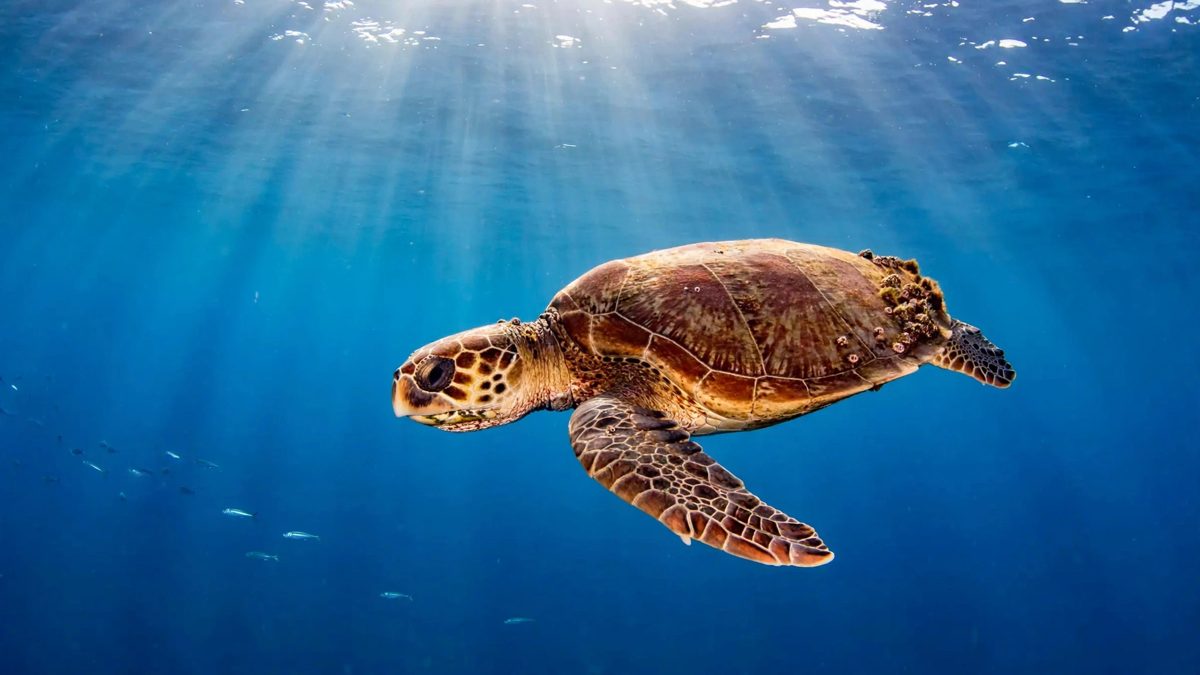
A young loggerhead turtle can learn the magnetic signature of a place and remember it. In a 2025 study in Nature, juvenile loggerheads fed in one magnetic field and tested later in that same field started an eager little display the team called a turtle dance. They had learned where dinner lives, using nothing but magnetism.
The work comes from the Lohmann Lab at the University of North Carolina at Chapel Hill, which has studied sea turtle navigation for decades. Earth acts like a quiet grid for these animals. The field is stronger in some places and tilts at a different angle in others, and the combination works like an address.
A map and a compass, run by two systems
The lab describes the field as two tools in one. As a compass, it tells a turtle which way it is heading. As a map, it tells the turtle where it is. Hatchlings tested in pools ringed by magnetic coils swam in different directions when the coils replayed the fields of different points along their Atlantic migration route. They behaved as if they knew their position.
The 2025 experiment pushed that further, from reading a map to learning one. Turtles fed repeatedly in a field that copied one ocean location learned to tell that field apart from fields found elsewhere. When the feeding field came back, the turtles rose, opened their mouths, spun, and waved their front flippers, expecting food.
Two senses, not one
The study also separated the machinery. A radiofrequency field, a treatment expected to disturb chemical magnetoreception based on radical pairs, left the learned map response in place. The same treatment disturbed orientation behavior that depends on the magnetic compass. The team reads that as evidence of two different mechanisms: one system runs the map, another runs the compass.
That split matters for how the animals live. Loggerheads cross whole oceans and return to the same feeding grounds and nesting regions. A compass alone can hold a heading. It cannot explain arrival at one small patch of a huge ocean. A learned map can, because each place signs its name in field strength and tilt, and the turtle files the signature away.
What is still unknown
Nobody has found the receptor. The lab is open about that: the body part and the physics that let a turtle read the field remain under study, and the radiofrequency result narrows the options for the map sense rather than closing the case. What the behavior shows is solid. The animals detect the field, learn its local patterns, and use them to judge position.
The ocean gives a turtle no landmarks for most of a migration. The planet itself supplies the signposts, written in magnetism, and a turtle the size of a dinner plate can learn to read them.