
Streamer Jhapalish Held Over Swear Words as Nepal Wins UN Rights Seat
Jhapa police detained rapper and streamer Manish Pandey over abusive words on social media and freed him after he promised to watch his language. His own account of handcuffs and a signature he could not read asks a harder question of a government that, one day later, won a seat on the UN Human Rights Council.
Key points
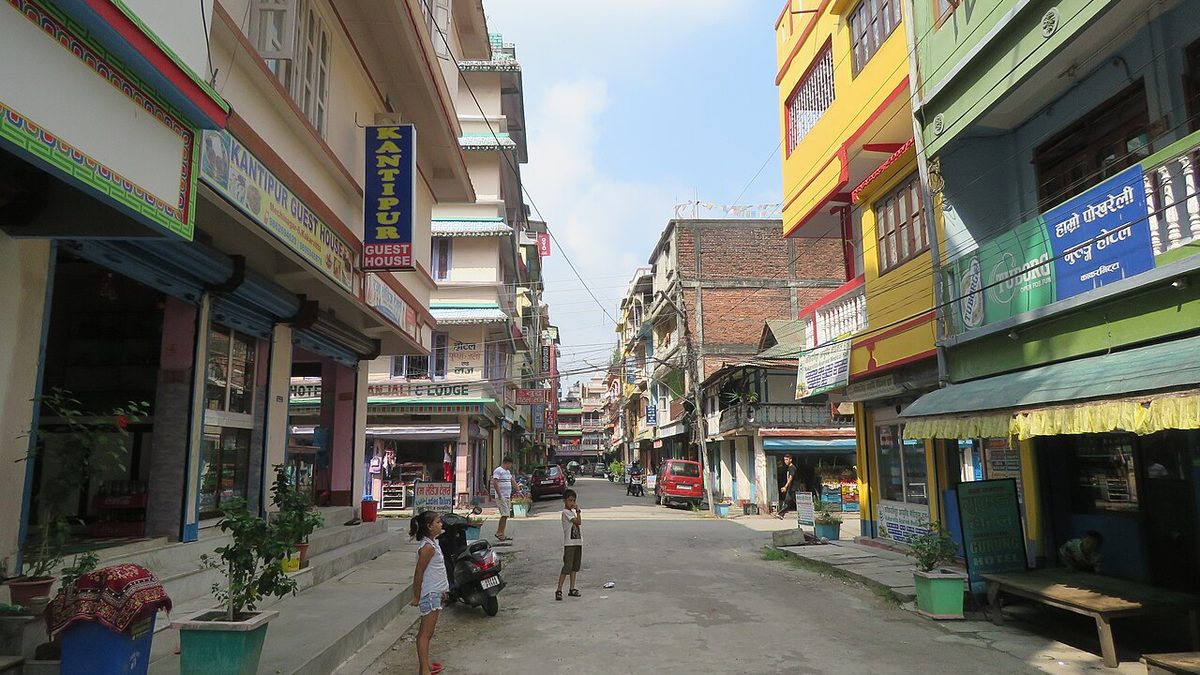
- On the evening of Monday, October 12, a Jhapa police team took Manish Pandey into custody at the Jadibuti Hotel in Kakarvitta, in Mechinagar-6, and drove him to the District Police Office.
- The complaint against him was not a charge sheet.
- So the full arc of the case is this: a man was taken from a hotel by police, questioned at a district police office, and set free once he promised to control the words he uses on his own streams.
On the evening of Monday, October 12, a Jhapa police team took Manish Pandey into custody at the Jadibuti Hotel in Kakarvitta, in Mechinagar-6, and drove him to the District Police Office. Pandey is a rapper and livestreamer from Jhapa. On YouTube he is Jhapalish, and more than 463,000 people subscribe to his main channel. A second channel, Jhapalish Live, has over 27,000.
The complaint against him was not a charge sheet. It was a verbal complaint. TechPana reported that police acted on allegations of defamation and abusive, obscene language used on social media. DSP Ranjan Awa, the Jhapa police spokesperson, told the outlet that during questioning Pandey admitted a mistake and said he would not repeat the behavior, and that he was released the same Monday after making that commitment. Awa said the complaint was then withdrawn after a mutual understanding, because it had only ever been verbal.
So the full arc of the case is this: a man was taken from a hotel by police, questioned at a district police office, and set free once he promised to control the words he uses on his own streams. No court decided anything. No judge weighed any evidence. The condition of his freedom is a promise about future speech, made in a police station.
His account: handcuffs and a paper he could not read
Pandey has told his audience a rougher story than the police version. He says he was handcuffed. He says he was not allowed to speak. He says he was made to sign a paper without being told what the paper said, and that his release came only after he agreed not to use vulgar words on stream.
The Orbit Post has not independently verified those details, and Jhapa police have not publicly answered them. They are his claims, and readers should hold them as claims. But they are not claims a democracy can wave away, because Nepal's own constitution speaks directly to them. It promises that no person is detained without being informed of the grounds. It gives an arrested person the right to consult a legal practitioner of their choice from the time of arrest. It requires that an arrested person be produced before a judicial authority within 24 hours.
If a citizen was handcuffed, silenced, and pressed to sign a document he did not understand, each of those promises failed in one evening. If none of it happened, the police can say so on the record. Silence is the one answer that protects nobody.
A signature is not a justice system
Strip the case down and a question remains that no spokesperson has answered. If the complaint was verbal, and it was withdrawn the same day, what was the custody for?
A release conditioned on a promise about future words is censorship delivered early, before any court, any charge, or any trial. It has a name in free-speech law: prior restraint. The punishment is not a fine or a sentence. The punishment is the evening in custody, the ride to the district office, and the knowledge, carried by every creator who watched it happen, that one phone call from an offended listener can do the same to them.
Nepal signed the International Covenant on Civil and Political Rights in 1991. Article 19 of that covenant allows limits on expression only when they are provided by law and necessary for the rights of others or for national security, public order, public health, or morals. A verbal complaint and a signed promise in a police station meet neither test on their face. The law must be clear enough that a citizen can know in advance what is forbidden. Nobody in Nepal can read a rule that says which swear words, on which stream, will bring officers to a hotel door.
The tool waiting behind cases like this is Section 47 of the Electronic Transactions Act. It bans electronic publication of material that may be contrary to public morality or decent behavior, words elastic enough to cover almost anything anyone dislikes. Human Rights Watch has documented the pattern for years: many people charged under Section 47 are never convicted, but they are detained first and bailed later, so the process itself becomes the punishment. It chills journalists and ordinary users alike.
We have seen this signature before
In August 2024, Kailali police detained two young men, Pratik Joshi and Rachit Shah, over Facebook comments critical of political leaders. Digital Rights Nepal recorded that they were handcuffed and released after a few hours, after signing an affidavit promising not to do anything that disrupts public peace. In 2019, comedian Pranesh Gautam spent more than a week in custody because a film director disliked his review video.
Different years, different governments, same stationery. A complaint, a custody, a signature, a release. Nothing is ever proven, and nothing ever has to be. The lesson is delivered without a verdict.
The rapper in the prime minister's office
This is where the story stops being about one streamer.
Nepal's prime minister, Balendra Shah, built his name as a rapper. As Balen, he railed against corruption in underground battles and in songs like Balidan, where he rapped that the country's leaders were thieves plundering the nation. His raw, angry music said things about the powerful that would not survive a politeness test. Young Nepalis heard themselves in it.
In September 2025, after the previous government moved to restrict social media, Gen Z protesters filled the streets and brought that government down. Shah was sworn in as prime minister on March 27, 2026, the youngest in Nepal's history, with his Rastriya Swatantra Party holding 182 of 275 seats in parliament. A generation that organized online handed power to a man whose career began with a microphone and forbidden opinions.
Seven months into his government, the record on speech is already hard to read as anything but a warning. In April 2026, police in Panchthar arrested YouTuber Roshan Pokharel over derogatory content about leaders, including Prime Minister Shah himself. A court extended his remand by 10 days. Gen Z activists protested and demanded his release, warning the government to protect freedom of expression and not move toward authoritarianism. He was freed into his relatives' custody on April 12. By July, a court had ordered him into judicial custody pending trial under the Electronic Transactions Act. A man in Nepal is facing trial today for insulting the prime minister.
CIVICUS, which rates Nepal's civic space as obstructed, has catalogued the rest of the first year: a home minister warning that his ministry would act against media that insult or defame, a government directive sending state advertising only to state-owned media, reporters barred from filming at the prime minister's own office complex, court orders deleting published investigations, and an election commission that asked the press regulator to remove a BBC documentary about the Gen Z uprising.
On July 1, 2026, at the UN Human Rights Council, Nepal accepted recommendations that journalists and activists should be able to work without fear of prosecution, harassment, or surveillance. In the same review, it declined recommendations to bring its media laws in line with the covenant it signed in 1991, and declined to decriminalize defamation.
The seat Nepal won the next day
On Tuesday, October 13, 2026, one day after officers took Jhapalish from his hotel, the UN General Assembly elected Nepal to the Human Rights Council for the 2027 to 2029 term. Nepal won 173 of the 180 votes cast, the highest total in its group. Its mission in New York called the result a sign of international confidence in the country's commitment to human rights.
Countries that sit on that council are expected, under the General Assembly resolution that created it, to uphold the highest standards in the promotion and protection of human rights. That standard is not met in a conference room in Geneva. It is met or lost in district police offices, in front of young men whose crime is a vocabulary.
Is this communism, or India-style control?
Two questions follow this case everywhere online, and both deserve a straight answer.
Is Nepal turning communist? No, and the label misses the point. The government the Gen Z revolt removed in 2025 was the communist-led one. Shah's party is not a communist party. What Nepal is drifting toward has no party name. It is the habit, shared by governments of every ideology, of reaching for vague morality and cyber laws whenever speech gets uncomfortable. Authoritarian habits do not need a red flag. They need only a broad law, a willing police station, and a public too tired to object.
Is Nepal starting to look like India? The fear behind that question is real, because the playbook is regional. Across South Asia, rights monitors document the same sequence: elastic online speech laws, takedown pressure on platforms and publishers, arrests that end in release but teach everyone watching to stay quiet. India has faced years of that criticism. Nepal does not need to import the model. Its own Section 47 has been loaded and on the table since 2008.
The comparison that should shame Kathmandu is the United States, where streamers also swear, insult leaders, and offend audiences daily. There, a platform can enforce its own guidelines, because a private company's moderation is a business choice. The state is a different matter. In Cohen v. California in 1971, the US Supreme Court ruled that a state could not make it a crime to display a four-letter word in public without a specific and compelling reason. American police cannot lawfully haul a streamer to a station and trade his freedom for a promise about his language. That is not because Americans love vulgarity. It is because their courts understood that a government trusted to punish offensive words will soon punish offensive opinions.
The test is not his vocabulary
Nobody has to enjoy what Jhapalish says on his streams. Taste is not the test, and it never has been. The test of a democracy is what it does with speech it dislikes, from citizens it did not choose, in words it would not use.
Nepal's young people removed a government in 2025 partly because it tried to control what they could say and watch online. They elected a rapper who made his name saying the unsayable. If, under that government, a streamer from Jhapa can be taken from a hotel, held at a police office, and sent home with his future vocabulary under signature, then the revolution has a paperwork problem.
The government of Prime Minister Shah owes the country three things. A public answer to Pandey's account of handcuffs and a signature he could not read. A clear rule, written in law, for what online speech police may act on and what they must leave alone. And a repeal or a hard rewrite of Section 47, so that public morality stops being a blank warrant.
Until then, every young Nepali creator now knows the price list. Say the wrong word, and the state will not bother to convict you. It will simply make you sign.
Timeline
- Sep 2025Gen Z protests against corruption and a social media crackdown topple the government of K. P. Sharma Oli.
- Mar 27, 2026Rapper turned politician Balendra Shah is sworn in as prime minister after his Rastriya Swatantra Party wins 182 of 275 seats.
- Apr 9, 2026Police in Panchthar arrest YouTuber Roshan Pokharel over derogatory content about leaders, including Prime Minister Shah.
- Apr 12, 2026Pokharel is released into his relatives' custody after Gen Z activists protest and demand protection for free expression.
- Jul 1, 2026The UN Human Rights Council adopts Nepal's Universal Periodic Review. Nepal accepts free-expression recommendations but declines to reform its media laws or decriminalize defamation.
- Oct 12, 2026Jhapa police detain Manish Pandey, known as Jhapalish, in Kakarvitta over a verbal complaint about abusive language. He is released the same day after a commitment on future language.
- Oct 13, 2026The UN General Assembly elects Nepal to the Human Rights Council for 2027 to 2029, with 173 of 180 votes, the highest in its group.
Sources
- TechPana: Rapper and YouTuber Manish Pandey, known as Jhapalish, released after police questioning in Jhapa
- Online Bichar: Rapper Jhapalish arrested in cyber offence case, released after agreement (Nepali)
- CIVICUS Monitor: Nepal, press freedom at risk under new government
- CIVICUS Monitor: Nepal attempts to tighten its grip on journalists and social media
- OHCHR: International Covenant on Civil and Political Rights
- Nepal Foreign Affairs: Nepal elected to UN Human Rights Council for 2027-2029
- CNN: The rapper who railed against corruption now set to be Nepal's new leader
- Devdiscourse: Gen Z activism secures journalist's release in Nepal
- Nepali Style: Why the police action against Jhapalish signals a dangerous precedent