
India Approves Rs 10,000 Crore Container Manufacturing Scheme
The Union Cabinet cleared Rs 10,000 crore to lift domestic container capacity to 750,000 TEUs a year, close a cost gap with China and create about 3,000 direct jobs.
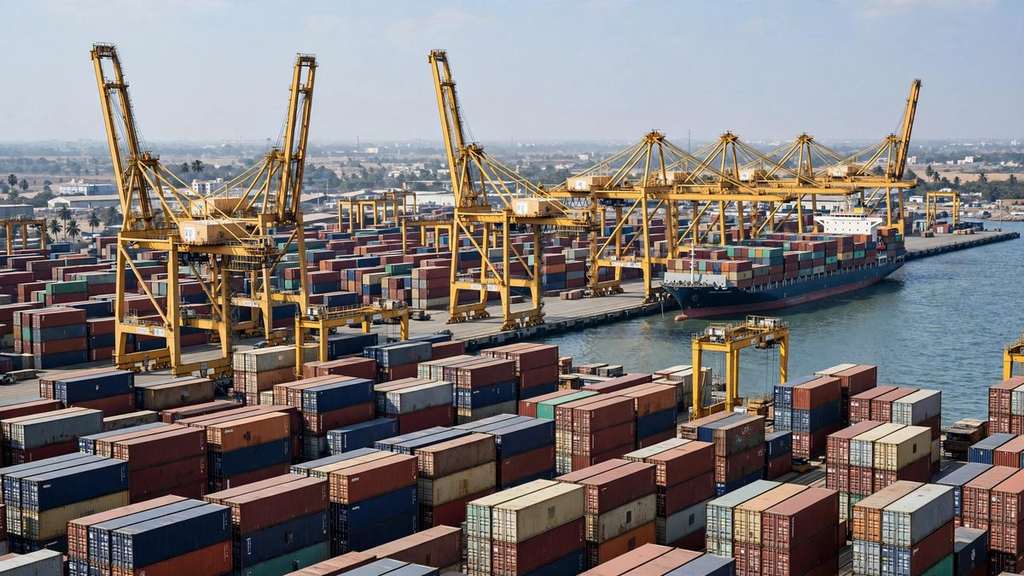
Key points
- India's Union Cabinet, chaired by Prime Minister Narendra Modi, approved a container manufacturing promotion scheme worth Rs 10,000 crore on Wednesday, October 28, 2026.
- The scheme was first announced in the Union Budget for 2026-27 and runs through the financial year 2039-40.
- The largest share, Rs 8,891 crore, will provide operating cost assistance to makers of eligible containers.
India's Union Cabinet, chaired by Prime Minister Narendra Modi, approved a container manufacturing promotion scheme worth Rs 10,000 crore on Wednesday, October 28, 2026. Information and Broadcasting Minister Ashwini Vaishnaw announced the decision. The package is worth 100 billion rupees, or about $1.05 billion, and it aims to build a domestic industry in a market where China controls roughly 95 percent of global production, according to the official Press Information Bureau release cited in reporting.
The scheme was first announced in the Union Budget for 2026-27 and runs through the financial year 2039-40. Its target is annual domestic capacity of 750,000 twenty foot equivalent units, known as TEUs. That level is about ten times the current capacity of about 75,000 TEUs, a gap that has left Indian trade dependent on imported containers during periods of tight supply.
What the scheme funds
The largest share, Rs 8,891 crore, will provide operating cost assistance to makers of eligible containers. A second share of Rs 859 crore will provide interest support at 3 percent a year on eligible factory loans. A third share of Rs 150 crore will fund testing and certification facilities. The operating support addresses a clear cost problem. Early Indian production cost estimates run about $2,200 to $2,400 per TEU, against about $1,700 for Chinese made units. The government support is meant to close that gap while new plants reach scale.
Capacity, local content and jobs
Local content rules require 70 percent through the financial year 2031-32, rising to 90 percent from 2032-33. New greenfield plants must reach at least 100,000 TEUs a year, while brownfield expansions must reach at least 25,000 TEUs a year. Supported plants must be commissioned within three years of in-principle approval. The government estimates the scheme will create about 3,000 direct jobs and more than 50,000 indirect jobs across suppliers, logistics and related work.
Why India is acting now
Conflicts have disrupted maritime trade, forced longer shipping detours and tightened container availability, according to Reuters reporting. When boxes are scarce, freight costs rise and exporters face delays at ports. A larger domestic supply would not remove those risks, but it would give Indian shippers another source when global supply tightens. The test will be whether plants are commissioned on time, meet the local content rules and bring costs down toward the Chinese level once support begins to taper.
What happens next turns on execution in the first three years. Makers that win in-principle approval must commission their plants inside that window, hire workers and secure steel and parts that meet the rising local content thresholds. Ports, shipping lines and exporters will watch the first large production runs closely, because price and reliability will decide whether orders that now go abroad begin to stay in India in meaningful volumes.