
Goa Runway Near Miss: Probe Blames Air India Express Crew
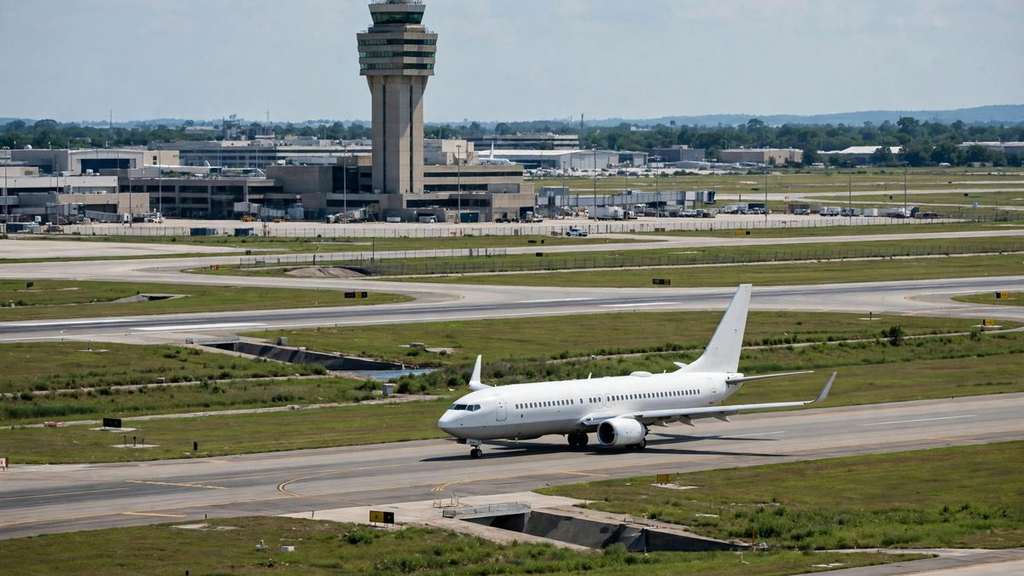
The AAIB final report on the April 3, 2026 incursion at Dabolim says the Air India Express crew failed to follow ATC instructions and misread an expect call as a runway clearance, putting a Boeing 737-8 with 171 people on board in the path of a Navy fighter takeoff.
Key points
- An Air India Express jet with 171 people on board entered an active runway at Goa's Dabolim airport while an Indian Navy fighter was taking off, and investigators say the airline crew's failure to…
- The flight was Air India Express AXB 1109, a Boeing 737-8 bound for Delhi.
- The report names two probable causes: the crew's failure to follow ATC instructions and a communication misinterpretation.
An Air India Express jet with 171 people on board entered an active runway at Goa's Dabolim airport while an Indian Navy fighter was taking off, and investigators say the airline crew's failure to follow air traffic control instructions and a misread clearance probably caused the near miss. The Aircraft Accident Investigation Bureau, or AAIB, issued its 35 page final report on the April 3, 2026 incursion, and news outlets reported the findings on October 31, 2026.
The flight was Air India Express AXB 1109, a Boeing 737-8 bound for Delhi. On board were 165 passengers and 6 crew, 171 people in total. No one was injured and no aircraft was damaged. The report said the outcome could have been catastrophic.
A clearance that was never given
The report names two probable causes: the crew's failure to follow ATC instructions and a communication misinterpretation. The surface movement controller told the crew to "Expect back track." The crew read that call as a clearance to enter the runway and backtrack. It was not. An expect call is a warning of what may come next, not permission to move onto an active runway.
The crew did not hold at the holding point. The crew also did not contact Navy Approach on 119.7 MHz first, a step the report treats as part of the breakdown. A readback and hearback error on the hold instruction added to the failure: the hold instruction was not caught and corrected in the exchange between the tower and the cockpit, so the jet kept moving toward a runway that was already in use.
The cockpit and the tower, step by step
Inside the cockpit, the report points to the training setup. The trainee Pilot Monitoring relied too heavily on the instructor, stayed heads down and did not caution the other pilot as the jet approached the runway. That silence removed the last internal check. A second pilot who is watching the taxi path and speaking up is the guard that catches a misread clearance before it becomes an incursion.
On the runway, the Navy fighter pilot acted fast. The fighter expedited its takeoff, lifted off about 2,000 metres down the runway with about 900 to 1,000 metres of separation from the airliner, and reached about 450 feet. Those numbers describe the margin. A loaded passenger jet on the runway and a fighter forced to climb early over it left no room for a second error.
A split control setup at Dabolim
Dabolim is not a standard civilian airport. It is a civil enclave at INS Hansa, a naval air station. The Navy runs the tower and approach control, while the Airports Authority of India handles surface movement control. Crews therefore deal with more than one control voice on the ground and in the air around the field. The report treats that split as context for the failure, not as an excuse for it. Clear phraseology, a firm hold at the holding point and a call on the right frequency matter more, not less, where control is shared.
What investigators want changed
The recommendations reach beyond one crew. Investigators want taxiway N2 marked as a HOTSPOT, a label that tells every crew the spot carries a higher incursion risk. They call for counselling and added training for the crew involved, a review of AAI phraseology so expect calls cannot be confused with clearances, and closer work between the DGCA and the AAIB and Defence side on shared fields.
For passengers, the lesson is plain. The system worked at the last second because a fighter pilot climbed early, not because the safeguards held. The final report now puts the fixes in writing. Whether Dabolim and other shared fields apply them will decide if April 3 stays a warning or becomes a rehearsal.
Timeline
- Apr 3, 2026Air India Express flight AXB 1109 entered the active runway at Dabolim, Goa while a Navy fighter was taking off. All 171 people on board were unharmed.
- Oct 31, 2026News outlets reported the AAIB 35 page final report, which named crew failure to follow ATC instructions and communication misinterpretation as probable causes.
Sources
- PTI via Hindu BusinessLine: AI Express flight crew lapse probably led to runway incursion at Goa airport in April, AAIB
- Indian Aviation News: AAIB flags cockpit distractions, ATC lapses in Air India Express Goa runway incursion
- Aviation Today: AAIB cites crew misinterpretation and ATC errors as probable causes of runway incursion