
Egg Yolk Color Is a Menu, Not a Grade: It Shows What the Hen Ate, Nothing More
A hen cannot make yolk color herself. Corn, greens, and marigold in her feed set the shade, and extension scientists say the shade carries about zero information about nutrition.
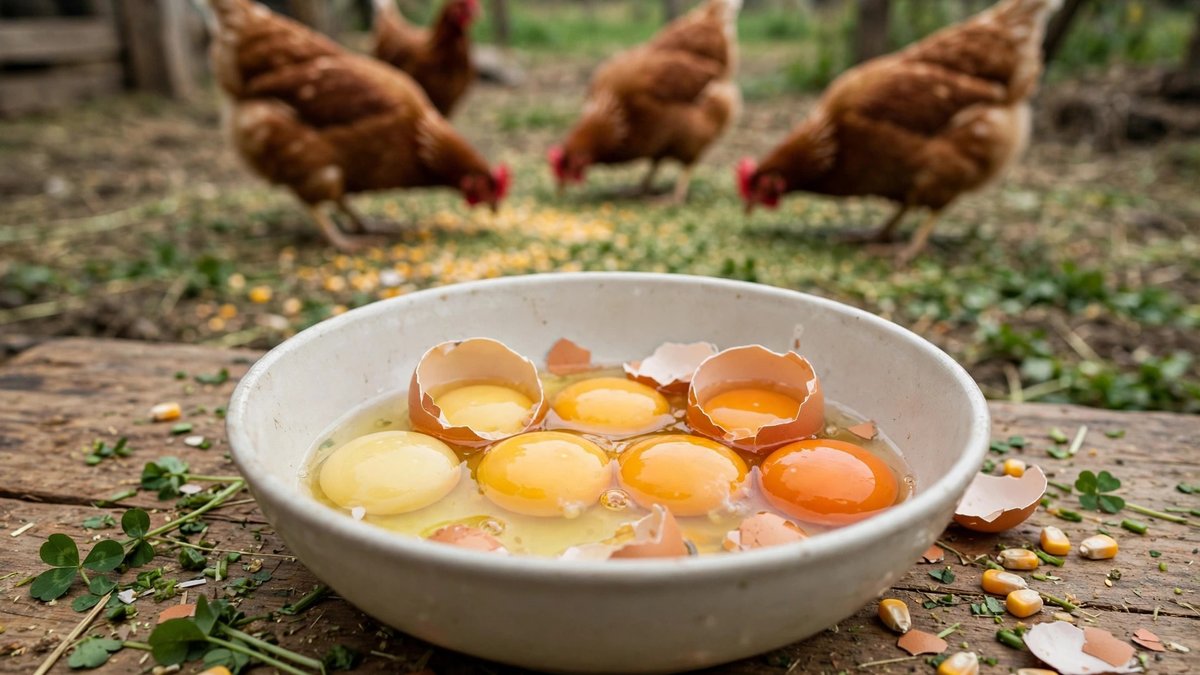
Key points
- A deep orange egg yolk is not a report card.
- That surprises shoppers, because orange looks richer and richer is easy to read as better.
- Yolk color comes mostly from xanthophyll, a yellow pigment family found in plants.
A deep orange egg yolk is not a report card. It is a menu. The color of a yolk records the pigments in the hen's recent feed, and Kansas State University extension puts the point bluntly: yolk color has about zero effect on nutrition.
That surprises shoppers, because orange looks richer and richer is easy to read as better. The chemistry says otherwise. A hen cannot make yolk color herself. Every shade, from pale cream to near red orange, was eaten first.
The pigment pipeline
Yolk color comes mostly from xanthophyll, a yellow pigment family found in plants. Yellow corn carries a lot of it. Alfalfa and leafy greens carry it. Marigold meal, added to feed in many countries for exactly this purpose, is loaded with it. The hen absorbs the pigments as she digests her feed, and they travel to the yolk as it forms, tinting it on the way in.
Change the feed and the tint follows. Hens fed mostly wheat, barley, or sorghum, grains with little yellow pigment, lay eggs with pale yolks. The Kansas State extension newsletter walks through the same pattern: the color in the diet is mostly from yellow corn, birds on low pigment grains lay pale, and specialty ingredients such as marigold push the shade deeper. Two hens of the same breed, in the same barn, can lay noticeably different eggs if their feed differs.
What the color does not tell you
The extension list of non meanings is long. Yolk color does not show that a hen is organic. It does not show that she gets more sunlight. It is not really a breed trait either. Bugs and worms have no effect on it. And the claim many shoppers make, that a darker yolk proves a healthier hen, is not connected to the color at all.
Nutrition follows the same rule, with one honest wrinkle. University of Georgia dietetics director Emma Laing makes the careful version of the point: hens eating more carotenoid rich feed or a varied foraging diet can produce eggs higher in some nutrients, but, in her words, the color of the yolk will not always indicate this. The pigment itself is a nutrient family, and specialty feeds can add lutein or omega 3 fats to an egg. But you cannot see protein, vitamins, or fat quality in a shade of orange. A pale yolk from a hen on complete, balanced feed is a fully nutritious egg that simply ate less pigment.
Taste follows color just as loosely. Many people swear a dark yolk tastes stronger. The extension service notes that most data shows this is not true. What changes with the orange is mostly the look of the plate. So read a yolk for what it is: a small, honest record of what the hen had for dinner, and nothing beyond that.