
Baby Carrots Are Not Babies. They Are Grown Carrots Cut Down to Size.
Most bagged baby carrots are full grown carrots cut to two inches, peeled, and polished. A California farmer built the product in 1986 out of carrots he used to throw away.
Key points
- The baby carrots in the bag are not babies.
- The United States Department of Agriculture writes that name into its own buying rules.
- The cut version starts with a waste problem.
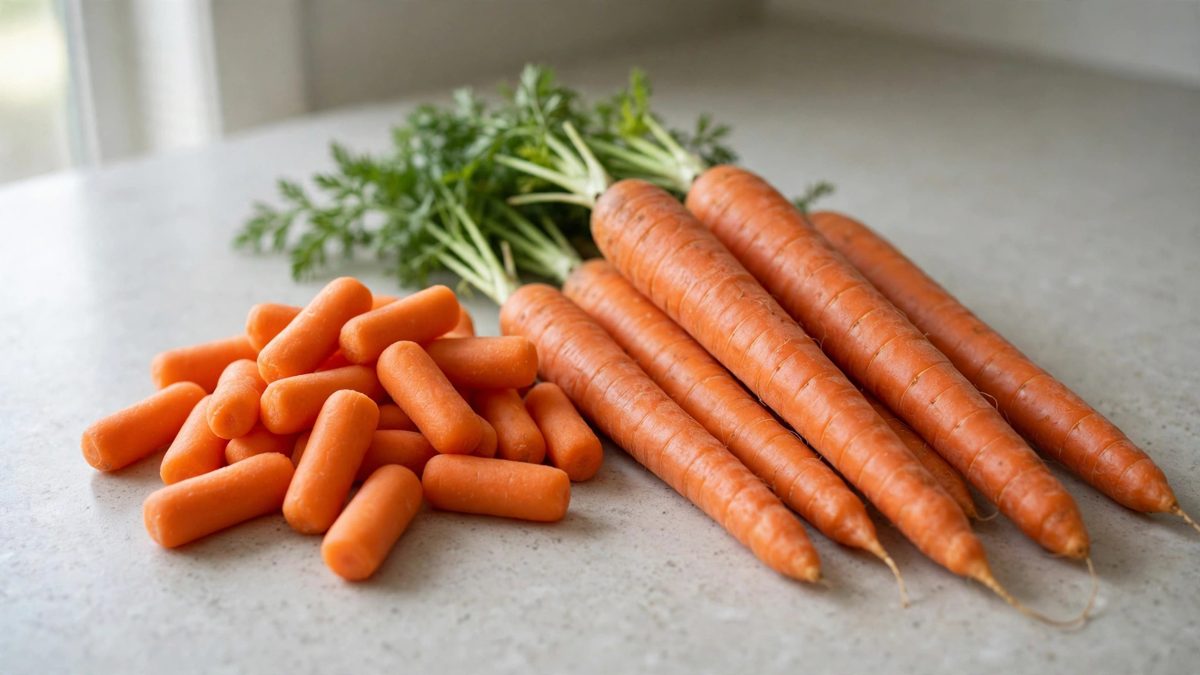
The baby carrots in the bag are not babies. Most are full grown carrots that were cut into two inch pieces, peeled, and polished round by machines. The food even has a separate official name for them: baby-cut carrots.
The United States Department of Agriculture writes that name into its own buying rules. Its commodity specification for fresh vegetables lists baby-cut, peeled carrots as a style of their own, cut to two inches in length. A true baby carrot is a different product: a carrot pulled young, before it reaches full size.
The farmer who cut the culls
The cut version starts with a waste problem. California carrot farmer Mike Yurosek was throwing away carrots that were bent, broken, or too knobby to sell. In 1986, as the World Carrot Museum's history of the product records, he began cutting those full grown culls down to size instead, running the pieces through a green bean cutter that clipped them to two inches and then a potato peeler that smoothed the edges.
The trims turned throwaway carrots into a new snack. The pieces came pre-washed, pre-peeled, and ready to eat from the bag. Stores took them, and the baby-cut became the standard bagged carrot in American supermarkets.
How the bag gets filled today
The steps are still the ones Yurosek improvised. Large carrots are machine cut into two inch sections. The sections are then abraded, scraped down and rounded by the same process, which strips the peel and shapes each piece to a uniform size. One long carrot can yield several baby-cut pieces.
Long, slender carrot varieties suit the machines best, so growers now plant carrots bred for the cut trade, which the museum describes as the modern form of the business Yurosek started with culls. The product that began as a rescue for ugly carrots became the main crop.
Why the name misleads
Baby sounds like a stage of life. For the bagged product, it is a size and a shape. Nothing about a baby-cut carrot is young except the piece. The carrot inside was grown to full size, and its flavor comes from that full growth, cut down at the plant.
Check the label the next time you buy a bag. If it says baby-cut, you are holding grown carrots in a smaller uniform. The name on the bag tells the truth, in smaller print than the picture suggests.