
Antarctic Icefish Have Clear Blood and No Hemoglobin at All
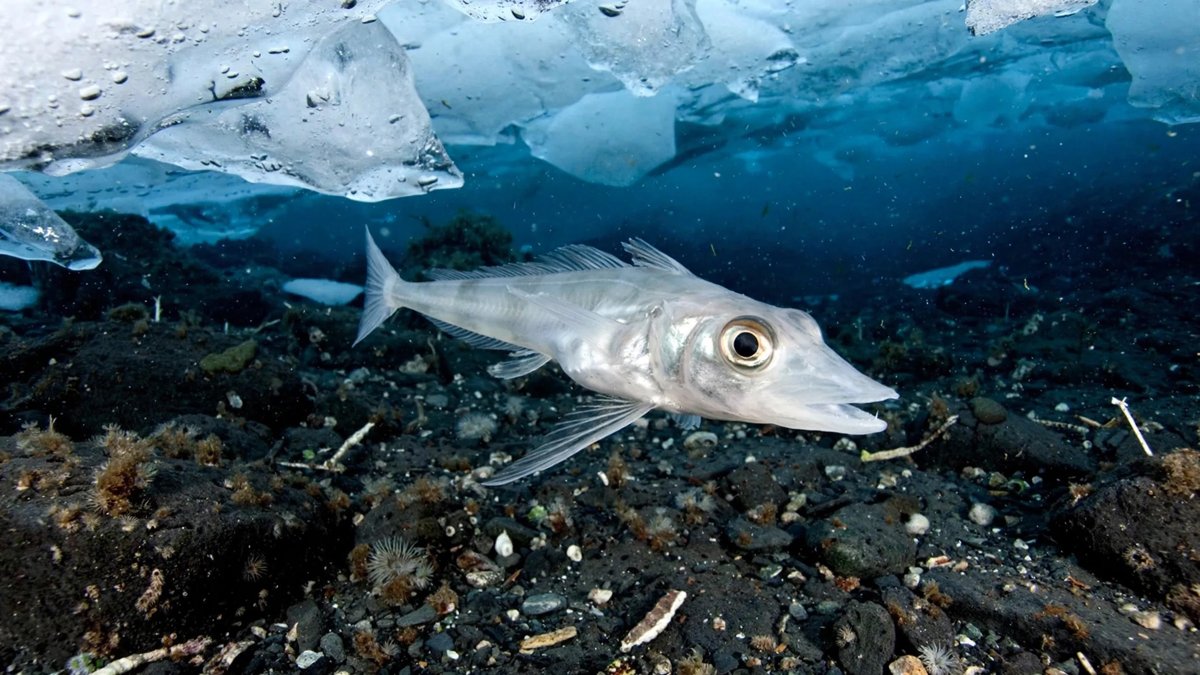
Every other vertebrate on Earth runs on red blood. The 16 species of Antarctic icefish lost their hemoglobin and red blood cells, and survive on oxygen dissolved in plasma.
Key points
- Cut open any fish, bird, reptile or mammal and the blood is red.
- In December 1927, Norwegian zoologist Ditlef Rustad pulled a strange fish from the waters off Bouvet Island, far south in the Atlantic.
- The family, Channichthyidae, holds 16 recognised species, all living in the cold Southern Ocean around Antarctica.
Cut open any fish, bird, reptile or mammal and the blood is red. Cut open an Antarctic icefish and the blood runs clear, like water with a milky tint. The icefish are the only vertebrates known to live with no hemoglobin and no red blood cells at all.
A catch that made no sense
In December 1927, Norwegian zoologist Ditlef Rustad pulled a strange fish from the waters off Bouvet Island, far south in the Atlantic. It had a long jaw, pale gills and blood he described in his notebook as colourless. The Scientist recounts that biochemist Johan Ruud confirmed the puzzle in a 1954 Nature paper: the fish, now called the blackfin icefish, lacked both red blood cells and hemoglobin, the protein that carries oxygen in every other backboned animal.
The family, Channichthyidae, holds 16 recognised species, all living in the cold Southern Ocean around Antarctica. Among roughly 50,000 vertebrate species, they stand alone.
Oxygen the slow way
Hemoglobin is efficient. A red-blooded fish moves most of its oxygen locked onto the protein inside red cells. Icefish move oxygen only as gas dissolved directly in their blood plasma. Research summarised in Genome Biology and Evolution puts that at about 10 percent of the oxygen a red-blooded relative carries in the same volume of blood.
The fish pay for the loss with a set of workarounds. They have oversized hearts and wide blood vessels, and they pump a large volume of blood. Their blood is thin, since it carries no cells, so the heart spends less effort pushing it. They also live where the water does the hardest part for them. The Southern Ocean sits near freezing and holds far more dissolved oxygen than warm seas. Cold water and low energy needs keep demand down to what dissolved oxygen can supply.
Genes deleted, not switched off
This is not a case of genes sitting idle. A 2025 study in Genome Biology and Evolution compared the genomes of eight icefish species with ten red-blooded relatives and traced how both hemoglobin gene clusters were deleted in the icefish ancestor. Jumping pieces of DNA called transposable elements sit exactly at the edges of the missing clusters, which points to them cutting the genes out. All that remains is a single leftover piece, the third exon of one alpha-globin gene, like the last page of a deleted file.
Earlier work on PubMed records the same picture from the other side: icefish genomes keep inactive scraps of alpha-globin sequence but have lost the beta-globin gene outright. The loss happened in a shared ancestor after icefish split from their dragonfish cousins about 5.3 million years ago.
A loss that only worked in one ocean
Losing hemoglobin would kill almost any other fish. It worked here, scientists argue, because the loss happened in water so cold and so rich in oxygen that the protein had become less necessary. Once the genes were gone, the fish rebuilt their circulation around the gap.
That makes the icefish a rare natural experiment. They show that a trait found in every other vertebrate, red oxygen-carrying blood, is not a fixed rule of body design. It is a tool, and in one freezing ocean, evolution threw the tool away and kept the fish.