
Why Leaves Change Color in Fall: The Yellow Was Hidden, the Red Is Made Fresh
Fall does not paint the leaves. The yellow and orange were there all summer, hidden under green chlorophyll, and the red is built fresh from sugar trapped in the leaf.
Key points
- The red and gold of a fall forest were inside the leaves all summer.
- The Smithsonian explains the trigger.
- Red works the other way.
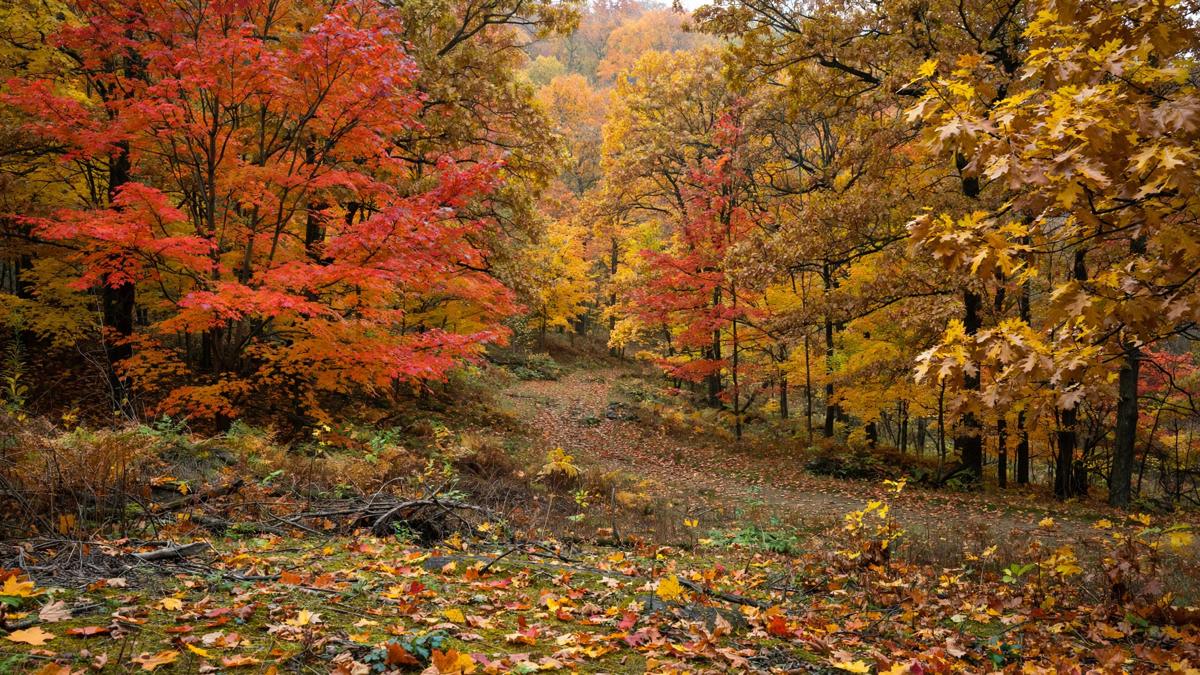
The red and gold of a fall forest were inside the leaves all summer. You just could not see them. All season, green chlorophyll runs the leaf, soaking up sunlight and turning it into sugars that feed the tree. That green is so strong it covers the yellow and orange pigments sitting next to it. Fall does not paint the leaves. Fall removes the paint that was hiding the color.
The Smithsonian explains the trigger. As days get shorter and temperatures drop, trees get less direct sunlight, and the chlorophyll in the leaves breaks down. The tree stops replacing it. As the green fades, the yellow and orange pigments that were there all along show through. Those pigments are carotenoids, the same family that colors carrots.
Red is the one color the leaf makes fresh
Red works the other way. Dark red and purple fall colors do not hide under the green waiting to be revealed. They are built new in the fall. The Smithsonian describes the change this way: sugars that get trapped inside the leaf produce new pigments called anthocyanins, which were not part of the leaf during the growing season. Oaks and dogwoods are among the trees likely to turn red, and the U.S. Forest Service adds that maples carry an even wider range, with reds and purples deepening as more anthocyanins form.
The Forest Service also ties the reds to stress signals late in the season, including the first frosts, and to the chemistry inside the leaf cells, where acidity and mineral content shift the shade. That is why two trees of the same species, standing side by side, can turn different reds. They hold different sugar loads, different cell chemistry, and slightly different light.
Why some years blaze and some years fade
Weather in the final weeks decides the show. The Smithsonian notes that the best colors come when the weather is dry, sunny and cool. NASA's Earthdata program gives the same recipe in more detail: a run of warm, sunny fall days followed by cool, crisp nights above freezing produces the richest color. Warm days let the leaf keep making sugar. Cool nights slow the sugar from leaving, so more of it stays trapped in the leaf, and trapped sugar is the raw material for red anthocyanins.
A hard freeze too early can kill the leaf before the colors finish forming. A wet, grey fall gives duller color because cloudy days cut sugar production. Drought can push leaves to drop early. The calendar is set mostly by day length, which is why the turn comes at roughly the same time each year, but the quality of the color is set by the weather of a few short weeks.
The ending is practical, not decorative. As the season closes, the tree builds a protective seal between each leaf and its branch, cutting the leaf off so the tree can hold its water through winter. The leaf falls. Evergreen trees skip the whole display for the opposite reason: their needles keep their green and keep working through the cold. The fall show is the visible cost of a deciduous tree shutting down its food factories, and reclaiming what it can before it lets go.