
SpaceX Cargo Launch Paints a Jellyfish Over the East Coast at Dawn
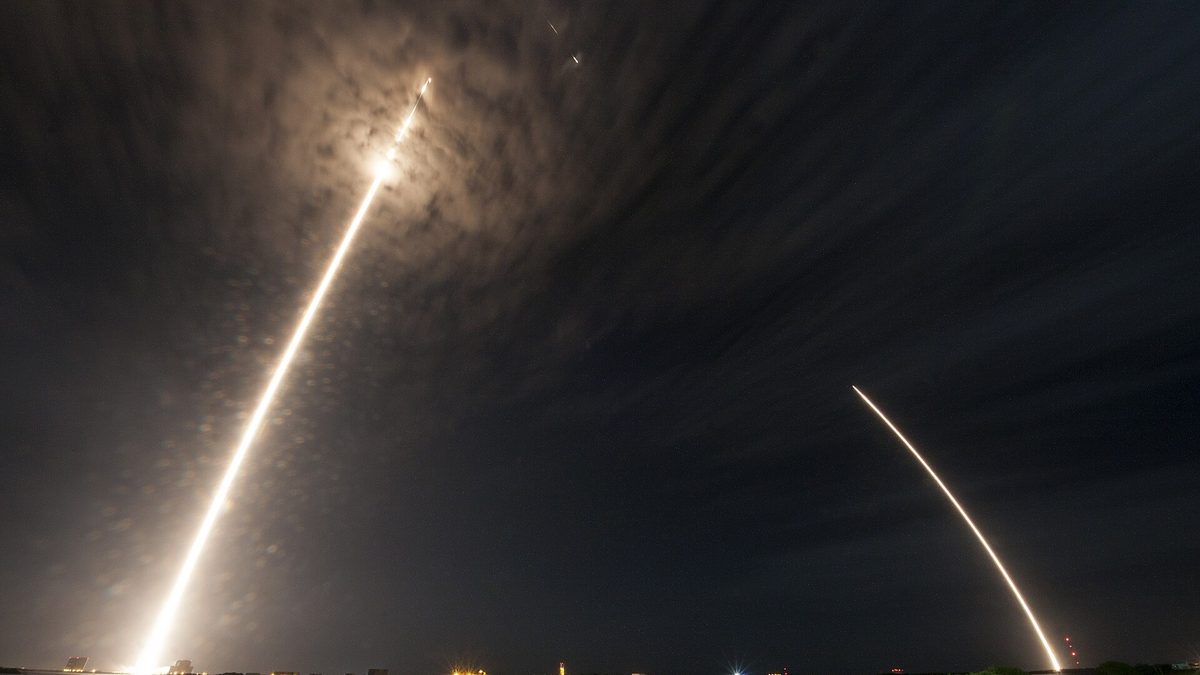
A Falcon 9 lifted off at 6:33 a.m. on Oct. 13 with about 6,500 pounds for the space station, and sunlight on its exhaust plume drew a glowing jellyfish seen from Florida to New Jersey.
Key points
- CAPE CANAVERAL: People along the East Coast woke up on Tuesday, Oct. 13, to a glowing shape in the dawn sky that looked like a jellyfish.
- The mission is SpaceX CRS-35, the company's 35th resupply flight for NASA under the Commercial Resupply Services contract.
- Resupply flights are the station's supply line.
CAPE CANAVERAL: People along the East Coast woke up on Tuesday, Oct. 13, to a glowing shape in the dawn sky that looked like a jellyfish. It was a rocket. A SpaceX Falcon 9 lifted off at 6:33 a.m. from Launch Complex 40 at Cape Canaveral Space Force Station, carrying a Cargo Dragon spacecraft toward the International Space Station, and sunlight hit its exhaust plume while the ground below was still dark.
The mission is SpaceX CRS-35, the company's 35th resupply flight for NASA under the Commercial Resupply Services contract. The Cargo Dragon carries about 6,500 pounds of supplies and science for the crew on the station, according to NASA figures carried by USA Today Network outlets. One count from New Jersey coverage put the load at more than 6,300 pounds. The booster came back to Landing Zone 40, sending sonic booms across Florida's Space Coast. The Dragon is set to dock on its own at about 11 a.m. on Thursday, Oct. 15, at the space facing zenith port of the station's Harmony module.
Why it matters
Resupply flights are the station's supply line. Food, spare parts and experiments ride up, and time sensitive research rides down. CRS-35 carries work on producing artificial retinas, on how microgravity affects 3D printed heart tissue, on glass formation from unusual materials, and on links between inflammation and neurodegenerative disease. A student experiment from Florida Tech in Melbourne, Florida, is also on board. If the Dragon docks on schedule on Oct. 15, the station crew gets a fresh load of science to work through, and the mission clock for the return trip starts.
The jellyfish effect is part of why this launch reached people who never follow the space program. The physics is simple. The Falcon 9 climbed into sunlight high above a dark ground. Its exhaust spread out and caught the sun, glowing against the pre-dawn sky. Photographer John Kraus runs a predictor for exactly this effect, and Florida Today reported it flagged Tuesday's conditions as right. Reports and photos came in from Florida, from Tallahassee, from central Pennsylvania and from New Jersey, where the station itself made a bright pass just before the launch.
The context
SpaceX has flown cargo to the station for NASA for years, and CRS flights now run on a steady rhythm. What changes from flight to flight is the cargo and the viewing geometry. Early morning launches up the Atlantic coast are the ones that put on a show, because the rocket heads northeast along the shoreline in twilight. Tuesday's window was instantaneous, which means the rocket had to go at 6:33 a.m. or not that morning at all. A backup chance was listed for Wednesday, Oct. 14 at 6:08 a.m. It was not needed. Sunrise at Cape Canaveral came at 7:21 a.m., nearly an hour after liftoff, which is what kept the ground dark enough for the plume to stand out.
In New Jersey, chief meteorologist Dan Zarrow noted the station flyover minutes before the launch lasted about eight minutes as a bright, steady point of light. Then the Falcon followed on a similar path. For early risers from the Jersey Shore to Pennsylvania, the morning delivered two passes in a row, the station first and its supply ship second.
What happens next
The Dragon coasts until Thursday, Oct. 15, then docks at about 11 a.m. Station crew will unload the cargo and later pack the spacecraft with research and hardware for the return trip. New Jersey coverage put the return in mid-November, with a splashdown off the coast of California. For viewers, the next chance to see a pass comes Wednesday, when the station flies over the East Coast again. The jellyfish, though, needs a rocket, the right hour and clear air all at once. Tuesday had all three.
Key numbers
Liftoff was at 6:33 a.m. on Tuesday, Oct. 13, from Launch Complex 40. The Cargo Dragon carries about 6,500 pounds of supplies and science. This is SpaceX's 35th NASA resupply mission. Docking is set for about 11 a.m. on Oct. 15 at the Harmony module's zenith port. Sunrise at the Cape was 7:21 a.m., 48 minutes after liftoff.
Timeline
- Oct 13, 2026Falcon 9 lifts off at 6:33 a.m. from Launch Complex 40 with the CRS-35 Cargo Dragon.
- Oct 15, 2026Cargo Dragon is set to dock at about 11 a.m. at the Harmony module's zenith port.