
The First Vegetable Grown in Space Was a Potato, Aboard the Shuttle Columbia in 1995
Before lettuce, before peppers, before any space salad, five small potatoes grew in a chamber on the space shuttle Columbia, and NASA still calls the potato the first vegetable grown in space.
Key points
- The first vegetable grown in space was not lettuce or a pepper.
- The flight was STS-73, Columbia's mission with the United States Microgravity Laboratory, which launched on October 20, 1995 and landed on November 5.
- The experiment asked a plain question.
The first vegetable grown in space was not lettuce or a pepper. It was a potato. In October 1995, potato plants flew aboard the space shuttle Columbia and formed small tubers in orbit, and NASA describes the potato as the first vegetable grown in space.
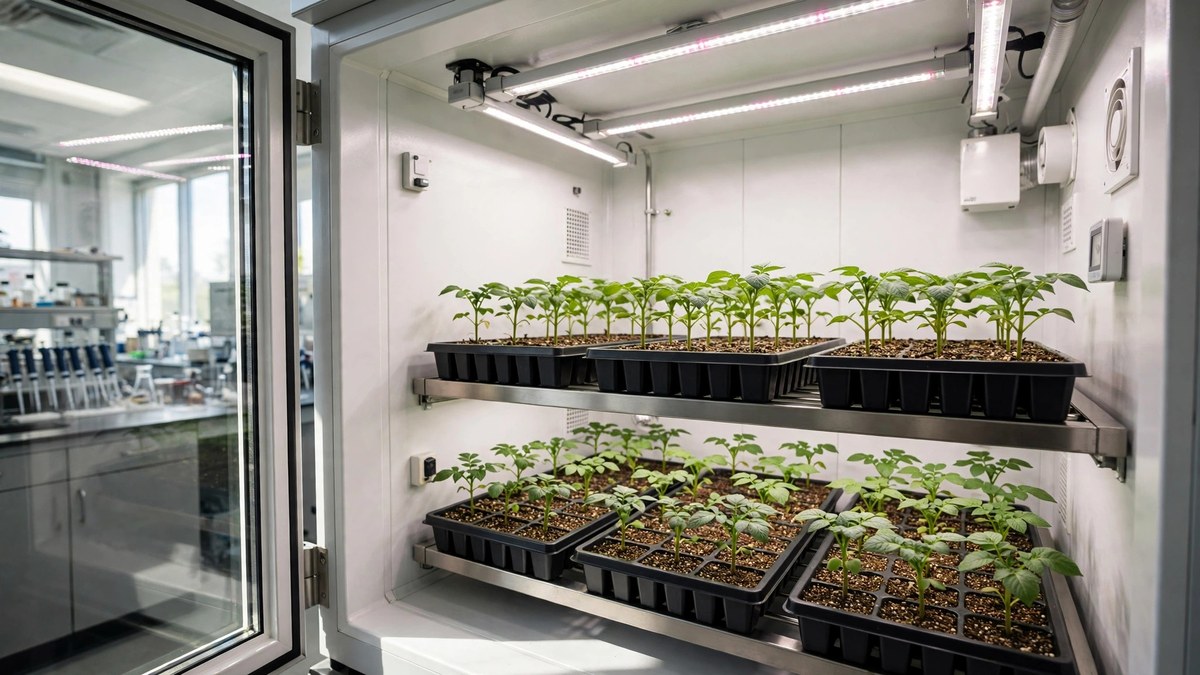
The flight was STS-73, Columbia's mission with the United States Microgravity Laboratory, which launched on October 20, 1995 and landed on November 5. Packed into the shuttle was a plant growth unit called Astroculture, built to give plants controlled light, water and nutrients in weightlessness. The crop inside was the Norland potato, Solanum tuberosum, grown not from seed but from explants: small cuttings made of a leaf, a bud and a piece of stem.
Five small potatoes
The experiment asked a plain question. A potato tuber is a swollen underground stem, and on Earth gravity is part of the world it grows in. Would a tuber form normally with no gravity at all? The answer came back yes. The shuttle's mission summary records that five small potatoes grew on orbit in the Astroculture facility. When scientists later compared the space tubers with potatoes grown in the same hardware on the ground, the study archived by NASA found the structure of the space-grown tubers was similar to the controls, with the same ordered tissue. Gravity, it turned out, was not required to build a proper potato.
The work came out of a partnership between NASA and the University of Wisconsin-Madison, where researchers had spent years developing controlled environment growing systems for spaceflight. Potatoes were a practical first choice: they are calorie dense, they store well, and a single plant part can produce new tubers without waiting for seeds to mature.
Why a potato went first
Long space missions cannot carry every meal from Earth. A crop that feeds a crew has to earn its place in a small chamber, and the potato earns it the way it has on Earth for centuries, by turning modest inputs into a lot of food. The 1995 flight was an early proof that edible food could be produced in orbit at all. Two decades later, astronauts aboard the International Space Station harvested and ate red romaine lettuce grown on the station, the first space-grown food eaten fresh by a crew. The lettuce got the headlines. The potato had quietly gone first, thirty years ago, in a chamber the size of a suitcase.