
North Korea Test-Fires Two Types of Cruise Missiles From Its Nuclear Attack Submarine
State media said the October 14 test in the East Sea fired two kinds of submarine-launched strategic cruise missiles, in what experts believe was the first public launch from the Hero Kim Kun Ok. South Korea said it tracked the missiles throughout their flights.
Key points
- SEOUL.
- KCNA said the firing was meant to check the readiness of the North's underwater combat systems and to train its navy for strategic missions.
- Based on those photographs, South Korean experts believe the missiles were fired from the Hero Kim Kun Ok, a 3,000 ton submarine unveiled in September 2023 as the North's first tactical nuclear…
SEOUL. North Korea test-fired two types of submarine-launched strategic cruise missiles in the East Sea on Wednesday, October 14, the state run Korean Central News Agency reported on Thursday. The agency said the Missile Administration test caused no harm to the security of neighbouring countries.
KCNA said the firing was meant to check the readiness of the North's underwater combat systems and to train its navy for strategic missions. Its photographs showed one missile climbing vertically out of the sea and another leaving the water at a steep angle, trailing flame.
A first launch from the nuclear attack boat
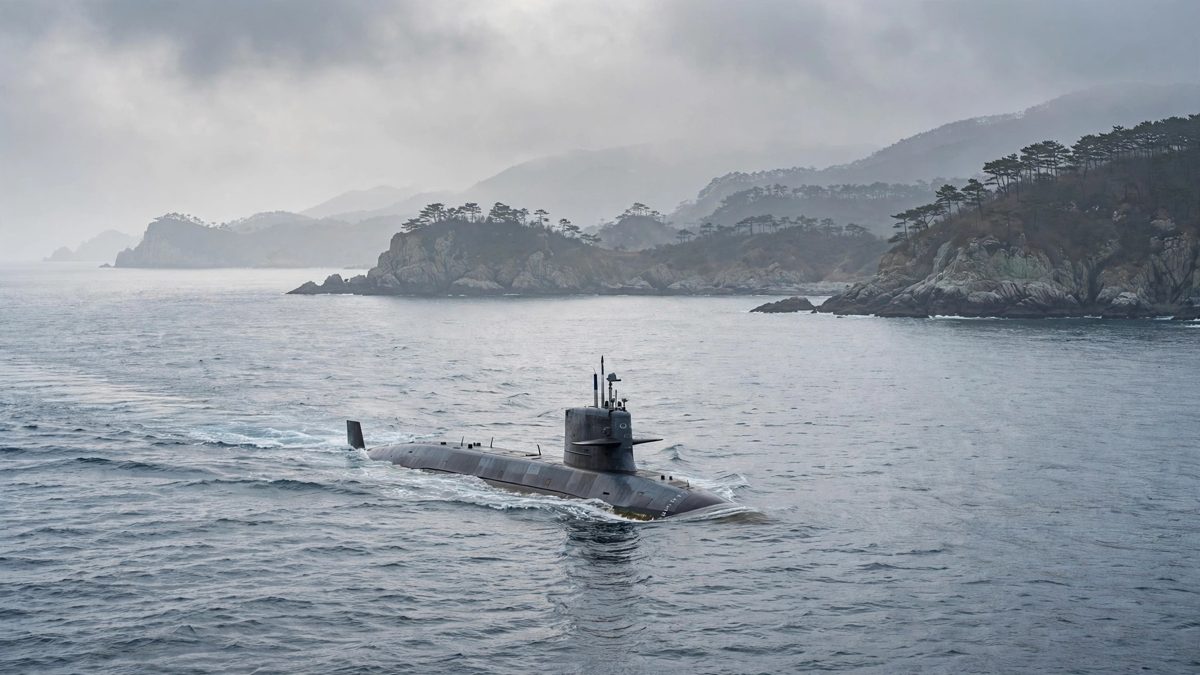
Based on those photographs, South Korean experts believe the missiles were fired from the Hero Kim Kun Ok, a 3,000 ton submarine unveiled in September 2023 as the North's first tactical nuclear attack submarine. If that is right, this was the first public launch from the boat since its unveiling, and the North's first reported underwater missile launch in nearly three years.
Officials and experts in Seoul believe the two types were fired in two different ways, one from a vertical launch tube and one through a torpedo tube. KCNA gave no flight times and no distances.
South Korea's Joint Chiefs of Staff said its forces tracked the missiles from before the launch to the end of their flights. Cruise missiles are jet powered and fly low, at about 100 metres, which makes them harder for radar to pick up than ballistic missiles.
Why two types at once
Analysts in Seoul read the paired test as a detection problem set for air defences. Hong Min, a senior research fellow at the Korea Institute for National Unification, said two missile types with different ranges, speeds and approach directions, fired at staggered intervals, would force defenders to engage targets arriving from different directions at different times.
Shin Jong-woo, of the Korea Defense Security Forum, said the North appeared to be testing combat systems to make the submarine operational, and that ballistic missile tests from submarines would likely follow.
Some analysts believe the two types were the Hwasal-2 and the Pulhwasal-3-31. The Pulhwasal-3-31 has a reported range of up to 2,000 kilometres, enough to cover the whole Korean Peninsula and US bases in Japan, and is believed to be able to carry the Hwasan-31, a warhead North Korea calls a tactical nuclear weapon. Those are analyst assessments, not confirmed facts. North Korea named neither missile.
Kim Jong-sik, a senior Workers' Party official, and Jang Chang-ha, head of the Missile Administration, watched the test. Leader Kim Jong Un did not attend. Analysts said sending working level officials could signal that Pyongyang now treats such firings as routine deployment work.
A tense month on the peninsula
The test came after weeks of friction over a landmine explosion on September 21 in the South Korean controlled part of the Demilitarised Zone, which injured three South Korean soldiers. Seoul says the North planted the mines, and demanded an apology. Pyongyang denies it.
On Monday, October 12, North Korea fired tactical ballistic missiles toward the sea off its east coast. Thursday's announcement made it two kinds of missile test inside three days.
The same day, Seoul announced the annual Hoguk field exercise, a joint Army, Navy and Air Force drill, will run from October 19 to October 30.
What remains unclear is how far the sea based force has really come. Outside experts say its true state is still hard to judge, and Thursday's test disclosed no range or flight data to judge it by.
Timeline
- Oct 12, 2026North Korea fires tactical ballistic missiles toward the sea off its east coast. State media later says the test checked an upgraded core part of the missile system.
- Oct 14, 2026North Korea's Missile Administration test-fires two types of submarine-launched strategic cruise missiles in the East Sea. South Korea's military tracks the missiles throughout their flights.
- Oct 15, 2026KCNA reports the submarine test, the North's first reported underwater missile launch in nearly three years. The same day, Seoul announces its annual Hoguk joint exercise will run from October 19 to October 30.