
Appeals Court Rules Trump California Guard Deployment to Los Angeles Was Unlawful
A 9th Circuit panel ruled 2 to 1 on Friday that President Trump had no authority to federalize 4,000 California National Guard members in June 2025, affirming the order that returns control of the Guard to Governor Gavin Newsom.
Key points
- A divided panel of the US Court of Appeals for the 9th Circuit ruled on Friday, October 23, 2026, that President Donald Trump acted unlawfully when he federalized about 4,000 members of the…
- Judge Jennifer Sung wrote the majority opinion in Newsom v.
- Trump relied on a federal law, 10 U.S.C.
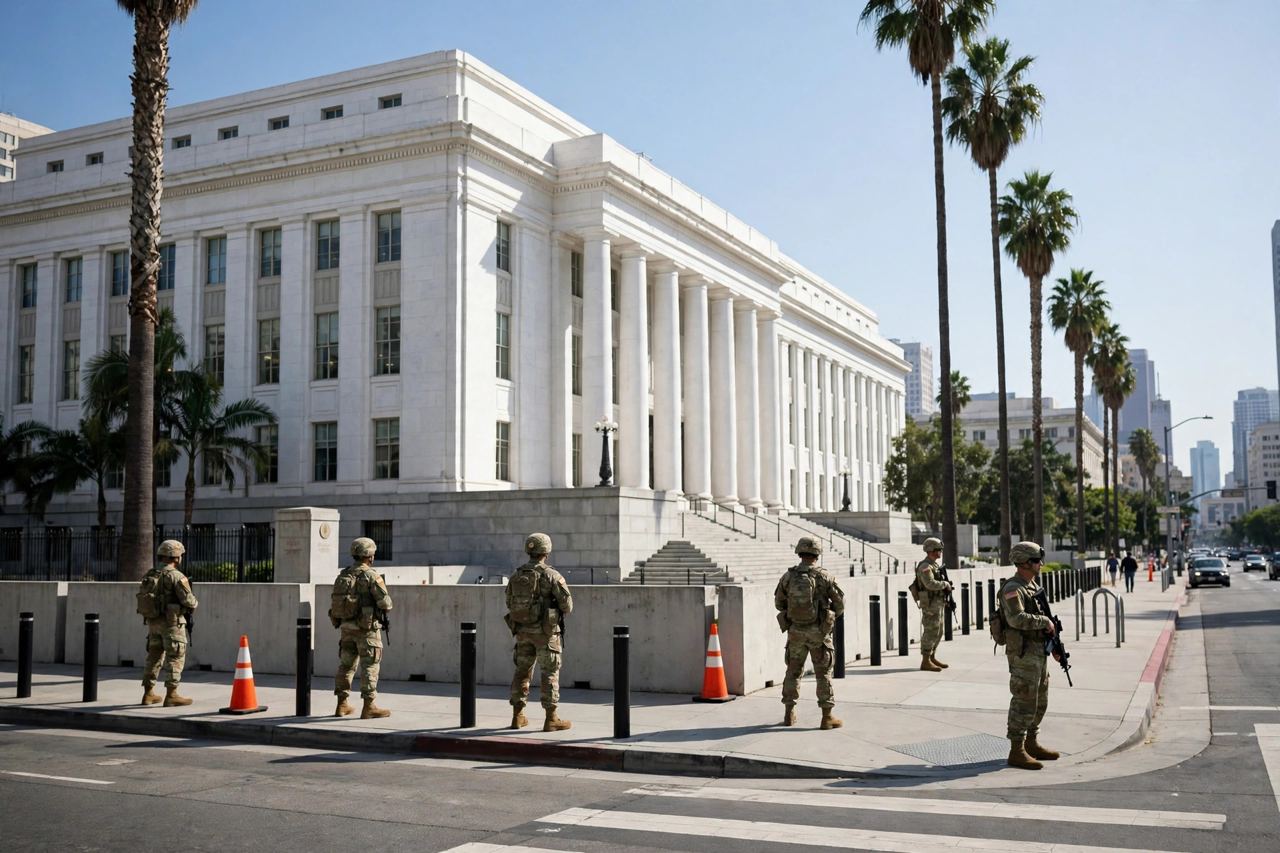
A divided panel of the US Court of Appeals for the 9th Circuit ruled on Friday, October 23, 2026, that President Donald Trump acted unlawfully when he federalized about 4,000 members of the California National Guard and sent them to Los Angeles in June 2025. The 2 to 1 decision affirmed a lower court order that blocked the deployment and directed the administration to return control of the Guard to Governor Gavin Newsom.
What the court held
Judge Jennifer Sung wrote the majority opinion in Newsom v. Trump, No. 25-3727. Judge Eric Miller joined the opinion in full and wrote a separate concurrence. Judge Mark Bennett dissented.
Trump relied on a federal law, 10 U.S.C. section 12406, which allows a president to federalize the Guard when there is a rebellion or danger of a rebellion, or when the president is unable with the regular forces to execute the laws. The majority held that neither condition was met in Los Angeles. The court found that while some protesters committed violence, most demonstrated peacefully, local police brought the situation under control, and there was no evidence of an organized effort to overthrow the government. The president's claim of a rebellion, Sung wrote, "does not reflect a colorable assessment within a 'range of honest judgment.'"
The panel also read "regular forces" to mean the regular US military. Under a Supreme Court ruling from December in a similar Illinois case, Trump v. Illinois, a president cannot claim he is unable to execute the laws with the regular forces unless he first has legal authority to use the regular military for that purpose. The court concluded that the order violated the constitutional separation of powers and the Tenth Amendment.
How the case began
In June 2025, during protests over federal immigration raids in Los Angeles, Trump placed about 4,000 California Guard members under federal control for 60 days, saying they were needed to protect federal property and personnel. He acted over the objection of Newsom, who commands the state Guard as governor. Attorney General Rob Bonta sued on behalf of the governor and the state.
US District Judge Charles Breyer ruled for California and ordered the deployment blocked. The same three appeals judges initially sided with Trump in a temporary order that allowed the deployment to proceed while the case moved forward. Friday's published opinion reversed that early position after the Supreme Court's Illinois ruling changed the legal test the panel had to apply.
Reaction and what comes next
"Today is a crucial day for the rule of law, upholding the Constitution, and defending democracy," Newsom said in a statement released by his office. "California continues to stand as a first line of defense against Donald Trump's authoritarianism." Bonta said the deployment, in his words, "with no rhyme or reason was a clear example of federal overreach."
Bennett, in dissent, argued that the court should not have decided the appeal and that California lacked a valid legal basis to sue. Of the state's claim, he wrote, "In today's majority opinion, that Hail Mary pass scores."
The White House did not immediately respond to a request for comment, Newsmax reported. The administration can ask the full 9th Circuit to rehear the case or appeal to the Supreme Court. Separate appeals over extensions of the deployment and a ruling that the troops violated the Posse Comitatus Act remain pending, so Friday's decision does not end every legal fight that grew out of the Los Angeles deployment.
Timeline
- June 2025President Trump places about 4,000 California National Guard members under federal control for 60 days during protests over immigration raids in Los Angeles. Governor Newsom objects and California sues.
- June 2025District Judge Charles Breyer orders the deployment blocked. A 9th Circuit panel initially lets the deployment proceed in a temporary order.
- December 2025The Supreme Court rules in the Illinois case, Trump v. Illinois, blocking a similar Guard federalization and changing the legal test.
- Oct 23, 2026The 9th Circuit rules 2 to 1 that the Los Angeles deployment was unlawful and affirms the order returning control of the Guard to Governor Newsom.
Sources
- Newsmax: Appeals Court Rules Trump Illegally Federalized Calif. Guard
- Office of Governor Gavin Newsom: Governor Newsom on court's final decision holding President Trump accountable for illegal federalization of the California National Guard
- MyNewsLA (City News Service): Appeals Court Rules Trump's National Guard Deployment to LA Was Unlawful