
Mayon Volcano Erupts in Albay as Philippines Raises Alert to Level 3
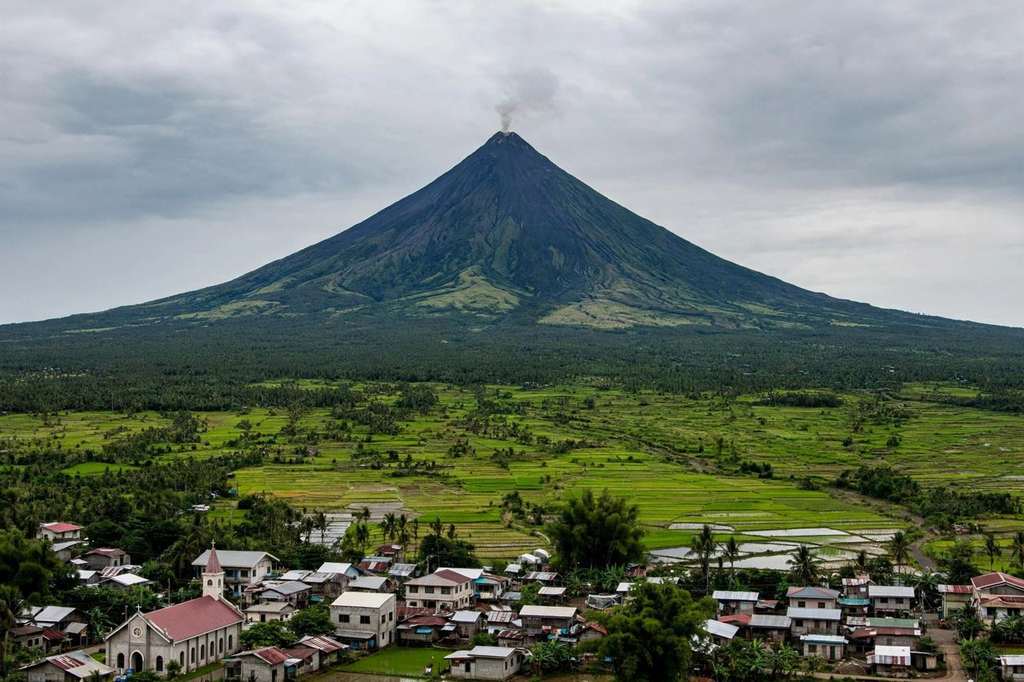
A moderately explosive eruption at 11:53 a.m. on Friday sent ash 3,000 meters above Mayon Volcano, and PHIVOLCS raised the alert to Level 3 and told people to stay out of the 6 kilometer danger zone.
Key points
- Mayon Volcano in Albay province erupted at 11:53 a.m. local time on Friday, October 30, in a moderately explosive burst that sent a grayish ash plume about 3,000 meters above the crater.
- PHIVOLCS recorded the eruption in its first eruption notification of the day.
- Alert Level 3 means an increased tendency toward a hazardous eruption.
Mayon Volcano in Albay province erupted at 11:53 a.m. local time on Friday, October 30, in a moderately explosive burst that sent a grayish ash plume about 3,000 meters above the crater. The Philippine Institute of Volcanology and Seismology, known as PHIVOLCS, said the eruption ended at 11:59 a.m., after nearly six minutes, and that the plume drifted west-southwest. The agency raised Mayon from Alert Level 2 to Alert Level 3 on its five level scale.
Ashfall and the danger zone
PHIVOLCS recorded the eruption in its first eruption notification of the day. In a bulletin at 12:30 p.m., the agency said ashfall was expected in Daraga, Guinobatan and nearby towns in Albay. It recommended evacuating the areas inside the 6 kilometer Permanent Danger Zone, where entry is prohibited, because of pyroclastic density currents, called uson locally, lava flows, rockfalls and other volcanic hazards. Airlines were told to avoid flying close to the summit.
Alert Level 3 means an increased tendency toward a hazardous eruption. PHIVOLCS defines the level as relatively high unrest, with magma close to or at the crater, and it says a hazardous eruption is possible within weeks if the unrest keeps rising. At Level 3 the agency will also consider extending the danger zone in the sector where the crater rim is low. No expansion had been announced by early afternoon.
A volcano that had only just settled
Mayon had held Alert Level 2 since August 5, when PHIVOLCS lowered it and warned that the volcano was still pressurized. Friday's eruption put it back at Level 3 less than three months later. The volcano first reached Level 3 this year on January 6, when Albay Governor Noel Rosal ordered the preemptive evacuation of almost 3,000 residents inside the danger zone. On May 2, lava collapses sent pyroclastic currents down its slopes, and ash fell on at least 52 villages in Camalig, Guinobatan and Ligao City. The Office of Civil Defense said more than 30,500 families were affected at that time.
In its 24 hour observation summary issued for October 30, before the eruption, PHIVOLCS counted 101 volcanic earthquakes and a sulfur dioxide flow of 1,413 tonnes a day, with a plume 100 meters above the crater. The agency had not yet issued a new daily bulletin at the raised alert level when the first reports came out.
As of 1:15 p.m. local time, no province wide evacuation order for October 30, no flight cancellation and no class suspension had been confirmed. Camalig Mayor Carlos Irwin Baldo Jr. posted the PHIVOLCS decision shortly after noon and told residents to stay out of the danger zone, stay home unless they had important business outside, and wear face masks when they went out.
The most active volcano in the Philippines
Mayon is the most active volcano in the Philippines, with more than 50 eruptions in the last four centuries, and a popular tourist destination because of its near perfect conical shape, Reuters reported. Its most destructive eruption came in February 1814, when lava flows buried an entire town and killed 1,200 people.
For families in Albay, the timing adds pressure. Many people are traveling home this weekend for All Saints Day and All Souls Day, and local disaster offices will set the next steps. Residents were told to follow their village and municipal disaster offices and to watch for lahars and sediment laden stream flows along channels draining the volcano during heavy rain.
Timeline
- Feb 1814Mayon's most destructive eruption buries a town in lava flows and kills 1,200 people.
- Jan 6, 2026Mayon reaches Alert Level 3 for the first time this year, and Albay orders the preemptive evacuation of almost 3,000 residents inside the danger zone.
- May 2, 2026Lava collapses send pyroclastic currents down Mayon's slopes, and ash falls on at least 52 villages in Camalig, Guinobatan and Ligao City.
- Aug 5, 2026PHIVOLCS lowers Mayon to Alert Level 2, while warning that the volcano is still pressurized.
- Oct 30, 2026A moderately explosive eruption at 11:53 a.m. local time sends ash 3,000 meters above the crater, and PHIVOLCS raises the alert back to Level 3.