
This Red Lake in Tanzania Preserves Dead Birds Like Stone Statues
Lake Natron is so alkaline that dead birds and bats wash up coated in mineral crust, stiff and intact. The same harsh water protects millions of flamingos.
Key points
- A lake in northern Tanzania can leave a dead bird looking like a statue.
- Lake Natron is a salt lake in the Great Rift Valley, near the Kenyan border.
- The chemistry starts underground.
A lake in northern Tanzania can leave a dead bird looking like a statue. Birds and bats found along the shore of Lake Natron sit stiff and pale, coated in a white mineral crust, with feathers and wings still in place. The lake does not turn living animals to stone. It preserves animals that are already dead, the way a natural mummy is preserved, and the effect is strange enough that photos of the shore have circled the world for more than a decade.
Water close to ammonia
Lake Natron is a salt lake in the Great Rift Valley, near the Kenyan border. Water flows in but has no river out, so it leaves only by evaporation. What stays behind is a concentrated brine rich in natron, a natural mix of sodium carbonate and sodium bicarbonate. Smithsonian Magazine reports the water has been measured at a pH as high as 10.5, nearly as alkaline as ammonia. In the hottest shallows the water can reach about 60 degrees Celsius, or 140 degrees Fahrenheit, according to reporting that cites NASA Earth Observatory data.
The chemistry starts underground. Volcanoes in the region, including Ol Doinyo Lengai about 20 kilometres to the south, produce carbonate-rich material that moves through faults and wells up in hot springs around the lake. Rain washes more mineral into the basin. Every dry season, evaporation concentrates it further.
Why the lake turns red
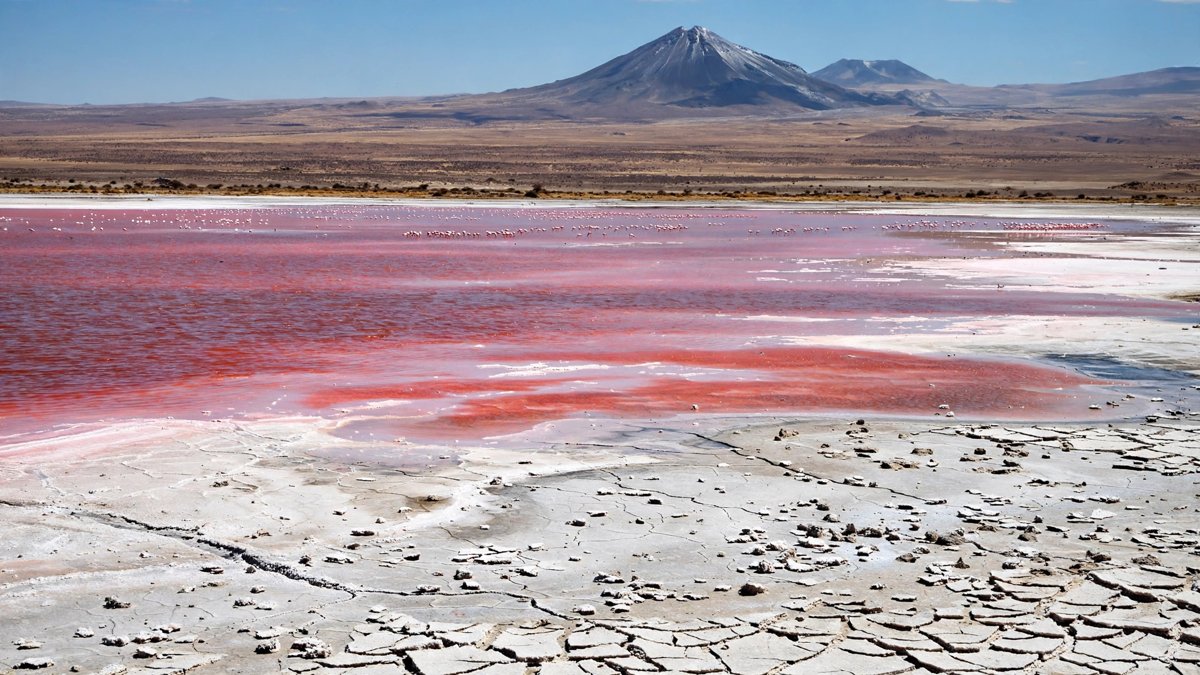
The red and pink colour is alive. NASA Earth Observatory images from space show the lake's salt crust coloured red and orange by salt-loving microorganisms. Cyanobacteria and haloarchaea carry red pigments that protect them from hard sunlight, and as the dry season shrinks the lake, the microbes multiply and the colours deepen. The crust pattern changes every time astronauts or satellites photograph it.
Those microbes feed one of the great bird gatherings on Earth. Lesser flamingos eat the algae, take in the same pigments, and breed on the lake in huge numbers. NASA notes the lake is the only regular breeding ground for lesser flamingos in East Africa, with about 2.5 million birds tied to the Rift Valley lakes. The caustic water works as a moat. Predators cannot cross it to reach the nests.
How the statues form
Photographer Nick Brandt found the preserved birds and bats in 2011 and published the images in 2013. He posed the stiff carcasses in lifelike positions for his photographs, which is why they look perched and alert. The preservation itself is real. Sodium carbonate dries tissue fast and slows decay. Ancient Egyptians used natron from dry lake beds for the same reason, to dry and preserve bodies during mummification.
Why the birds die is less certain. Brandt suggested the flat, reflective surface may confuse birds into striking the water, the way birds hit glass. That part stays a theory. What is settled is the chemistry: an animal that dies in or near the lake can be dried, salted and kept intact by the same minerals that make the water hostile to almost everything else.
A nursery built on danger
One fish survives at the edges. Alkaline tilapia live in the warmer, slightly less caustic water of the hot spring inlets. Almost nothing else can. That emptiness is the point for the flamingos. A lake too harsh for predators, rich in algae, and ringed by mineral flats is a safe place to raise chicks, as long as the rains keep the balance. Tanzania listed the Lake Natron Basin as a wetland of international importance in 2001.
So the statues and the flamingo flocks come from the same fact. The water preserves what dies in it and protects what has learned to live off it.