
India Top Court: Banks Must Repay Digital Arrest Victims
The Supreme Court said banks must compensate digital arrest and cyber fraud victims at least the amount lost when a bank's weak due diligence let the fraud through, and told the RBI to build that duty into its new rules.
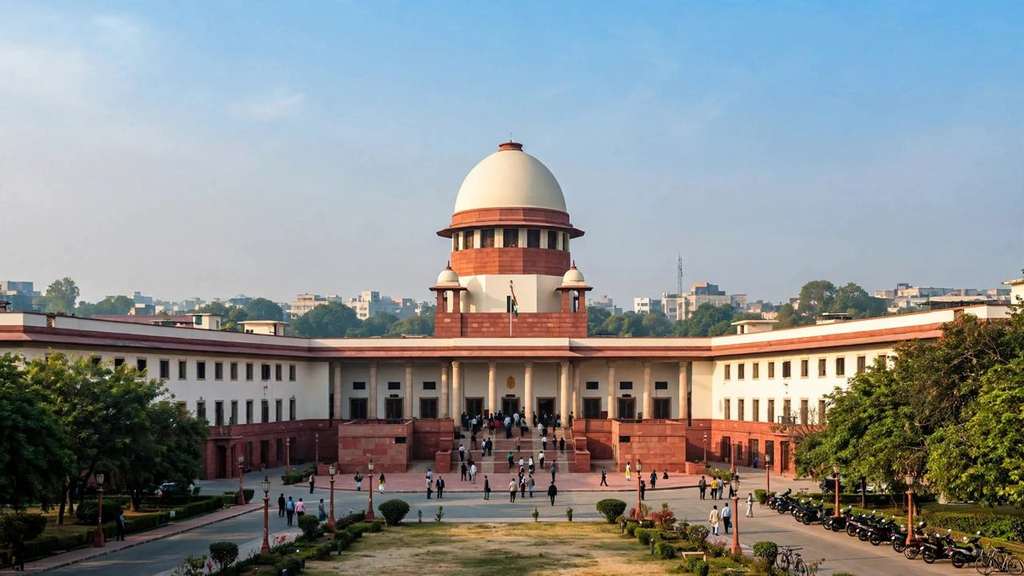
Key points
- India's Supreme Court has said banks must be made to repay victims of digital arrest scams and other cyber fraud at least the full amount lost, when an investigation finds the fraud went through…
- The bench was led by Chief Justice Surya Kant and included Justices Joymalya Bagchi and V Mohana.
- The court noted that reported cyber crime has fallen by about 50 percent, yet victims still lost close to Rs 800 crore this year.
India's Supreme Court has said banks must be made to repay victims of digital arrest scams and other cyber fraud at least the full amount lost, when an investigation finds the fraud went through because the bank failed its due diligence. The court was hearing its own suo motu case on digital arrest scams, proceedings titled In Re: Victims of Digital Arrest Related to Forged Documents.
The bench was led by Chief Justice Surya Kant and included Justices Joymalya Bagchi and V Mohana. It heard the case on Thursday, October 29, and the order was reported across Indian outlets on October 30. PTI reported the bench's words: the Reserve Bank of India's proposed framework "must mandate financial institutions to indemnify victims of digital arrest or cyber fraud through suitable compensation, not less than the amount lost by the customer, where the fraud or crime is found to have resulted from a failure of due diligence by the financial institution."
The numbers behind the order
The court noted that reported cyber crime has fallen by about 50 percent, yet victims still lost close to Rs 800 crore this year. A status report filed in court put complaints on the National Cybercrime Reporting Portal at 21,928 cases involving more than Rs 647 crore between January and August 2026. Attorney General R Venkataramani told the court that reported digital arrest cases had fallen by about half compared with the previous year.
Digital arrest is a phone and video scam. Callers pose as police or investigators, tell the victim a parcel, account or ID is tied to a crime, keep the victim on a call under threat of arrest, and push them to move money to accounts the criminals control.
What the court wants built
The bench said it will first examine the RBI's proposed Know Your Customer Amendment Directions, 2026, before the regulatory process proceeds. The directions are expected to be notified by November 30 and put into effect by December 31. The court called for preventive steps as well as compensation: banks should hold transactions that break from a customer's usual pattern, report suspicious activity automatically, verify unusual transfers in person, and alert nearby police stations about customers who may be victims. It also directed the RBI to list all the financial institutions the rules will cover by the next hearing.
The bench was blunt about soft measures. "Unless there is a penal direction to these banks, they will never mend their ways," it said, as reported by the Economic Times bureau. The order is not a blanket promise that every victim is repaid automatically. Compensation is tied to a finding that the institution's own failure let the fraud happen.
What happens next
The RBI must produce its list of covered institutions and the court will review the draft KYC directions before they are notified by November 30. If the compensation clause survives in the final rules, a victim whose bank ignored warning signs would have a route to full repayment that does not depend on catching the criminals. Banks, in turn, face a direct financial reason to stop suspicious transfers before the money leaves.
Timeline
- Oct 29, 2026A Supreme Court bench led by Chief Justice Surya Kant hears the suo motu digital arrest case and says banks must indemnify victims at least the amount lost where due diligence failed.
- Nov 30, 2026The RBI's proposed KYC Amendment Directions, 2026 are expected to be notified, with the court's review before the process proceeds.
- Dec 31, 2026The RBI directions are expected to be put into effect.