
Flamingos Are Born Grey. Their Pink Color Comes From Their Food.
Chicks hatch white and grey, pick up some pink at about six months, and take two or three years to reach the deep adult color. The color comes from carotenoid pigments in algae and brine shrimp.
Key points
- A flamingo chick hatches grey.
- Smithsonian National Zoo describes its hand raised chick plainly.
- Carotenoids are the red, orange and yellow pigments made by plants and algae.
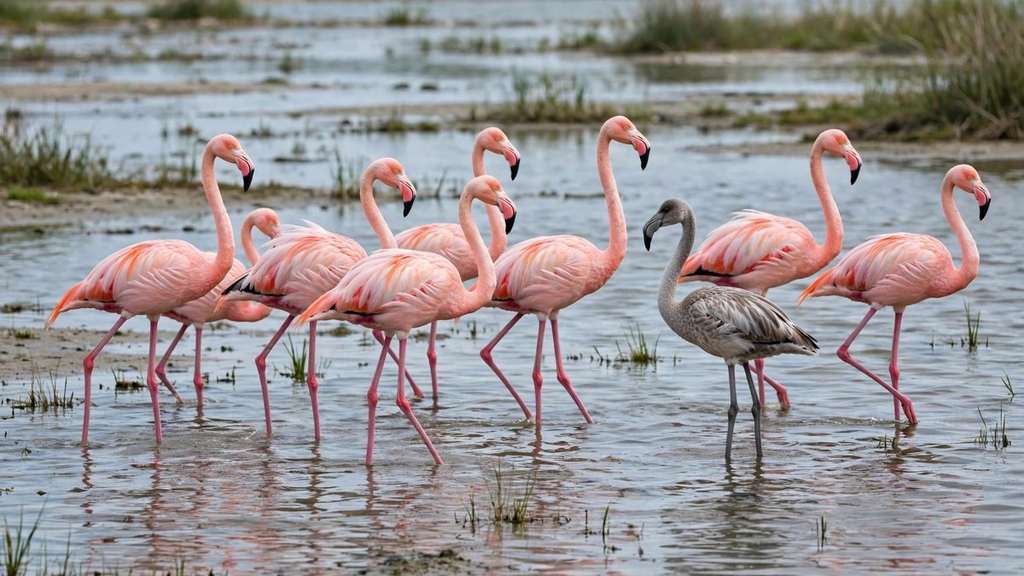
A flamingo chick hatches grey. The pink that makes the bird famous is not in its genes as a color. It arrives meal by meal, from pigments in the algae and small animals the bird eats, and it fades when those meals stop.
Born grey, dressed by dinner
Smithsonian National Zoo describes its hand raised chick plainly. The young bird feathers were fluffy and white at hatching, and keepers expected visitors to know it later by its smaller size and grey color. Some pink feathers appear at about six months. By the first birthday the plumage is light pink, and the deeper adult pink takes two or three years. Nothing about the chick diet is decorative. Keepers add pellets that contain the carotenoid pigments that turn the plumage pink, the same class of pigment the bird would take from wild food.
The pigment path
Carotenoids are the red, orange and yellow pigments made by plants and algae. Flamingos eat algae directly, and they eat small crustaceans such as brine shrimp that fed on algae first. San Diego Zoo puts it in one sentence: the flamingo pink or reddish color comes from the rich sources of carotenoid pigments in the algae and small crustaceans the birds eat. The bird body breaks those pigments down and deposits the results in growing feathers, skin and the bill. Each new feather carries the color of the food that came before it. Old feathers hold their color until they are shed, which is why change shows at molts.
Pink is a report, not a coat of paint
Because color rides on diet, it works as a visible report. A bird feeding well on pigment rich food grows bright feathers. A bird on poor food grows pale ones. Parents pay a special price. Both mothers and fathers feed chicks a rich red secretion called crop milk, and producing it can drain so much pigment that breeding adults fade toward white by the end of nesting. Smithsonian reporting on its 2026 chicks notes that parents regain color as chicks become independent and new feathers grow. Zoos learned the same lesson from the other side. Flamingos kept on food without enough carotenoids lose their pink, so zoo diets are built to replace what wild wetlands provide.
Six species, one recipe
There are six flamingo species, and they do not all wear the same shade. American flamingos run the brightest red pink, while greater flamingos wear a paler pink. The recipe stays the same across all of them. No pigment in the food means no pink in the feather. The most colorful bird at the lagoon is, in a plain sense, the bird that has been eating its color for years, one filter fed mouthful at a time.