
Elephants Cannot Jump, and Even at Full Speed One Foot Always Stays Down
Even at full speed, an elephant keeps one foot on the ground at all times. The reason is a tiptoe skeleton with no spring, weak lower leg muscles, and up to 16,000 pounds of weight.
Key points
- An adult elephant cannot jump.
- Start with the load.
- Look at an elephant skeleton and a strange thing shows up.
An adult elephant cannot jump. Not a small hop, not a leap over a log, not even the brief airborne moment that sneaks into a fast run. Even at full speed, at least one foot stays on the ground at every instant. Smithsonian Magazine asked the question directly, and the answer from the Smithsonian's National Zoo was plain: elephants cannot jump, and their bodies explain why.
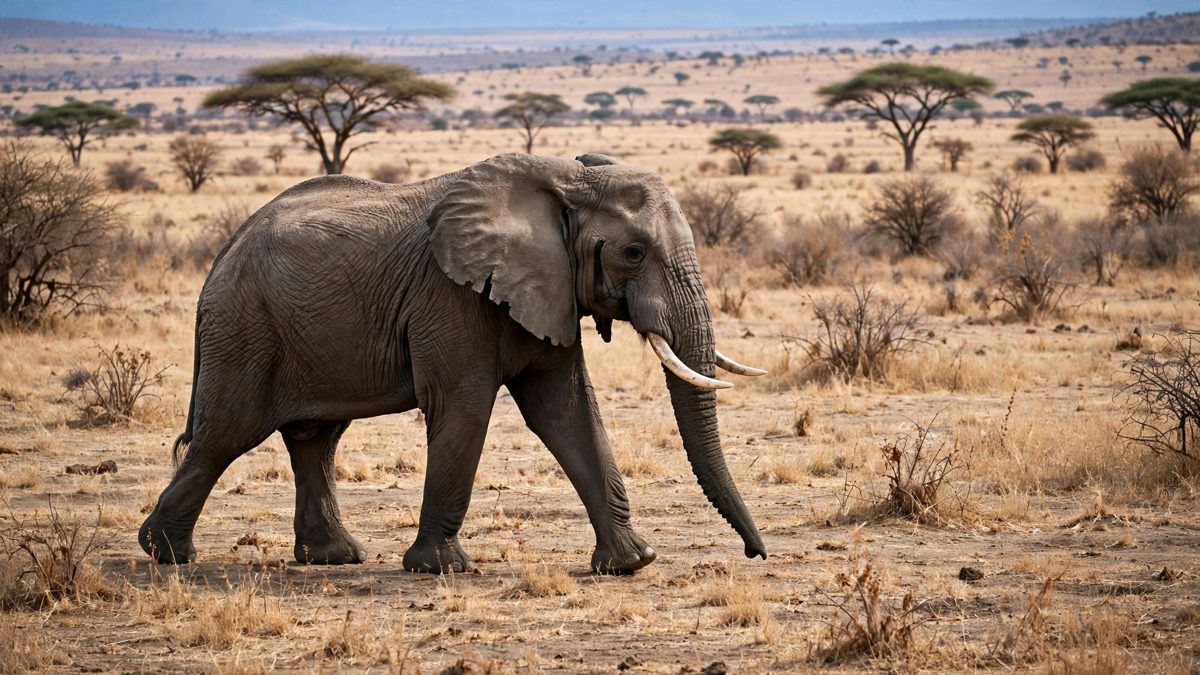
Start with the load. The average elephant weighs about 8,000 pounds, and large ones reach 12,000 to 16,000 pounds. All of that sits on four legs that the zoo's elephant curator, Tony Barthel, compared to slender columns holding up a prize winning pumpkin. It is a design for carrying weight, not for leaving the ground.
Standing on tiptoe, with no spring fitted
Look at an elephant skeleton and a strange thing shows up. The animal is effectively standing on its tiptoes, with the leg bones pointed straight down. That straight column supports enormous weight while standing and walking. What it cannot do is spring. A jump needs the leg to fold, store energy, and then throw the body upward. Elephant legs do not fold that way, and there is no upward spring in the foot.
John Hutchinson, a professor of evolutionary biomechanics at the Royal Veterinary College in London, gave Live Science the muscle side of the same problem. Animals that jump need flexible ankles, strong Achilles tendons and powerful calf muscles. Elephants, for their size, have weak lower leg muscles and ankles that are not very flexible. The parts a jumper depends on most are the parts an elephant has least.
Speed does not rescue the jump either. Elephants move at about 10 to 15 miles per hour at their fastest, according to the Smithsonian, and their running gait still keeps a foot down. There is no gathered crouch, no launch, and no landing. A landing may be the real barrier. Coming down multiplies the force on legs that already work near their limit just carrying the animal, so a failed jump risks a broken bone in an animal that cannot afford one.
The honest gap in the story
One part of the popular version needs care. You will often read that elephants are the only mammal that cannot jump. The two expert sources for this article do not make that claim. They establish the narrower, solid fact: elephants themselves cannot jump. Other heavy mammals that look just as unlikely, such as rhinos and hippos, can get all four feet off the ground while running. The elephant cannot, and that contrast is strange enough without stretching it into a record nobody has fully tested.
Elephants also never needed the skill. Jumping is mostly an escape tool, and a healthy adult elephant has size and the herd for protection. The Smithsonian notes that the only predators of healthy adults are humans, though lions, leopards, hyenas and crocodiles can take calves or very ill older animals. And where another animal would leap a ditch, an elephant uses the tool in front of its face. A trunk that bends, stretches and reaches does the job that jumping does for smaller animals, without ever leaving the ground.