
DOJ Election Monitors Go to All 50 States for November 3 Vote
Kentucky's Jefferson and Fayette counties confirmed federal monitors on Monday as the Justice Department's plan for about 1,000 observers, the largest in its history, reaches every state eight days before the midterms.
Key points
- The U.S. Department of Justice will send election monitors to polling places in all 50 states on November 3, the department confirmed this week, in what its Civil Rights Division chief has called…
- Jefferson County Clerk David Yates planned to share more details with the county Board of Elections and the media on the afternoon of October 26, according to the clerk's office.
- A Justice Department spokesperson said monitors will be sent to all 50 states for what the department called routine election monitoring.
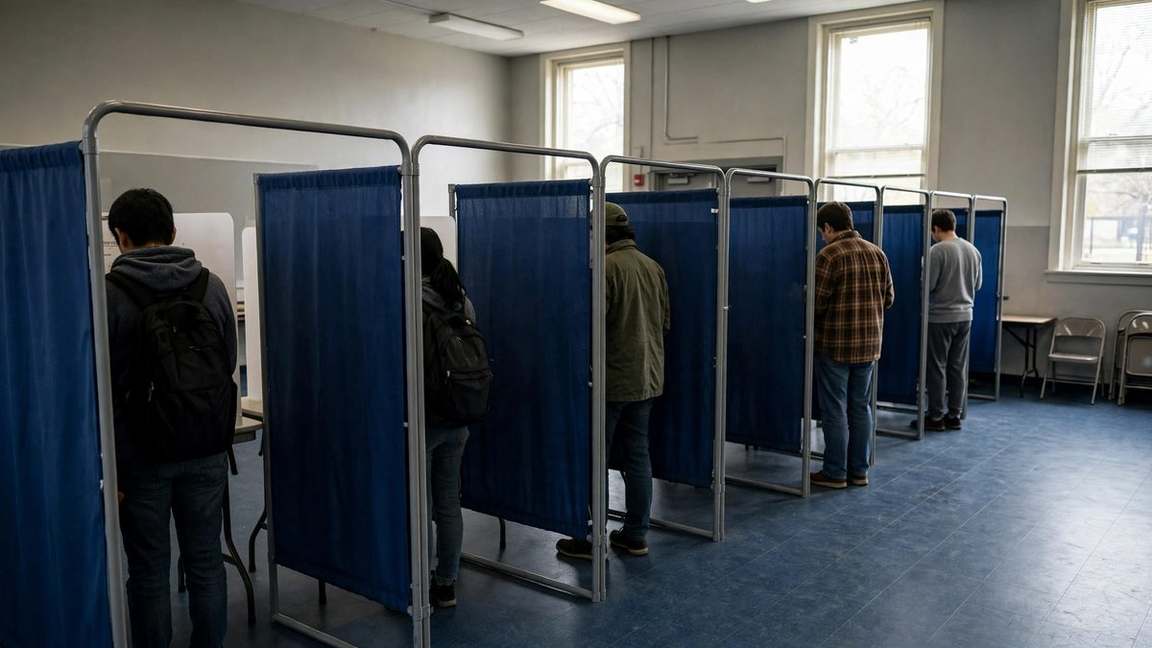
The U.S. Department of Justice will send election monitors to polling places in all 50 states on November 3, the department confirmed this week, in what its Civil Rights Division chief has called the largest monitoring effort in the department's history. The national scale of the plan became clearer on Monday, October 26, when the Jefferson County Clerk's Office in Louisville, Kentucky announced that federal monitors will watch polling places in Jefferson County on Election Day, and reporting in Kentucky said Fayette County, home to Lexington, is also on the list. Louisiana officials said the same day that monitors will come to their state too, while noting they had not received official notice of which parishes will be covered.
Jefferson County Clerk David Yates planned to share more details with the county Board of Elections and the media on the afternoon of October 26, according to the clerk's office. Early voting is already under way in Kentucky, and Jefferson and Kenton counties hosted federal monitors in 2024, so the presence itself is not new. The scale is. Assistant Attorney General for Civil Rights Harmeet Dhillon said in a September social media post that the department plans to send 1,000 federal election monitors to select locations around the country to observe the general election, calling it the largest monitoring effort in DOJ history. Attorney General Todd Blanche has repeated the figure of roughly 1,000 monitors.
What the monitors can and cannot do
A Justice Department spokesperson said monitors will be sent to all 50 states for what the department called routine election monitoring. In its notice to Kentucky, the department said the monitors only observe and take notes, and would alert a team lead for the jurisdiction if they saw an election problem. Under the department's rules, monitors may not interfere with voting, may not speak with voters inside polling places, must follow state and local rules, and may not carry firearms. Every monitor has the same role, the spokesperson said: observe for potential violations of federal law and report concerns to the department, which will review them after Election Day and act where appropriate.
President Donald Trump defended the operation on Saturday, speaking ahead of a campaign rally in Perry, Georgia. "They want to watch. They're not going to do anything other than watch," he said. "The one thing we have to have is honest elections."
Why it matters
Federal election monitoring is a long-running program. The Biden administration sent monitors to 86 jurisdictions in 27 states in 2024, and the department monitored polls in 24 states during the 2022 midterms. This year's plan, at roughly 1,000 monitors across all 50 states, is far larger, and it arrives after the department sent letters to all 50 states and Washington, D.C. threatening election officials with potential criminal charges over alleged noncitizen voting. The NAACP has sued the administration for records on the plan, seeking the legal authority, personnel, training, locations and internal planning behind the deployment. Kristen Clarke, who led the Civil Rights Division from 2021 to 2025 and now serves as the NAACP's general counsel, is leading the lawsuit. The NAACP argues the deployment could intimidate voters, a concern courts have recognized in past cases about law enforcement presence at polling sites.
In Indiana, Representative Andre Carson criticised the choice of Marion County and Lake County, the state's two counties with the largest populations of Democratic voters and Black and Hispanic voters. In Michigan, Attorney General Dana Nessel said last week that the department had sent notices to Detroit, East Lansing, Flint, Grand Rapids and Lansing, among other communities. Oklahoma's state election board has said monitors are coming to three counties, including its two most populous.
The context
Kentucky voters will choose a successor to retiring Senator Mitch McConnell on November 3, with Republican Representative Andy Barr facing Democrat Charles Booker. Control of Congress is at stake nationally, and early voting numbers are already setting records in several states, including Georgia, where more than 1.67 million people had voted in person by Sunday afternoon. The Campaign Legal Center has published guides for voters and election officials explaining what monitors may and may not do, and it is urging Congress to add transparency rules and a clear, enforceable standard of conduct for federal observers.
What happens next
Counties are still learning the details of where monitors will stand and how many will arrive. Jefferson County's briefing on Monday afternoon is one of several expected this week. The NAACP lawsuit will move through federal court while the deployment proceeds. For voters, the practical picture is simple: monitors observe and take notes, they do not check identification, question voters or handle ballots, and any voter who feels intimidated at a polling place can report it to local election officials or the department's Civil Rights Division.
Key numbers
About 1,000 monitors planned nationwide. All 50 states covered. In 2024, monitors went to 86 jurisdictions in 27 states. Election Day is November 3, 2026, with polls in Kentucky open from 7 a.m. to 8 p.m. in the state's general election.
Timeline
- Sep 2026Assistant Attorney General Harmeet Dhillon says the DOJ plans to send 1,000 federal election monitors, calling it the largest monitoring effort in the department's history.
- Oct 22, 2026The Indianapolis Star reports DOJ monitors will go to Marion County and Lake County, Indiana; Michigan's attorney general says notices went to Detroit and other Michigan cities.
- Oct 26, 2026Jefferson County, Kentucky announces DOJ monitors for Election Day; a DOJ spokesperson confirms monitors in all 50 states.
- Nov 3, 2026Election Day. Polls in Kentucky are open from 7 a.m. to 8 p.m.
Sources
- Louisville Courier Journal: DOJ to monitor Jefferson County polling places on Election Day
- Louisiana First News / Louisiana Illuminator: DOJ confirms election monitors to Louisiana and all 50 states
- Campaign Legal Center: Resources on Department of Justice Election Monitors
- Democracy Docket: DOJ sued for records on plan to deploy 1,000 election monitors