
Dashain Goat Shopping at Kalanki: Prices, Checks and How to Buy
Live goats at Kalanki sell for about Rs 780 to Rs 860 per kilogram this Dashain. Here is how pricing, health marks and bargaining work before you buy.
Key points
- For many families in Kathmandu, Dashain does not feel complete until a goat has been chosen, weighed and brought home.
- During Dashain 2026, live goats at Kalanki have sold by weight at about Rs 780 to Rs 860 per kilogram, according to Nepal Traveller.
- Live goat and cut mutton are priced in different ways, and buyers mix them up every year.
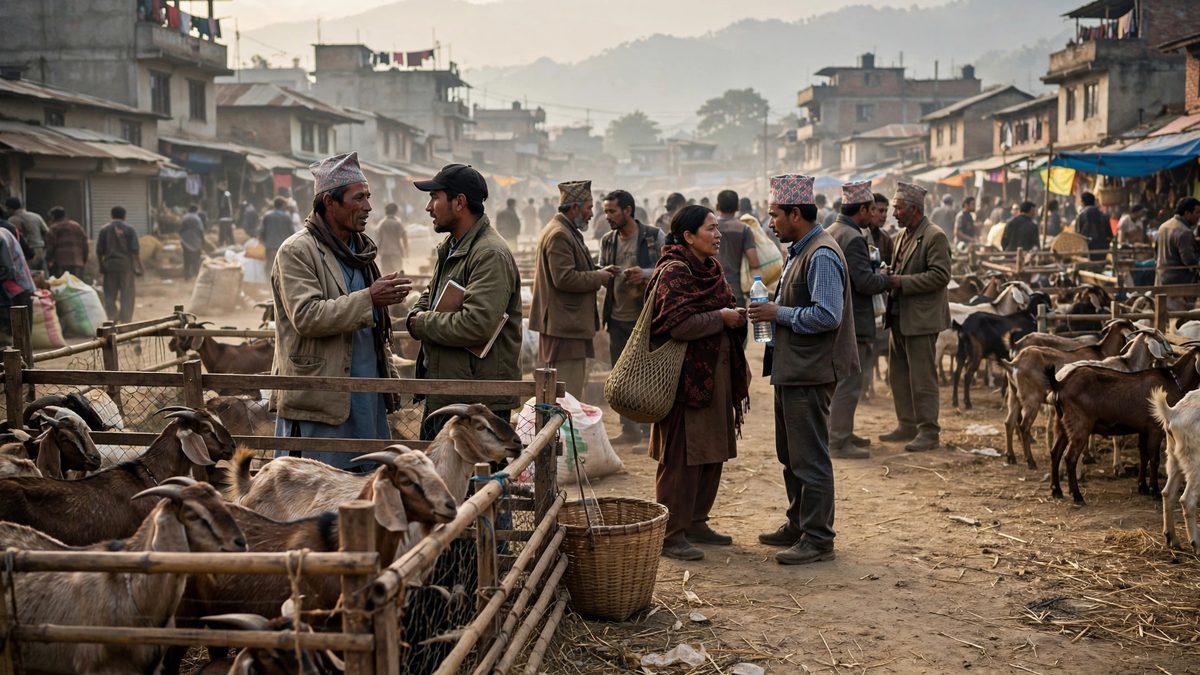
For many families in Kathmandu, Dashain does not feel complete until a goat has been chosen, weighed and brought home. At Kalanki Khasi Bazaar, one of the busiest livestock markets in the capital, that choice starts with a simple question. How much does the animal weigh, and what will you pay per kilogram?
During Dashain 2026, live goats at Kalanki have sold by weight at about Rs 780 to Rs 860 per kilogram, according to Nepal Traveller. That range is the place to start your bargaining. A 25 kilogram goat at Rs 800 per kilogram costs about Rs 20,000 before you agree any final discount. Do the maths out loud with the trader, agree the rate first, then weigh the animal. It avoids confusion when the market is crowded and noisy.
Live goats by weight, mutton by the kilo
Live goat and cut mutton are priced in different ways, and buyers mix them up every year. When you buy a live goat, you pay for the whole animal. When you buy mutton from a shop, you pay only for the meat in front of you.
Retail mutton in the Kathmandu Valley runs about Rs 1,600 to Rs 1,800 per kilogram, Nepal Traveller reported, with traders expecting prices to rise as Dashain nears. The gap looks large, but it reflects how the trade works. Live weight includes bone, skin and organs, so usable meat from a live goat is less than the number on the scale. A family that wants a set amount of meat for guests should keep that loss in mind and buy by expected yield, not by live weight alone.
Prices also vary by place. A separate report by eFeedLink on October 14 put live goat prices at Rs 800 to Rs 900 per kilogram at Kathmandu Valley entry points, slightly above the Kalanki range. Treat any single quote as a starting point, not a fixed rate for the whole valley.
What the weight really means
A heavier goat is not always better value. Ask what you are paying for. A large animal with more bone may give you less meat than a smaller, well fed animal in good condition. Look at the body, not just the scale. The goat should stand well, move without trouble and look alert.
If a goat sits apart, looks dull or struggles to stand, move on, even if the price sounds low.
The health check to look for
The Department of Livestock Services has veterinary teams screening goats, chyangra, sheep and buffaloes at Kathmandu Valley entry points until October 20. Healthy animals get a green mark on the horns. Unhealthy animals get a red mark, Nepal Traveller reported.
Use that mark as your first filter. Ask to see the horns before you pay. Pick active, healthy looking animals, as the teams advise, and be careful with any animal that carries a red mark or no clear mark at all. If you are unsure, ask the trader to show you another animal. Arrivals continued despite flood and landslide damage on roads, per local reports. Goats and chyangra still reached the valley, though the journey was harder this year. That helps explain why traders have kept a close eye on supply and why prices may shift from day to day.
A quieter market this year
Traders at Kalanki reported fewer customers and a quieter market than in past years, Nepal Traveller said. Anyone who remembers the packed lanes of earlier Dashains may notice more space to walk, compare and bargain this season.
A quieter market can work in a buyer favour. You have more time to compare animals, check the green mark, confirm the weight and walk away if the price does not fit. Bargaining is normal at Kalanki, so do it with respect and a clear limit. State your rate per kilogram, refer to the current range, and be ready to look at the next pen if the trader will not move.
How to buy well at Kalanki
Go early in the day if you can. Bring a simple plan: the weight you want, the rate you can pay, and the total you will not pass. If your budget is Rs 20,000, a rate near Rs 800 per kilogram points to an animal near 25 kilograms.
Agree the rate before weighing, watch the scale yourself, and confirm the total before money changes hands. Ask how the animal will be held or delivered if you cannot take it home at once, and agree that point in plain words too. Keep your receipt or note if the trader gives one.
Buy for the meal and the gathering, not for size alone. The best purchase is a healthy animal at a fair price that fits your home.
Key numbers
Live goats at Kalanki: about Rs 780 to Rs 860 per kilogram. A 25 kilogram goat at Rs 800 per kilogram: about Rs 20,000. Retail mutton in the Kathmandu Valley: about Rs 1,600 to Rs 1,800 per kilogram. Live goat prices at valley entry points: Rs 800 to Rs 900 per kilogram, per eFeedLink. Veterinary checks at valley entry points run until October 20, 2026, with a green mark for healthy animals and a red mark for unhealthy animals.
Timeline
- Oct 20, 2026Veterinary checks by the Department of Livestock Services at Kathmandu Valley entry points run until this date.