
Cacao Beans Were Once Money, and People Counterfeited Them With Clay
Maya kings took taxes in bags of 8,000 dried cacao beans, artwork from A.D. 691 onward shows it, and the Aztecs counted the beans in units like coins.
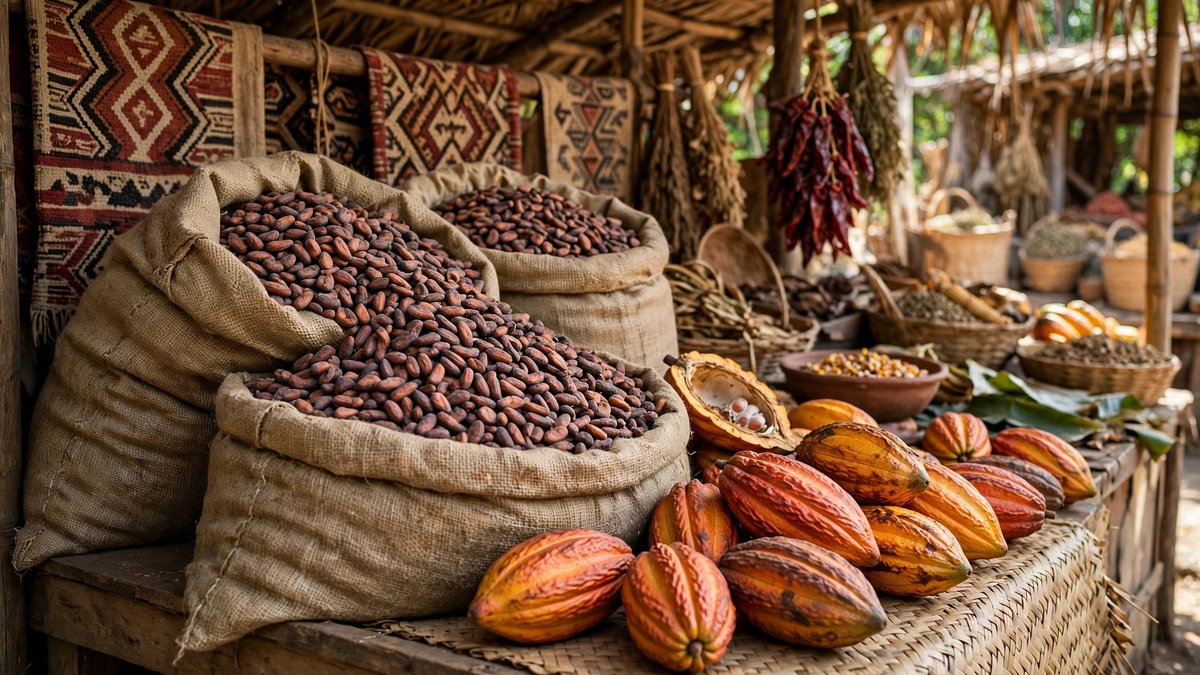
Key points
- For centuries in Mesoamerica, money grew on trees and could be drunk.
- The Maya never minted coins.
- Archaeologist Joanne Baron studied Classic Maya art from about A.D.
For centuries in Mesoamerica, money grew on trees and could be drunk. Cacao beans, the raw material of chocolate, paid taxes, settled market bills and filled royal storehouses among the Maya and later the Aztecs.
The Maya never minted coins. Research on their own artwork shows the beans doing the work of coins, centuries before Europeans arrived.
Taxes paid in chocolate
Archaeologist Joanne Baron studied Classic Maya art from about A.D. 250 to 900: murals, painted ceramics and carvings. In her 2018 paper in the journal Economic Anthropology, she traced a shift. Early scenes show cacao as a prized drink and gift. From A.D. 691 onward, roughly 180 scenes show cacao presented as tribute and tax, in bags labelled with the amount of dried beans inside.
That detail matters. Kings collected far more cacao than any palace could drink. Baron argues the surplus worked as money: paid out to workers, spent in markets, and accepted across rival kingdoms and languages. Cotton cloth shared the same role. She calls it the monetization of cacao and textiles among the Classic Maya.
Counting beans like coins
The Aztecs kept the system and counted it. A Field Museum study of cacao, published in 1923 from older Mexican records, lists the units: 20 beans made a score, 400 made a tzontle, and 8,000 beans filled a bag called a xiquipilli. Three bags made a standard load. The bag itself became the Aztec counting symbol for 8,000.
Money that can rot invites forgery, and the record shows it. Spanish writers complained that people hollowed out cacao shells and filled them with clay. Archaeologists have found well preserved fake beans made of clay at sites in Mexico and Guatemala. Counterfeiters bother only when the real thing spends everywhere.
A drink for kings, change for markets
Cacao money worked because the drink at the top of society was bitter, frothy and costly. Beans had a use everyone agreed on, they came in near uniform pieces, and they were light to carry. The same bean could be spent on food in a market or ground into a lord's cup.
The system outlasted the conquest. Cacao beans still circulated as small change in colonial Mexico, long after silver coins arrived, because small coins were scarce and beans were trusted. Next time a price is quoted in a currency you cannot eat, remember the Maya solved the same problem with chocolate, and their tax collectors accepted it by the bag.