
Washington, DC Council Is One Vote Short on Driverless Taxis as Waymo Bill Stalls
Three of five transportation committee members say they will vote no this week on the bill that would let Waymo carry paying passengers in driverless cars in Washington, despite a rewrite with an 800 vehicle cap and union rights for drivers.
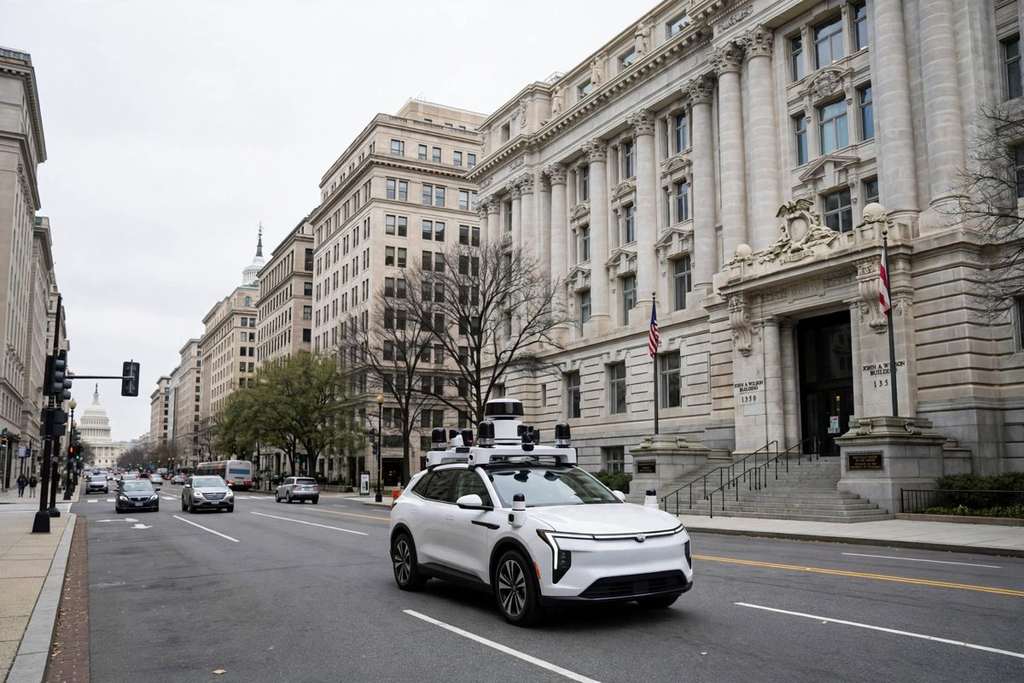
Key points
- Washington, DC: A bill to let Waymo and other companies carry paying passengers in driverless cars in Washington is one vote short in the D.C.
- Charles Allen, the Ward 6 member who chairs the Committee on Transportation and the Environment, unveiled a rewritten version of his autonomous vehicle bill on Tuesday, November 10.
- District law allows testing only with a trained person in the vehicle, and Waymo has tested in the District for about two years.
Washington, DC: A bill to let Waymo and other companies carry paying passengers in driverless cars in Washington is one vote short in the D.C. Council committee that must clear it first, after three of five members said they would vote no this week.
Charles Allen, the Ward 6 member who chairs the Committee on Transportation and the Environment, unveiled a rewritten version of his autonomous vehicle bill on Tuesday, November 10. At-large member Christina Henderson said she would vote yes. Zachary Parker of Ward 5, at-large member Elissa Silverman and Janeese Lewis George of Ward 4 said they would vote no this week. Lewis George is the mayor-elect. The count leaves Allen one vote short of a committee majority.
District law allows testing only with a trained person in the vehicle, and Waymo has tested in the District for about two years. Paying passengers in a fully driverless car are not allowed.
What the rewrite offers
The new version caps autonomous vehicles at 800 across the District for all companies, with an initial cap of 200 per applicant reported by City Cast DC. It would let rideshare drivers and maintenance workers unionize, a central demand of the unions opposing the bill. It adds a tax of 20 cents per mile traveled, with revenue for displaced drivers and congestion management, requires wheelchair-accessible rides, and sets strict data rules and a lengthy testing phase before commercial service starts.
Allen called the bill the most worker-friendly and safety-focused autonomous vehicle legislation in the country, and said the council has held three hearings on the subject in two and a half years.
Why opponents want to wait
Lewis George came out against the bill last month, citing rideshare and taxi job displacement raised by unions including the Service Employees International Union. She said the decision should wait until next session, when her appointees lead the transportation, for-hire vehicle and employment services agencies, and Silverman agrees. Parker said he supports authorizing autonomous vehicles but wants a few more months to work with the incoming mayor and address concerns from firefighters and for-hire vehicle workers, including whether driverless cars move out of the way for emergency vehicles.
Uber also questioned the timing, saying the council should consider how the proposals affect rider prices, driver protections and service levels. SEIU 32BJ Executive Vice President Jaime Contreras said robot taxis threaten jobs and drain local economies.
What supporters say
Henderson said the vehicle cap allows controlled growth that will not change the status quo overnight for labor. Waymo, the largest autonomous vehicle operator in the country, applauded Allen and said the service will create safer roads, high-quality jobs and a more connected city. It has built three facilities in the District for charging and servicing its fleet and promised hundreds of jobs. Opportunity D.C. policy director Malcom Fox said the bill will save lives and create jobs.
Allen hopes for a committee vote this week and a full Council vote by the end of the year. Parker and Silverman said Tuesday they had not yet read the new version, so positions could still move. If the bill is not passed before the session ends on January 2, 2027, it dies. If it passes, paid driverless service could start in October 2027, according to City Cast DC, with other estimates ranging from fall 2027 to early 2028.
Timeline
- May 1, 2026Charles Allen introduces the Autonomous Vehicle Deployment Authorization Amendment Act of 2026 in the D.C. Council.
- Jul 13, 2026The Committee on Transportation and the Environment hears testimony on the autonomous vehicle bill.
- Nov 9, 2026The committee print of bill B26-0684 is dated November 9, 2026.
- Nov 10, 2026Allen unveils a rewritten bill with an 800 vehicle cap and union rights. Parker, Silverman and Lewis George say they would vote no this week, leaving the bill one vote short in committee.