
The Tuatara Has a Third Eye on Top of Its Head, With a Lens and a Retina
It cannot form images and it hides under scales in adults. The parietal eye reads light for the body clock, on the last survivor of a reptile order from the age of dinosaurs.
Key points
- The tuatara of New Zealand grows a third eye on top of its head.
- The animal is not a lizard, whatever it looks like.
- Scientists call the structure the parietal eye.
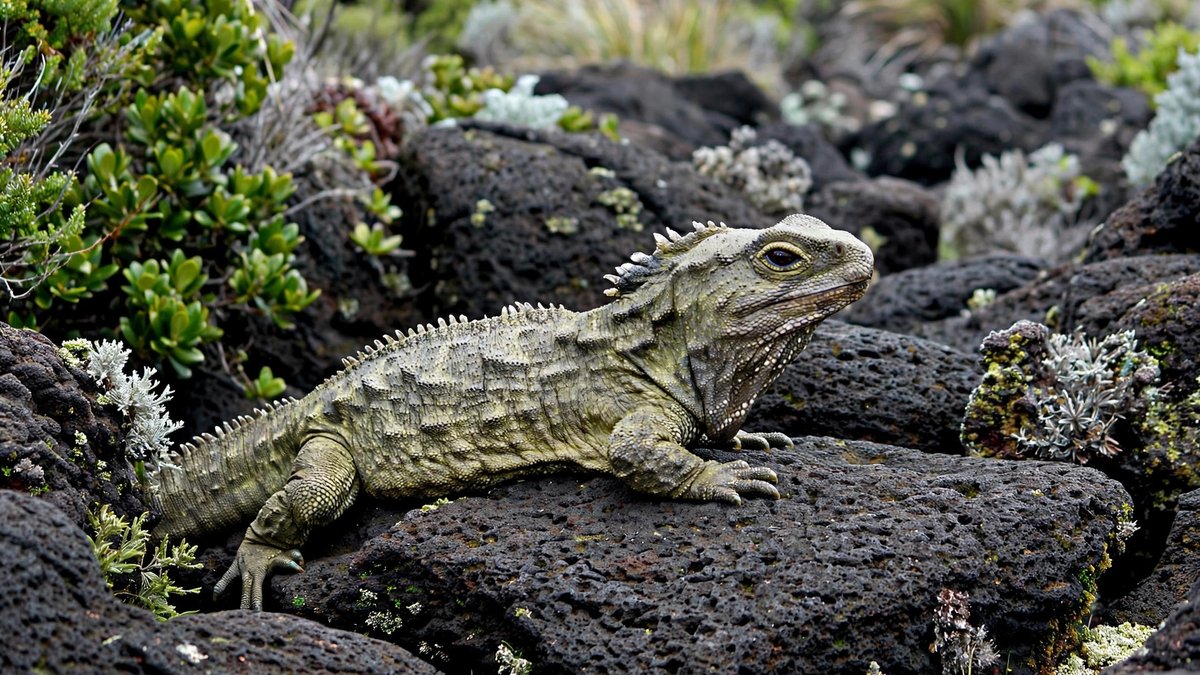
The tuatara of New Zealand grows a third eye on top of its head. It has a lens, a retina and a nerve running to the brain. It cannot see pictures, and by adulthood the eye hides under scales, out of sight.
The animal is not a lizard, whatever it looks like. It is the last survivor of a whole order of reptiles that shared the planet with the early dinosaurs.
An eye that reads light, not images
Scientists call the structure the parietal eye. A 2025 study in a peer reviewed evolution journal describes it as a simplified eye derived from the pineal complex, with photoreceptor cells like a real retina. In a young tuatara the eye sits open on the crown of the head. Within months, scales and pigment cover it.
An eye under skin sounds useless. It still senses light. Researchers link it to the body clock: reading day length, tracking seasons, and helping the animal judge sun exposure for body temperature. It works more like a light meter built into the skull than a camera.
Many lizards carry a smaller version of the same organ. The tuatara version is the most developed, one reason scientists study it so closely.
Not a lizard at all
Tuatara look like stout lizards, and people file them that way in casual talk. Biologists do not. Lizards and snakes belong to the order Squamata. The tuatara alone survives from Rhynchocephalia, a separate line whose members flourished around 250 million years ago and then vanished, one species aside.
The differences run through the body. Tuatara teeth are fused to the jaw bone, not set in sockets, and worn teeth are not replaced the way a lizard replaces them. Tuatara have no external ear openings. They stay active in cold weather that slows lizards down, hunting at night at temperatures most reptiles avoid. The name tuatara comes from the Maori language and means peaks on the back, for the crest of spines along the spine.
Slow life, long life
Tuatara live only on islands off New Zealand, where conservation teams guard them from rats and other introduced predators. They grow slowly, take decades to mature, and can live to around 100 years. A slow reptile with a light sensing third eye, unchanged in its basic plan since the age of dinosaurs, is still out there reading the seasons through the top of its head.