
Portland, Oregon: Appeals Court Vacates Tear Gas Limits at ICE Facility in Two 2 to 1 Rulings
A Ninth Circuit panel on Tuesday threw out two preliminary injunctions that had restricted federal agents' use of tear gas, pepper balls and other chemical munitions during protests outside the ICE facility in South Portland.
Key points
- A divided panel of the U.S. Court of Appeals for the Ninth Circuit on Tuesday, November 10, vacated two preliminary injunctions that had restricted how the Department of Homeland Security could…
- In the first case, Dickinson v.
- Judge Kenneth K.
A divided panel of the U.S. Court of Appeals for the Ninth Circuit on Tuesday, November 10, vacated two preliminary injunctions that had restricted how the Department of Homeland Security could police protests at the U.S. Immigration and Customs Enforcement facility in Portland, Oregon. Both rulings were 2 to 1. Both are published opinions, so they bind district courts across the circuit while the underlying lawsuits continue.
The protest and journalist case
In the first case, Dickinson v. Trump, five protesters and independent journalists said federal officers fired tear gas and pepper balls to punish protected speech outside the ICE building in South Portland. U.S. District Judge Michael H. Simon issued a temporary restraining order in February and, on March 9, 2026, a preliminary injunction with provisional class certification for nonviolent protesters and reporters. His order limited munitions to situations involving an imminent threat and required markings on officer uniforms.
Judge Kenneth K. Lee, joined by Judge Eric C. Tung, wrote for the majority that the district court applied the wrong standard by requiring an imminent threat of physical harm before officers could use nonlethal munitions. Officers may use nonlethal force to clear crowds and restore order, the majority held, and they need not wait until they face an imminent threat of physical harm. The panel found no showing that officers acted with retaliatory intent rather than to disperse crowds during security operations, and it vacated the provisional class as too broad.
The Gray's Landing case
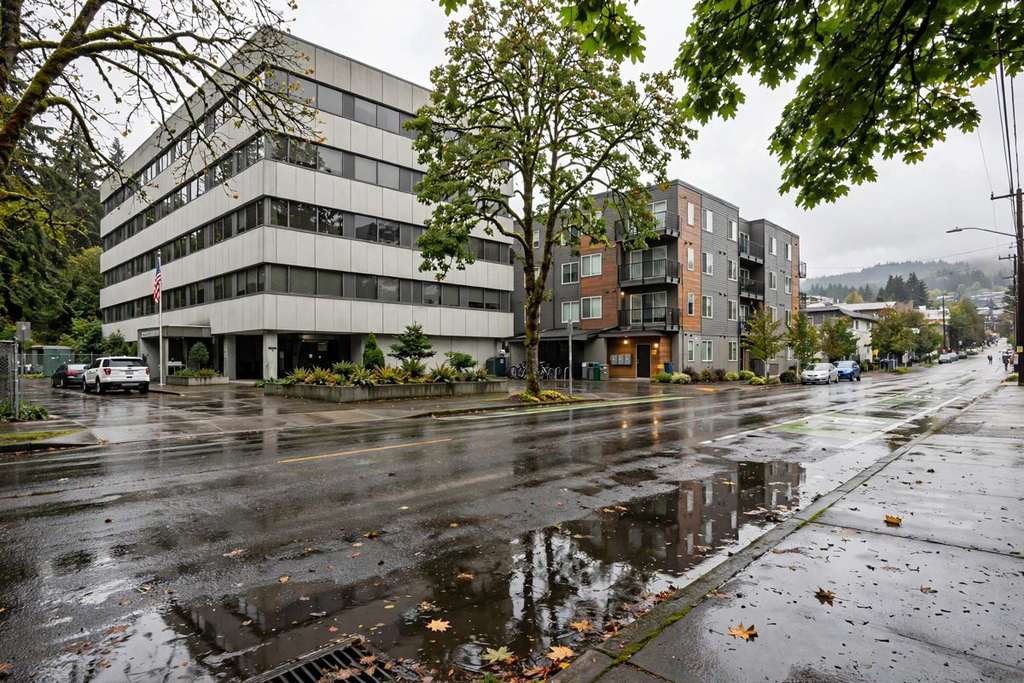
In the second case, Reach Community Development v. DHS, the owner and residents of Gray's Landing said gas from the protests drifted into their homes. Gray's Landing is a 209 unit affordable housing community next to the ICE facility. Judge Amy M. Baggio issued an injunction in early March that barred chemical munitions likely to reach the complex.
Judge Tung wrote for the majority that neighboring residents have no substantive due process right to be free from crowd control chemicals. Residents, including children, seniors, veterans and people with disabilities, reported that chemical agents repeatedly seeped into apartments, hallways and common areas, causing respiratory distress, chest pain and panic attacks, according to the plaintiffs. The court held that a right to be free from incidental exposure to crowd control chemicals is not deeply rooted in the nation's history, and it vacated the injunction.
Judge Ana de Alba dissented in part in the first case and in full in the second. She read the video, testimony and expert evidence as supporting a likely finding of retaliation, and she would have applied a conscience shocking standard for the residents and found them likely to succeed.
What happens next
The plaintiffs in the Gray's Landing case issued a joint statement after the decision. "We are disappointed by the court's decision and the outcome of this case," the statement said. "This case has always been about the safety and well being of the people who live at Gray's Landing."
The same three judge panel had stayed the Dickinson injunction on April 27, 2026, and heard argument on both appeals on July 10 in Pasadena. Tuesday's rulings decide the preliminary injunctions only. They are not final judgments, and both cases return to the U.S. District Court for the District of Oregon for further proceedings.
Timeline
- Mar 9, 2026U.S. District Judge Michael H. Simon grants a preliminary injunction in Dickinson v. Trump, limiting munitions outside the Portland ICE facility to situations involving an imminent threat.
- Apr 27, 2026The Ninth Circuit panel stays the Dickinson injunction while the appeals proceed.
- Nov 10, 2026The panel vacates both preliminary injunctions in 2 to 1 rulings, in Dickinson v. Trump and in Reach Community Development v. DHS.
Sources
- Bloomberg Law: Curbs to DHS Use of Force at Portland Facility Vacated on Appeal
- Courthouse News Service via Criminal Justice Journalists: Ninth Circuit Allows Federal Agents to Use Tear Gas to Disperse Crowds Outside Portland ICE Facility
- Immigration Analytics: Portland ICE Tear Gas Limits Vacated by Ninth Circuit in 2-1 Rulings
- Democracy Forward: Ninth Circuit Rules Against Portland Residents Seeking Protections from Chemical Munitions Exposure