
Nigeria State Police Amendment Clears Threshold as 24 Assemblies Approve
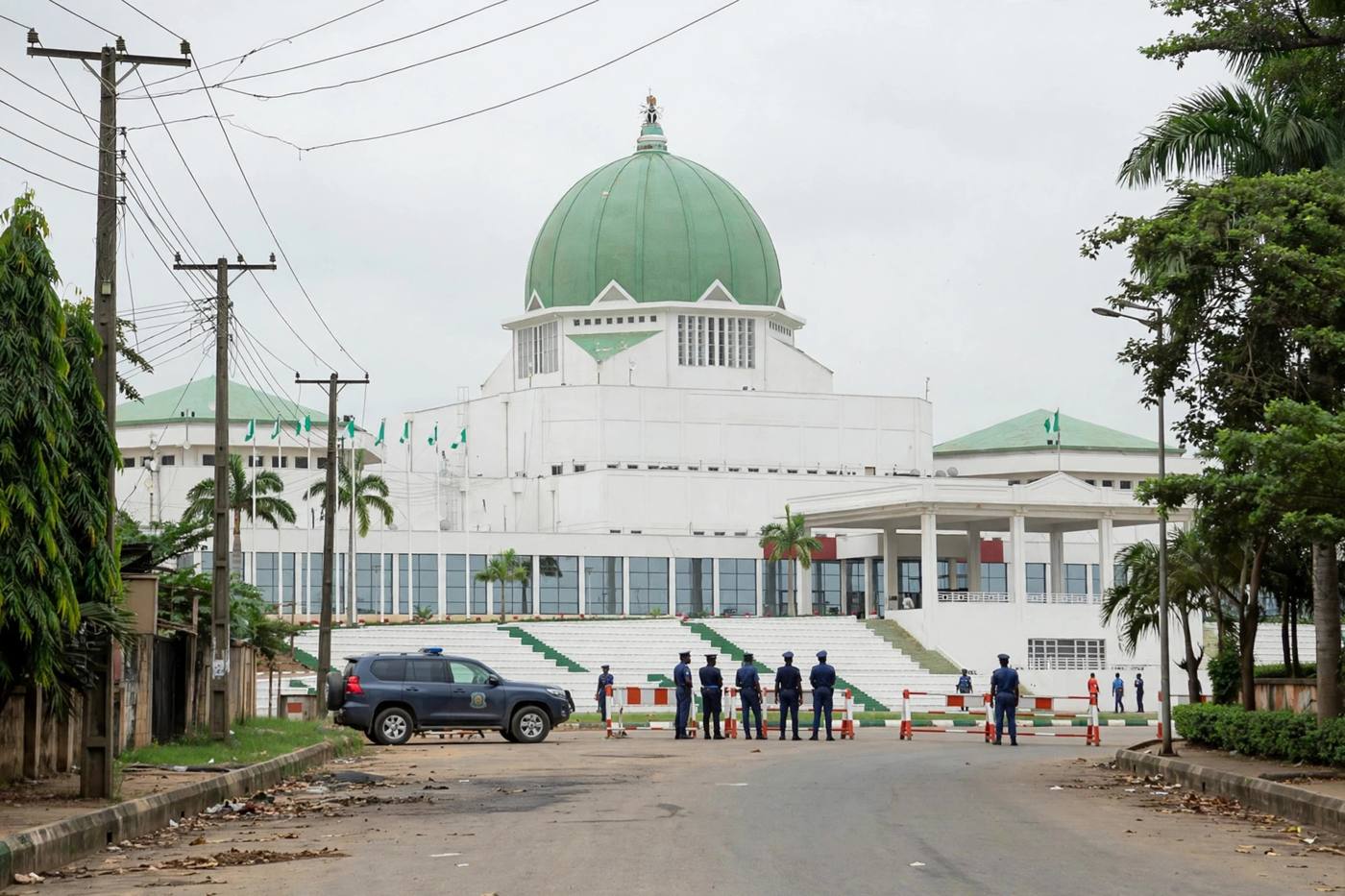
Nigeria's presidency said on Friday that 24 state Houses of Assembly have approved the constitutional amendment for state police, clearing the two-thirds state threshold and sending the proposal back toward the National Assembly and the president.
Key points
- Nigeria moved a step closer to state police on Friday, October 23, 2026, when the presidency said 24 state Houses of Assembly had approved the constitutional amendment providing for state police.
- The bill at the center of the vote is the Constitution (Sixth Alteration) Bill, 2026.
- The statement did not announce presidential assent or the start of state police operations.
Nigeria moved a step closer to state police on Friday, October 23, 2026, when the presidency said 24 state Houses of Assembly had approved the constitutional amendment providing for state police. The count meets the state approval threshold for the proposal, according to a presidency statement signed by Femi Gbajabiamila, chief of staff to President Bola Tinubu and chairman of the Presidential Working Group on the National Policing Bill.
The bill at the center of the vote is the Constitution (Sixth Alteration) Bill, 2026. It provides for a dual policing system, in which states can run their own police services alongside a federal service. Approval by 24 of Nigeria's 36 state assemblies meets the two-thirds threshold required under Section 9 of the 1999 Constitution.
What happens next
The statement did not announce presidential assent or the start of state police operations. It set out the next formal step instead. "In line with Section 9 of the Constitution, the amendment can now be returned to the National Assembly for transmission to Mr President for assent," Gbajabiamila said. Until assent and the supporting laws are in place, policing on the ground does not change.
Under the proposed arrangement, states would be able to establish their own police services while a federal police service continues nationally. The Nigeria Police Force would remain responsible for policing in a state until its state police formation became operational. That handover rule is meant to prevent a gap between the old system and the new one in any state that sets up a force.
A count that rose quickly
The National Assembly transmitted the bill to all 36 state Houses of Assembly on September 16, 2026. Progress was slow at first. As recently as October 16, only five assemblies had reportedly endorsed it, and the count reached 10 by October 21 before further approvals lifted it to 24.
The 24 approving states are Adamawa, Delta, Edo, Kwara, Nasarawa, Ogun, Osun, Oyo, Plateau, Rivers, Taraba, Zamfara, Enugu, Anambra, Imo, Ekiti, Kebbi, Akwa Ibom, Bayelsa, Benue, Cross River, Abia, Yobe and Kaduna. The 12 yet to vote are Lagos, Ondo, Ebonyi, Kogi, Niger, Borno, Gombe, Bauchi, Jigawa, Katsina, Kano and Sokoto. Their votes are no longer needed to clear the threshold, though they will still decide the question for their own states in the Assembly record.
The wider policing bills
A separate piece of work continues alongside the amendment. The draft National Policing Bill and associated legislation remain under legislative drafting review and validation at the Federal Ministry of Justice. The working group expects them back on or before Friday, October 30, 2026.
"The draft Bills are currently undergoing legislative drafting review and validation at the Federal Ministry of Justice and are expected to be returned on or before Friday, 30th October 2026," the Presidential Working Group statement said. Those bills will carry much of the practical detail, including how state forces are formed, funded and held to account, and their return date gives the next clear marker for a reform that Nigerians have debated for years.
For now, the headline is the threshold itself. Twenty-four assemblies have approved, the constitutional requirement on state support has been met, and the amendment can move back to the National Assembly on its way to the president.
Timeline
- Sep 16, 2026The National Assembly transmits the state police amendment bill to all 36 state Houses of Assembly.
- Oct 16, 2026Only five assemblies have reportedly endorsed the amendment.
- Oct 21, 2026The count of approving assemblies reaches 10.
- Oct 23, 2026The presidency says 24 assemblies have approved, meeting the two-thirds threshold under Section 9 of the Constitution.
Sources
- Okay News: Presidency Says 24 State Assemblies Approve State Police Amendment
- Global Financial Digest: State Police Bill Clears Key Hurdle as 24 Assemblies Back Constitutional Amendment
- MCC News: 24 States Approve Police Bill as 12 Remain
- The Satellite: State Police Move Closer to Reality as 24 Assemblies Approve Amendment
- EveryDayLagos: State Police, 24 States Approve Bill