
Lightning Heats the Air to Five Times the Temperature of the Surface of the Sun
The National Weather Service puts a lightning channel at about 50,000 degrees Fahrenheit. That instant heat explodes the air outward, and the shock wave is thunder.
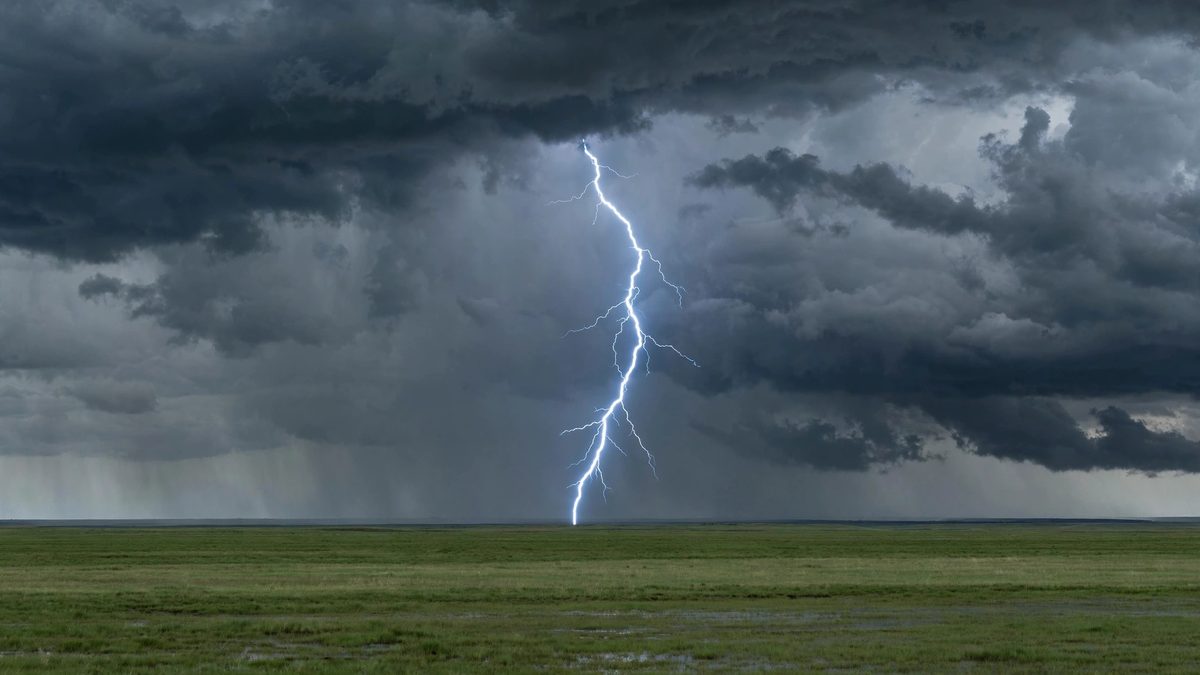
Key points
- For a fraction of a second, the air inside a lightning channel gets hotter than the surface of the Sun.
- The bolt does not stay hot.
- Inside a storm cloud, charges slowly separate until the gap between positive and negative charge grows too wide to hold.
For a fraction of a second, the air inside a lightning channel gets hotter than the surface of the Sun. The National Weather Service puts the peak at about 50,000 degrees Fahrenheit, five times the temperature of the Sun's visible surface.
The bolt does not stay hot. It does not need to. That instant of heat is enough to make the air explode outward, and the explosion is the thunder you hear seconds later.
How a cloud builds a bolt
Inside a storm cloud, charges slowly separate until the gap between positive and negative charge grows too wide to hold. NASA describes what follows as a rapid electrical discharge: lightning. Nobody knows every step of how the charges separate, and NASA says so openly, but the discharge itself is well measured.
The current rips down a thin column of air. Air resists the current, and that resistance turns electrical energy into heat almost at once. The column becomes a thread of superheated air and plasma, far hotter than lava, hotter than any furnace on Earth, and hotter than the bright surface of the star the Earth orbits.
The catch is scale. The Sun's surface is hot across an entire star, all the time. Lightning wins the temperature contest in a channel only centimeters wide, for less than a second, and then the air cools and collapses back.
Thunder is the sound of that heat
The National Weather Service explains thunder as a direct result of the temperature spike. The lightning discharge heats the air so fast that the air expands faster than it can move aside in an orderly way. The rapid expansion, followed by quick cooling and contraction, creates a shock wave. That shock wave reaches your ears as thunder.
This is why a close strike sounds like a single crack and a distant one rolls. The channel can run for miles through the air, so sound from the near part reaches you first and sound from farther sections arrives later, stretched into a rumble. Thunder can usually be heard about 10 miles from a strike.
You can use the gap to judge distance. Count the seconds between the flash and the thunder, then divide by 5. The answer is the distance in miles. Five seconds means the strike was about a mile away. Zero seconds means it was very close, and you should already be inside.
A planet that never stops
Lightning is not a rare event that happens to a few unlucky fields. NASA counts an average of 44 lightning bolts striking somewhere on Earth every second. While you read this page, hundreds of channels of air, on other continents and over open ocean, briefly ran hotter than the surface of the Sun.
None of them stayed that way, and none of them needed to. Temperature was never the Sun's contest to lose. Energy is, and the Sun wins that one without effort. But for pure peak heat in a single natural moment on Earth, the crown belongs to a storm cloud and a fraction of a second.