
India and US Sign 10-Year Defence Framework in Kuala Lumpur
Rajnath Singh and Pete Hegseth signed a decade-long roadmap covering land, air, sea, space and cyber. It is not an alliance and replaces nothing. It is a schedule, and schedules are how partnerships become real.
Key points
- India and the United States have signed a ten-year framework for their major defence partnership, a roadmap that ties the two militaries together across land, air, sea, space and cyber for the…
- Hegseth said the India-US defence relationship "has never been stronger" and called the partnership one of the most consequential in the world.
- The document sets a ten-year direction for cooperation: deeper work in the defence industry, technology and innovation, closer coordination between the two militaries, expanded information…
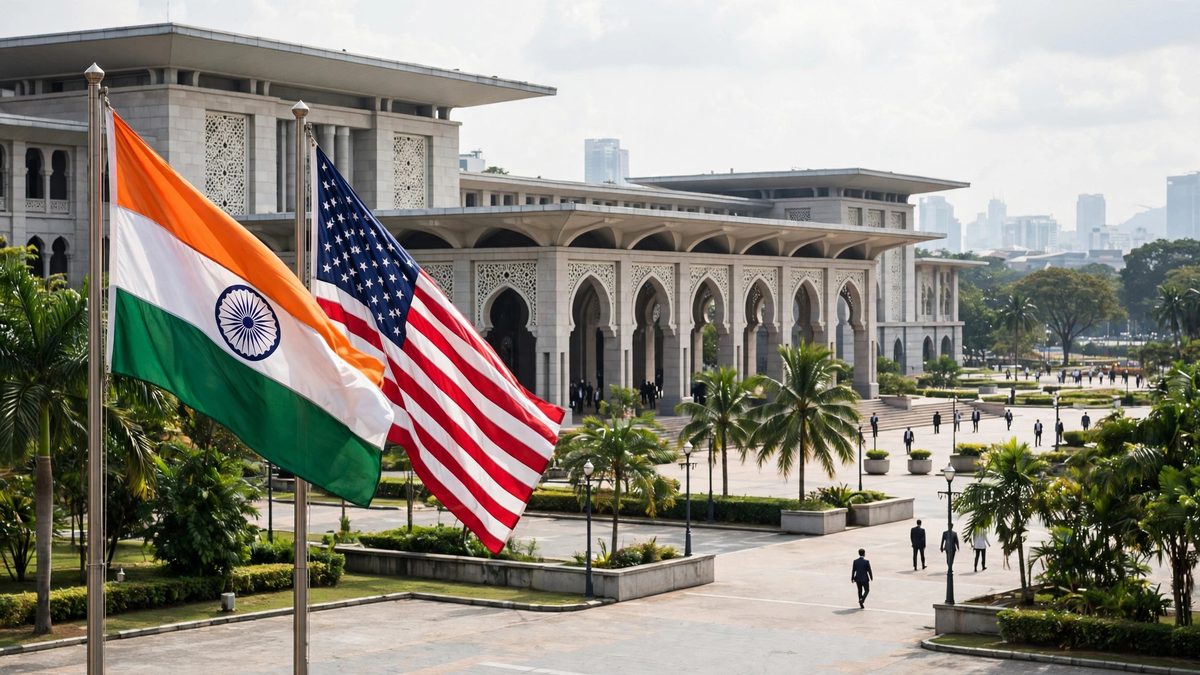
India and the United States have signed a ten-year framework for their major defence partnership, a roadmap that ties the two militaries together across land, air, sea, space and cyber for the next decade. The framework was signed in Kuala Lumpur, on the sidelines of the ASEAN Defence Ministers' Meeting-Plus, by Indian Defence Minister Rajnath Singh and US Secretary of War Pete Hegseth.
Hegseth said the India-US defence relationship "has never been stronger" and called the partnership one of the most consequential in the world. Both sides described the framework as long-term policy direction for the partnership, not a single weapons deal.
What the framework actually does
The document sets a ten-year direction for cooperation: deeper work in the defence industry, technology and innovation, closer coordination between the two militaries, expanded information sharing, more complex joint exercises, and stronger technological collaboration. It covers the traditional domains and the new ones, space and cyber, in the same frame.
Just as important is what it does not do. The framework does not create a trilateral alliance. It does not set up a joint command. And it does not replace the foundational agreements the two countries already work under, including LEMOA, COMCASA and BECA. It sits on top of them and points them at the next ten years.
Why the timing matters
The defence relationship has been the most durable part of the wider India-US relationship, and this year the two countries are on pace for a record number of joint exercises, including combined air assault operations carried out a short distance from the India-China border, the Carnegie Endowment noted in an analysis of the relationship this week. The maritime side carries the most weight in practice. The Indian Navy flies US-built P-8 maritime patrol aircraft, operates MH-60R anti-submarine helicopters and is acquiring MQ-9B surveillance drones, platforms built to work alongside US forces in the Indian Ocean.
Behind the hardware sits a wider bet. US technology companies pledged nearly 68 billion dollars in AI infrastructure investment in India last year, and Micron opened its first assembly and test facility in India in February. The framework gives the defence side of that relationship the same long horizon the commercial side already has.
The context readers need
India has historically bought much of its military hardware from Russia, and it guards its strategic independence in every negotiation. A ten-year framework with Washington is not an alliance, and New Delhi would be the first to say so. What it is, in practice, is a schedule: a decade of exercises, shared information and industrial work that makes the two militaries more able to operate together each year, whether or not any single crisis ever asks them to.
For the Indo-Pacific, that is the signal. Both governments used the same words at the signing: a free, open and rules-based region. The framework is how they plan to pay for those words, in ship visits, shared surveillance and factories rather than speeches.
What happens next
The framework now has to be filled in with working agreements: which exercises grow, which technologies get shared, and how much defence production moves to India. Watch the exercise calendar first. It is the fastest place a paper commitment turns into soldiers, sailors and pilots actually working together, and this year it is already running at a record pace.