
India's UDAN Turns 10 With 687 Routes and a Rs 28,840 Crore Phase
Ten years on, the scheme counts 687 routes and 1.72 crore passengers, with Rs 5,091.23 crore paid in support. The next phase spends Rs 28,840 crore over ten years.
Key points
- India's regional air scheme, UDAN, turned ten on Wednesday, October 21, 2026.
- UDAN, short for Ude Desh ka Aam Nagrik, was launched on October 21, 2016 under the National Civil Aviation Policy.
- The support behind those numbers is large.
India's regional air scheme, UDAN, turned ten on Wednesday, October 21, 2026. The government's own count shows both the reach of the program and the subsidy it still needs.
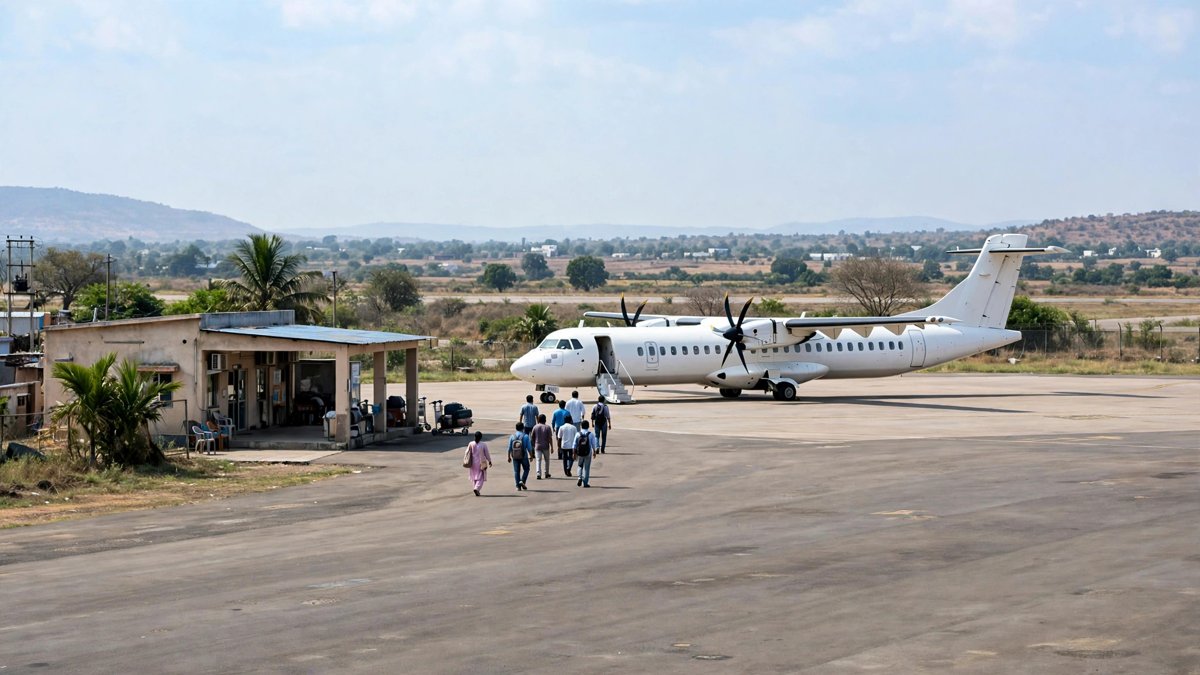
UDAN, short for Ude Desh ka Aam Nagrik, was launched on October 21, 2016 under the National Civil Aviation Policy. Its first flight, between Shimla and Delhi, took off in April 2017. In ten years the scheme has opened 687 regional routes and 95 aerodromes, including 17 heliports and two water aerodromes. More than 3.68 lakh flights have run under it, carrying 1.72 crore passengers, according to a Press Information Bureau backgrounder released on Tuesday, October 20, ahead of the anniversary.
The support behind those numbers is large. The government had paid out Rs 5,091.23 crore in viability gap funding by October 15, 2026. That funding plugs the gap on routes that cannot yet pay for themselves. The scheme pairs it with fare caps and concessions to draw airlines onto thin routes.
India's wider airport network has grown in the same period. Operational airports rose from 74 in 2014 to 166, the review said.
The next phase
The next phase, called Modified UDAN, was launched on July 4, 2026. It runs for ten years, from 2026-27 to 2035-36, with a total outlay of Rs 28,840 crore. The weight shifts from route subsidy to concrete: 100 airports are to be built from existing unused airstrips, at Rs 12,159 crore over eight years, and about 441 aerodromes are to get three years of operations and maintenance support, at Rs 2,577 crore. Another Rs 3,661 crore is set aside for 200 modern helipads over eight years. Airline support continues, with Rs 10,043 crore for viability gap funding over ten years. A smaller Rs 400 crore is set aside for Indian-built aircraft: two HAL Dhruv helicopters for Pawan Hans and two HAL Dornier aircraft for Alliance Air.
Why it matters
Regional routes are the test of the scheme. A route that opens with subsidy and then dies when the money stops is not a connection. The new phase spends most of its money on airports, helipads and upkeep, which suggests the government has reached the same view: the hardware has to last longer than the subsidy.
What happens next
The plan now moves through state agreements and route bidding. The measure to watch is simple: how many of the 687 routes still fly without support, and how many of the 100 planned airports open on time.
Sources
- NewKerala: UDAN facilitates air travel for 1.72 crore passengers across 687 routes in 10 years, government backgrounder
- The News Trust: UDAN completes a decade, modified scheme targets expansion of regional air connectivity
- Latestly (ANI): UDAN facilitates air travel for 1.72 crore passengers across 687 routes in 10 years