
Why Chili Peppers Burn, and Why Milk Beats Water Every Time
Capsaicin switches on the mouth's heat alarm without any real heat. Water spreads the oil, while milk protein pulls it off the alarm.
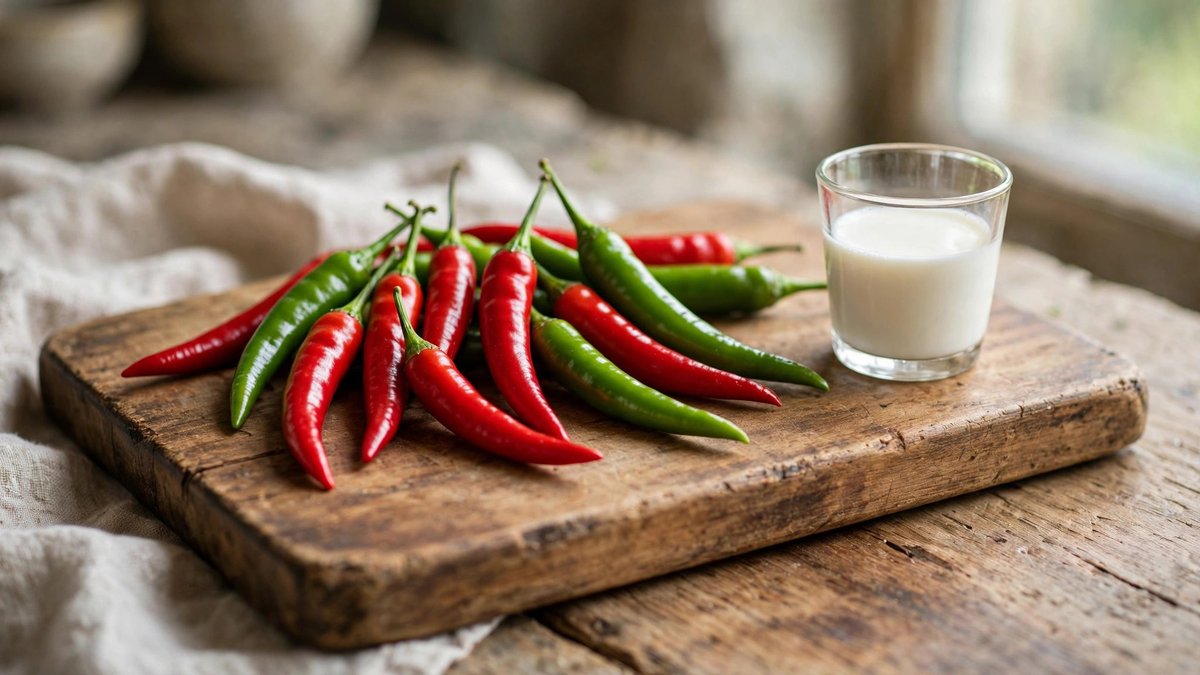
Key points
- A chili pepper is not actually hot.
- The pepper tricks a heat alarm in your nerves, and your brain believes the alarm.
- The heat in a chili comes from capsaicin, an oily compound stored mostly in the pale ribs inside the pepper.
A chili pepper is not actually hot. Nothing in your mouth is burning. The pepper tricks a heat alarm in your nerves, and your brain believes the alarm. That one trick explains the sweat, the tears, and why a glass of water makes the whole thing worse while milk calms it down.
A molecule that presses the fire button
The heat in a chili comes from capsaicin, an oily compound stored mostly in the pale ribs inside the pepper. Capsaicin latches onto a receptor in the mouth called TRPV1. That receptor has a normal job: it fires when something is hot enough to hurt, at about 43 degrees Celsius and above.
Capsaicin switches the same receptor on at mouth temperature. The nerve sends the exact signal it would send for a real burn, so the brain reports fire where there is none. Your body answers a fire that does not exist. Blood vessels widen, your face flushes, your eyes water, and you sweat, the standard kit for cooling down.
Why water spreads the fire
Capsaicin is hydrophobic, which means it does not mix with water. The Royal Society of Chemistry puts it plainly: rinse with water and you do not wash the capsaicin away, you spread it around your mouth and reach fresh receptors. The burn can feel bigger after the sip than before it.
Carbonated drinks do no better. In a 2019 Penn State study published in Physiology and Behavior, researchers gave people a spicy tomato mix and then one of seven drinks. Seltzer, soda and nonalcoholic beer all performed poorly. Ethanol makes it worse still, because alcohol amplifies the burn sensation.
Why milk works
Milk attacks the problem two ways. Its fat gives the oily capsaicin somewhere to dissolve. Its main protein, casein, works like a detergent: it surrounds capsaicin molecules and pulls them off the receptors, the way dish soap lifts grease off a pan.
The Penn State result surprised people on one point. Skim milk worked as well as whole milk. If fat were doing the main job, whole milk should have won clearly. It did not, which points to the protein as the key player. Cleveland Clinic doctors draw the same lesson: any animal milk should help, while almond or oat drinks, which have no casein, do not do the same job.
Yogurt and ice cream help for the same reasons, which is why yogurt shows up beside hot curries. A sweet drink can also dull the burn, but by a different route: sweetness overwhelms the signal rather than removing the capsaicin.
The practical rule
If a bite goes wrong, reach for milk or yogurt and hold it in your mouth for a few seconds before swallowing. Skip the water jug. And remember the burn itself is a false alarm: the pepper never raised the temperature of your mouth by a single degree. It just found the alarm button and leaned on it.