
Orionid Meteor Shower Peaks October 21-22: How to Watch
The Orionids, dust from Halley's Comet, peak on the night of October 21 into October 22. A bright Moon hides the faint meteors until it sets, so the best window is the dark stretch before dawn.
Key points
- The Orionid meteor shower reaches its peak on the night of Wednesday, October 21 into the morning of Thursday, October 22, and the nights around it are already worth a look outside.
- Every Orionid is a speck of Halley's Comet.
- A waxing gibbous Moon, about 80 percent lit, will wash out the fainter meteors for much of the peak night.
The Orionid meteor shower reaches its peak on the night of Wednesday, October 21 into the morning of Thursday, October 22, and the nights around it are already worth a look outside. The shower has been active since October 2 and runs to November 7, according to the viewing guides built on NASA and International Meteor Organization data.
Every Orionid is a speck of Halley's Comet. Each time the comet passes the Sun it sheds dust and small bits of rock along its orbit, and every October the Earth crosses that trail. The grains hit the atmosphere at about 66 kilometres (41 miles) a second, fast enough to burn up as bright streaks, and some leave glowing trains that hang in the sky for a few seconds. Halley's Comet itself last visited in 1986 and is not due back until 2061, so the shower is the closest most people will get to it.
The Moon is the problem this year
A waxing gibbous Moon, about 80 percent lit, will wash out the fainter meteors for much of the peak night. NASA's October skywatching guide gives the same advice as every other guide this year: wait for the Moon to set, then watch in the dark hours before dawn. Calculated moonset times for the peak night put that dark window at roughly two to three hours in most northern cities, starting around 3 a.m. local time in places like New York and Los Angeles.
Under a dark sky the Orionids produce about 10 to 20 meteors an hour at their peak. City and suburban watchers will see fewer, and the honest expectation from a backyard is a handful of bright ones in that pre-dawn window, not a storm.
How to watch
You do not need a telescope or binoculars, and they actually hurt, because meteors can appear anywhere in the sky. NASA suggests lying flat on your back with your feet pointing southeast in the Northern Hemisphere, taking in as much sky as you can, and giving your eyes up to 30 minutes to adapt to the dark. Keep your phone put away during that time.
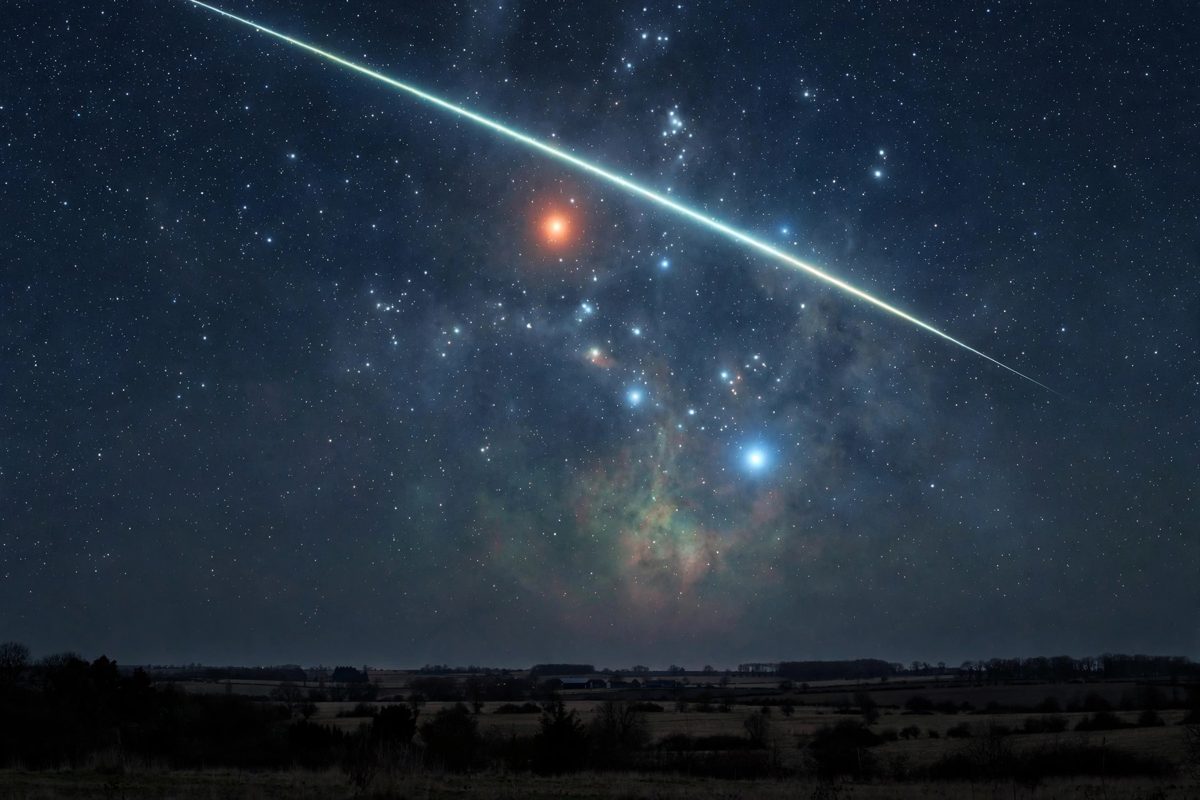
The shower takes its name from its radiant, the point the meteors seem to come from, which sits in the constellation Orion near the bright orange star Betelgeuse. Do not stare at Orion itself. The longest and most dramatic trails show up 45 to 90 degrees away from the radiant, so look at a wide, dark stretch of sky and wait.
If clouds or work rule out the peak night, the shower stays active for several nights on either side of October 21 to 22, and the Moon sets earlier on the nights before the peak, which buys a longer dark window in exchange for a few fewer meteors.
Timeline
- Oct 2, 2026The Orionid meteor shower becomes active as Earth enters the debris trail left by Halley's Comet.
- Oct 21, 2026Peak night, running into the morning of October 22. The best viewing comes after moonset, in the hours before dawn.